Image 1 of 12
Plant Reference
1 / 12
Strelitzia, Genus, reginae, Species,
- Genus & species
bird of paradise
Native to South Africa growing in coastal scrubland and riverbank thickets in Eastern Cape and KwaZulu-Natal provinces at low to moderate elevations
Overview
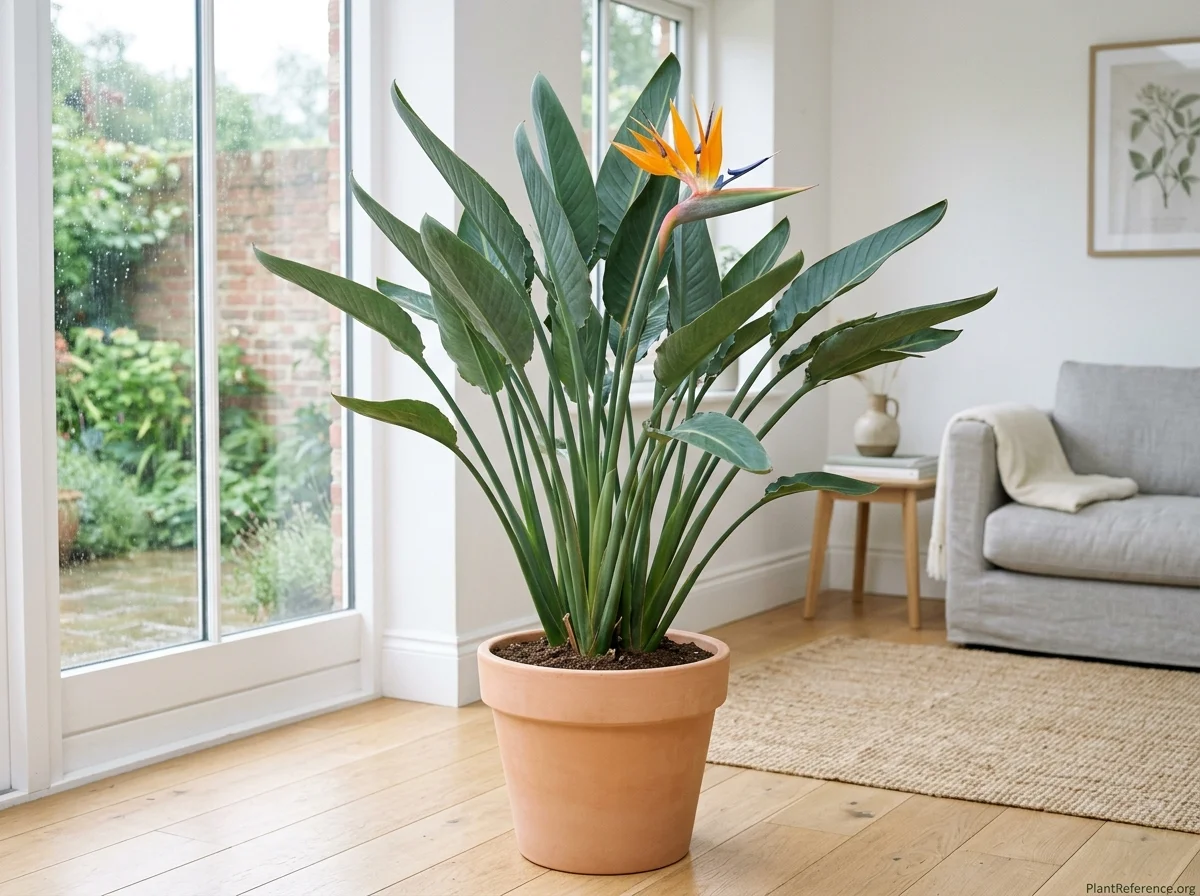
Strelitzia reginae is bird of paradise — a South African evergreen perennial in the family Strelitziaceae carrying widely recognized bird-shaped tropical flowers, growing 36–60 inches (90–150 cm) tall indoors and 48–72 inches (120–180 cm) tall outdoors in frost-free climates. The species was named in honor of Charlotte of Mecklenburg-Strelitz, Queen of England (1761–1818), and the species name 'reginae' translates as 'of the queen' in reference to the regal commemorative dedication. Brilliant orange sepals with electric blue petals emerge from a green-purple boat-shaped bract — the assembled flower precisely resembles an exotic bird's crested head in profile, giving the species its common name and running as the plant trait that places the flower among the widely recognized tropical flower forms in horticultural and floral-design contexts. Blue-green to gray-green large paddle-shaped leathery leaves on long stiff petioles provide the year-round structural foliage display. In frost-free climates (USDA zones 9–12) the species flowers from December through April with sequential flower stalks across approximately 12 weeks, filling a winter-spring bloom window when few other tropical plants flower. Indoor specimens require very bright light (south-facing window or supplemental grow lighting) plus 3–5 years of maturity to flower; many indoor specimens never reach the flowering stage, but the architectural foliage runs as ornamental on its own. The species runs as the city flower of Los Angeles, California, where the year-round mild climate suits the plant's outdoor cultivation. Mildly toxic to pets and humans through ingestion of plant tissue. Drought-tolerant once established outdoors.
Native Range
Strelitzia reginae is native to South Africa, growing in coastal scrubland and riverbank thickets in the Eastern Cape and KwaZulu-Natal provinces at low to moderate elevations.Suggested Uses
Used as an iconic tropical specimen in bright indoor spaces, in outdoor frost-free landscape positions across Southern California and Florida, in containers of 10 gallons (38 liters) or more for patio and conservatory display, and as a recognized cut flower in floral design. The widely recognized bird-shaped flower form gives the species cultural prominence beyond the typical houseplant tropical foliage species — visitors to gardens and indoor spaces with the plant in flower respond to the immediate visual recognition of the bird-shaped bloom. The architectural paddle-leaved foliage runs ornamental even without flowering, suiting the species to indoor spaces where flowering may not occur due to insufficient light or maturity. The species runs as the city flower of Los Angeles and the regional symbol of subtropical California garden design.How to Identify
Appearance
Size & Dimensions
Height3' - 5'
Width/Spread3' - 4'
Bloom Information
Flowering from December through April outdoors in frost-free zones 9–12 across approximately 12 weeks with sequential flower stalks. Indoor flowering runs sporadic and requires very bright light plus 3–5 years of maturity; many indoor specimens never reach the flowering stage. Plants run pollinated by sunbirds in the native South African range — the bird-shaped flower form runs adapted to bird perching during nectar feeding and contains structural features that suit sunbird foot anatomy.
Detailed Descriptions
Flower Description
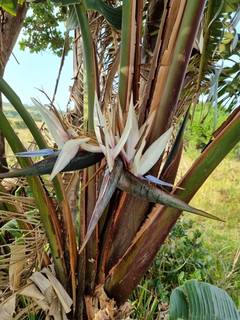
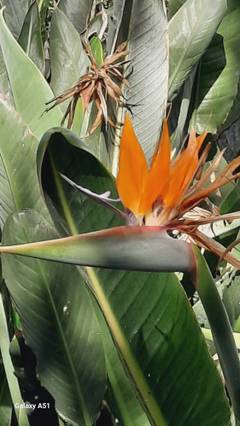
Brilliant orange sepals with electric blue petals emerging from a green-purple boat-shaped bract; resembles an exotic bird's crested head in profileFoliage Description
Blue-green to gray-green; large paddle-shaped leathery leaves on long stiff petiolesGrowing Conditions
Sun Requirements
Requires 6-12 hours of direct sunlight daily
• Full Sun: 6+ hours of direct sunlight
• Partial Shade: 3-6 hours of direct sunlight
• Full Shade: Less than 3 hours of direct sunlight
Care & Maintenance
Care Guide
Place in full sun outdoors or bright indirect light to direct sun indoors — the species requires meaningful brightness for flowering, with very bright light (south-facing window) or supplemental grow lighting needed to trigger indoor bloom. Well-draining tropical potting mix at pH 5.5–7.5 suits the species. Water regularly during the growing season (April–October); reduce watering in winter to prevent root rot in cooler dormant conditions. Flowering requires 3–5 years of maturity from seedling and very bright light — gardeners new to the species should plan for foliage-only display in the first several years and not expect immediate flowering. Mildly toxic to pets and humans through ingestion. Outdoor cultivation works in USDA zones 9–12 where temperatures stay above 25°F (−4°C) reliably; container culture with overwintering indoors extends the cultivation range north. Drought-tolerant once established outdoors.Pruning
Remove spent flower stalks at the base after the bloom finishes. Remove dead or damaged leaves at the base by cutting the petiole flush with the crown. Do not cut healthy foliage during the growing season — each leaf supports future flowering by feeding the rhizomatous crown.Container Growing
Suitable for container growing
Minimum container size: 10 gallons