Whipplea, Genus, spp., Multiple species,
- Genus
- Multiple species
yerba de selva
Western North America (Oregon to California)
Overview
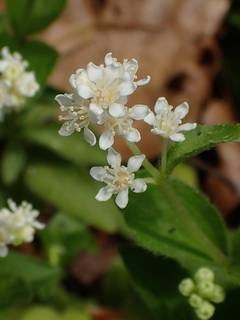
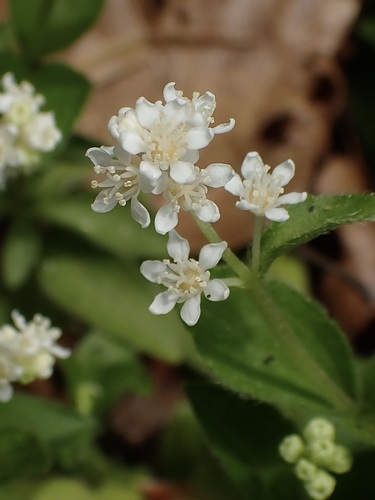
Whipplea is a monotypic genus in the hydrangea family, represented by the single species W. modesta, a low, trailing evergreen to semi-evergreen subshrub of western North America. Slender, somewhat woody stems creep along the ground, root where they touch moist soil, and form loose mats usually 10-20 cm (4-8 in) high with trailing shoots reaching 0.3-1 m (1-3 ft). The small opposite leaves are oval, 1-3 cm (0.4-1.2 in) long, green, and lightly toothed, often turning bronze in cold or dry spells. In spring, short upright stems carry rounded clusters of tiny white flowers, each with five to six narrow petals and protruding stamens. The plant grows in the partial shade of coniferous and mixed forests, on slopes and banks, where it tolerates the dry summers of its range once established. It spreads slowly by rooting stems rather than by runners or seed, forming a thin, ground-hugging cover. Frost hardy through its native zone, it declines in deep shade, soggy ground, or full exposure to hot sun. Growth and flowering are modest rather than vigorous.
Native Range
W. modesta is native to the Pacific coast of North America, from southwestern Oregon south through the Coast Ranges and Sierra Nevada foothills of California. It grows on shaded forest floors, road banks, and slopes in coniferous and mixed woodland. Its range is tied to the summer-dry, winter-wet climate of the region.Suggested Uses
Used as a small-scale groundcover in shaded native, woodland, and rock gardens of the Pacific states. It suits slopes and banks under trees where summer-dry shade limits other plants. Also grown in shaded containers and as part of habitat restoration in its native range.How to Identify
Appearance
Size & Dimensions
Height4" - 8"
Width/Spread1' - 3'3"
Bloom Information
Flowering occurs in spring, roughly April to June depending on elevation and latitude. Small white flowers open in tight clusters on short upright stems held above the trailing foliage. Bloom lasts about four to six weeks and is followed by small dry seed capsules.
Detailed Descriptions
Foliage Description
green, bronzing in coldGrowing Conditions
Sun Requirements
Requires 2-5 hours of direct sunlight daily
• Full Sun: 6+ hours of direct sunlight
• Partial Shade: 3-6 hours of direct sunlight
• Full Shade: Less than 3 hours of direct sunlight
Care & Maintenance
Care Guide
The plant grows in partial to full shade in humus-rich, free-draining woodland soil that stays moist in spring and can dry in summer. It suits the dappled light beneath trees and shrubs, and grows poorly in hot, exposed sites or heavy, waterlogged ground. Once established it tolerates the natural summer drought of its range, though occasional water keeps the foliage fresh. It is hardy through its native zone and needs no winter protection there. Stems root as they spread, so plants knit together into a thin cover over a season or two. Few pests trouble it, but crown rot follows poor drainage.Pruning
Little pruning is needed. Trailing stems are trimmed to keep the mat within bounds, and any winter-burned or bronzed shoots are sheared in early spring to encourage fresh growth. Plants resprout readily from the creeping stems.Container Growing
Suitable for container growing
Minimum container size: 1 gallons