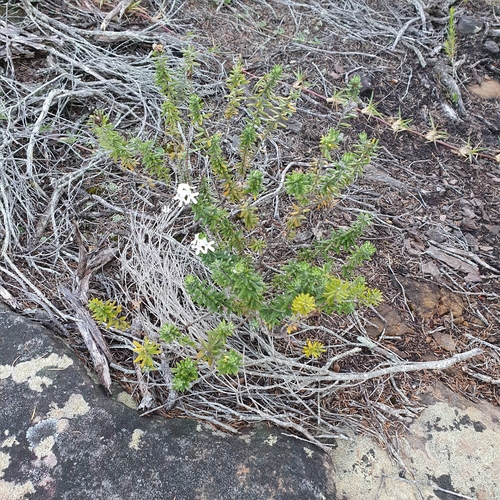
Westringia, Genus, spp., Multiple species,
- Genus
- Multiple species
coast rosemary
Overview
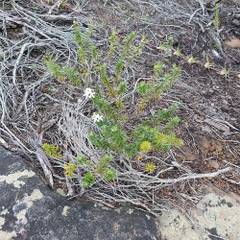
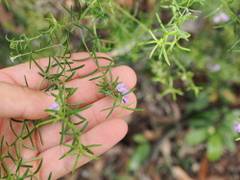
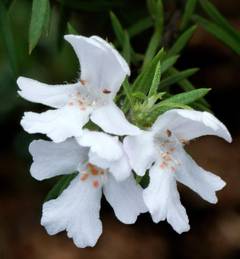
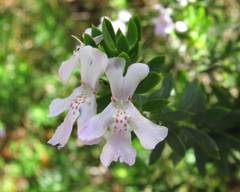
Westringia is a genus of about 30 evergreen shrubs in the mint family, all native to Australia, with W. fruticosa the species most often grown in gardens. Plants form dense, rounded bushes 0.5-2.5 m (1.5-8 ft) tall and as wide or wider, clothed in small, narrow leaves arranged in whorls of three or four around the stems. The foliage is often grey-green, with a paler, felted underside that helps the plants withstand wind, salt, and heat. Two-lipped tubular flowers 1-1.5 cm (0.4-0.6 in) long appear in the leaf axils in white, pale mauve, or lilac, frequently dotted with orange or purple in the throat. The main flush comes in spring, with lighter flushes through the year in mild climates. Many species grow naturally on exposed coastal headlands and sandy soils, so the genus tolerates salt spray, wind, and drought once established. Growth is dense and twiggy, which takes clipping well and forms hedges and topiary. Cold below about minus 5C (23F) damages most species, and wet, heavy soils cause root rot. Across the genus, habit ranges from low and spreading to upright and rounded.
Native Range
All species are native to Australia, where they grow in coastal heath, on sandy soils, rocky headlands, and in dry inland scrub across the southern and eastern states. W. fruticosa comes from exposed coastal cliffs of New South Wales. The genus as a whole spans coastal and semi-arid habitats.Suggested Uses
Used for low to medium hedges, coastal and seaside gardens, dry and gravel gardens, and clipped or informal screens. Compact forms suit containers and borders. Tolerance of salt and wind suits exposed sites where many shrubs fail.How to Identify
Appearance
Size & Dimensions
Height1'6" - 8'
Width/Spread2' - 10'
Bloom Information
The main flowering flush comes in spring, roughly September to November in Australia, with scattered flowers appearing through much of the year in mild climates. Flowers open in the leaf axils along the stems rather than in showy spikes. Light trimming after the spring flush often brings a second flowering.
Detailed Descriptions
Flower Description
white, pale mauve, or lilac with throat markingsFoliage Description
grey-greenGrowing Conditions
Sun Requirements
Requires 6-10 hours of direct sunlight daily
• Full Sun: 6+ hours of direct sunlight
• Partial Shade: 3-6 hours of direct sunlight
• Full Shade: Less than 3 hours of direct sunlight
Care & Maintenance
Care Guide
Plants grow in full sun on light, free-draining sandy or loamy soils and tolerate exposed, windy, and coastal sites. Once established they need little water and withstand extended dry spells, while wet, heavy, or poorly drained soil leads to root rot. Most species take light frost but are damaged below about minus 5C (23F). Clipping is tolerated well, so plants are shaped into hedges, balls, and informal screens. Feeding is light, using a low-phosphorus fertiliser suited to native plants, as many Australian shrubs are sensitive to phosphorus. Pests are few, though scale and root rot appear on stressed or overwatered plants.Pruning
Light trimming after each flush keeps plants dense and maintains a hedge or rounded shape. Plants tolerate regular clipping and resprout from semi-hardwood, though cutting back into old bare wood regrows slowly. A harder renewal prune in early spring restores leggy, overgrown bushes.Container Growing
Suitable for container growing
Minimum container size: 5 gallons