Washingtonia, Genus, spp., Multiple species,
- Genus
- Multiple species
fan palms
Southwestern United States and northwestern Mexico
Overview
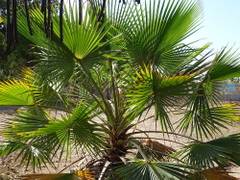
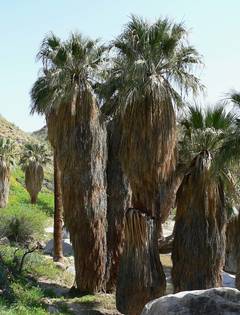
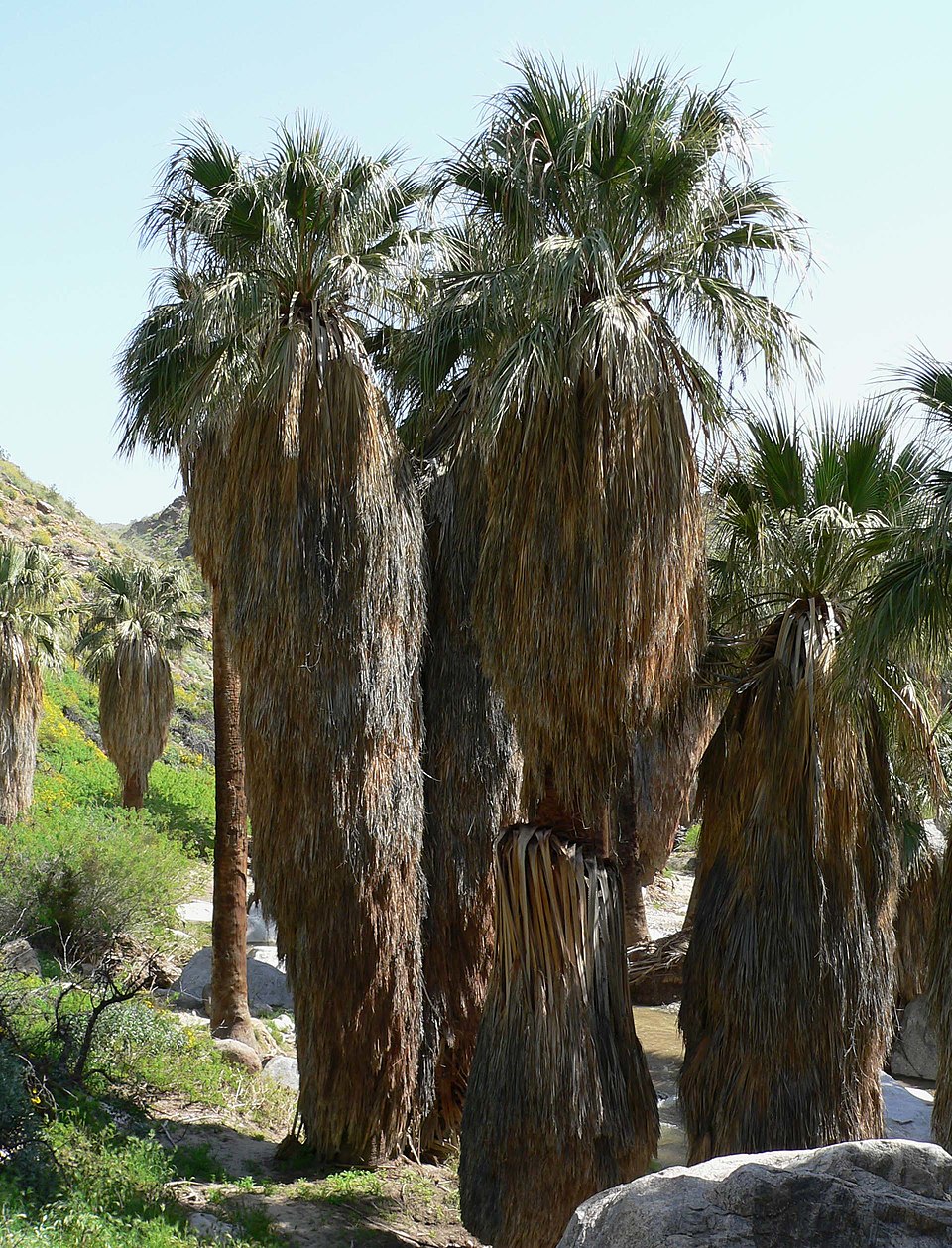
Washingtonia is a genus of two species of tall fan palms in the family Arecaceae, native to the deserts and oases of the southwestern United States and northwestern Mexico. The two species are the California fan palm (W. filifera) and the Mexican fan palm (W. robusta). Both develop a single straight trunk topped by a rounded crown of large, fan-shaped (palmate) leaves 3-6 feet (0.9-1.8 m) across, carried on toothed leaf stalks. W. filifera is stouter and grows to about 60 feet (18 m), while W. robusta is more slender and reaches 80-100 feet (24-30 m). Untrimmed plants hold their dead leaves as a dense brown skirt against the trunk. Small cream flowers are borne on arching stalks up to 10 feet (3 m) long, followed by clusters of small black fruit eaten by birds. The palms grow quickly, tolerate heat and drought once established, and are hardy only to about USDA zone 8 to 9, which limits them to warm-temperate and subtropical climates. The shed leaf skirt is a fire risk near buildings and is often removed.
Native Range
The genus is native to the southwestern United States and northwestern Mexico, where the species grow around desert springs, canyons, and seasonal streams. W. filifera occurs in California, Arizona, and Baja California, while W. robusta is native to Baja California Sur and Sonora.Suggested Uses
Fan palms are planted as street, avenue, and specimen trees in warm-climate landscapes, spaced 10-20 feet (3-6 m) apart, and are used to line drives and frame large buildings. W. robusta is grown for height in tight spaces, while W. filifera is used where a broader, shorter palm suits. Young plants are grown in large containers and moved under cover in marginal climates.How to Identify
Appearance
Size & Dimensions
Height40' - 100'
Width/Spread10' - 15'
Colors
Bloom Information
Flowering occurs in late spring and summer, when long arching stalks of small cream flowers extend out beyond the leaves. The flowers are followed through late summer and autumn by hanging clusters of small black fruit. Mature palms flower and fruit each year once established.
Detailed Descriptions
Foliage Description
green to gray-greenGrowing Conditions
Sun Requirements
Requires 6-12 hours of direct sunlight daily
• Full Sun: 6+ hours of direct sunlight
• Partial Shade: 3-6 hours of direct sunlight
• Full Shade: Less than 3 hours of direct sunlight
Care & Maintenance
Care Guide
Washingtonia palms grow in full sun in a wide range of well-drained soils across a pH of 6.0-8.0 and tolerate sand, alkalinity, and salt spray. They are deeply drought tolerant once established but grow faster with regular water and feeding. The palms withstand brief cold to about 15-20F (-9 to -7C), with W. filifera the hardier of the two, matching USDA zones 8b-11. Hard freezes damage the crown and can kill young plants. They are prone to trunk rot in poorly drained ground and to palm-specific pests and diseases such as fusarium wilt and palm weevils. The persistent dead-leaf skirt is flammable and is often cleared from palms near buildings.Pruning
Pruning is limited to removing fully dead, brown leaves and old flower and fruit stalks, cut close to the trunk. Green, living fronds are left in place, since over-pruning into the crown weakens the palm and slows growth. The hanging skirt of dead leaves is removed on palms near structures to reduce fire and pest risk.Pruning Schedule
Prune: May–June
springsummer
Container Growing
Suitable for container growing
Minimum container size: 15 gallons