Washingtonia, Genus, robusta, Species,
- Genus & species
Mexican fan palm
Baja California and northwestern Mexico
Overview
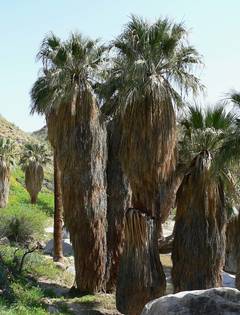
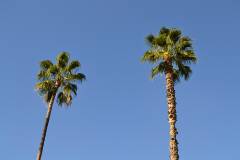
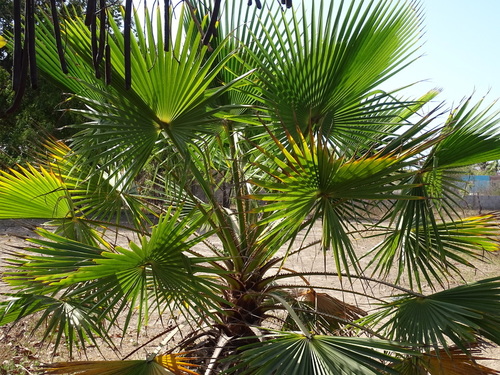
Washingtonia robusta is the Mexican fan palm, growing 480-960 inches (1,200-2,400 cm) tall with a slender trunk 10-12 inches (25-30 cm) in diameter — the tallest commonly planted palm in North America, and the iconic tall skinny palm silhouette of Los Angeles. Green palmate (fan-shaped) fronds 36-48 inches (90-120 cm) with thread-like filaments on the leaf margins (especially on young fronds). Dead fronds hang against the trunk forming a 'petticoat' (thatch skirt) if not removed — the dry petticoat is a fire hazard in Southern California and creates habitat for rats, which is why most municipalities require dead frond removal. Separated from W. filifera (California fan palm): W. robusta has a thinner trunk (10-12 inches vs. 18-24 inches / 45-60 cm), taller mature height, and less pronounced filaments. Native to Baja California and northwestern Mexico. Invasive in riparian areas of the southwestern United States (displacing native W. filifera in some locations). Hardy to 20°F (-7°C). Extremely fast-growing for a palm — 36-48 inches (90-120 cm) per year. Cream flowers in long drooping inflorescences 60-96 inches (150-240 cm). Small black fruit 0.4 inch (10 mm) dispersed by birds. Full sun (8+ hours). Drought-tolerant once established. Adapts to clay and alkaline soils. Non-toxic. Shallow root system — susceptible to toppling in saturated soil with wind. Professional arborist required for dead frond removal at mature heights. Zones 9-11.
Native Range
Native to Baja California and northwestern Mexico. Invasive in riparian areas of the southwestern United States.Suggested Uses
Grown as a tall accent or avenue palm in zones 9-11 where the 480-960 inch (1,200-2,400 cm) height is appropriate. Full sun. Dead frond maintenance is ongoing and requires professional services at mature heights. Invasive in some regions. Non-toxic.How to Identify
Appearance
Size & Dimensions
Height40' - 80'
Width/Spread5' - 10'
Bloom Information
Detailed Descriptions
Flower Description
Cream, in long drooping inflorescencesFoliage Description
Green, palmate (fan-shaped) fronds with thread-like filamentsGrowing Conditions
Sun Requirements
Requires 8-10 hours of direct sunlight daily
• Full Sun: 6+ hours of direct sunlight
• Partial Shade: 3-6 hours of direct sunlight
• Full Shade: Less than 3 hours of direct sunlight