Wahlenbergia, Genus, gracilis, Species,
- Genus & species
Australian bluebell
Overview
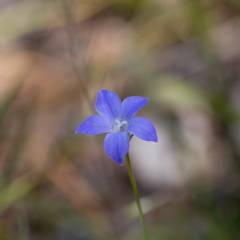
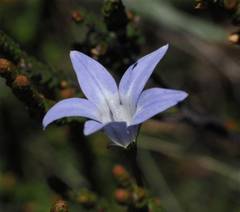
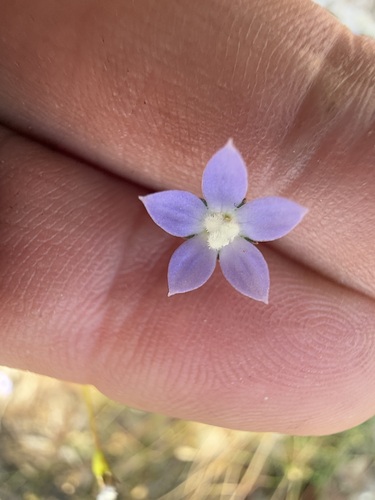
Wahlenbergia gracilis is a slender, wiry perennial (sometimes behaving as an annual) 15-60 cm (6-24 in) tall, forming a loose tuft of slender stems from a small rootstock. The narrow leaves are mostly 1-4 cm (0.4-1.6 in) long, alternate and sparse along the upper stems and crowded at the base, with slightly wavy margins. From spring to autumn it carries small, pale to mid-blue, five-lobed star- to bell-shaped flowers about 1-2 cm (0.4-0.8 in) across on long, thin stalks that nod and sway in the wind. The flowers close in dull weather and are followed by small capsules that release tiny seed. It grows in grassland, open woodland, and disturbed ground across much of Australia on a wide range of soils. The wiry, open habit reads as loose rather than massed, and individual flowers are short-lived, though the plant flowers over a long season and self-seeds freely.
Native Range
Native to Australia, where it is widespread across all mainland states and Tasmania, and also occurs in New Zealand and parts of Asia.Suggested Uses
Used in cottage and native gardens, meadow and grassland plantings, and rockeries where its nodding blue flowers mix through other low plants. Suited to containers and self-seeding informal borders. Also grown to attract small native pollinators.How to Identify
Appearance
Size & Dimensions
Height6" - 2'
Width/Spread6" - 1'
Bloom Information
Pale to mid-blue, five-lobed bell- to star-shaped flowers open from spring through to autumn on long, thin nodding stalks. The flowers attract small native bees and other insects and close in dull or wet weather. Small capsules follow and release seed that germinates readily.
Detailed Descriptions
Flower Description
pale to mid-blueFoliage Description
greenGrowing Conditions
Sun Requirements
Requires 5-9 hours of direct sunlight daily
• Full Sun: 6+ hours of direct sunlight
• Partial Shade: 3-6 hours of direct sunlight
• Full Shade: Less than 3 hours of direct sunlight
Care & Maintenance
Care Guide
Grows in full sun to light shade on free-draining soils across a wide pH range of about 5.5-7.5. It tolerates dry, poor soils and is drought-hardy once established, though it flowers more freely with occasional summer water. Rich, wet soils produce soft growth and shorten its life. Plants are short-lived but maintain themselves through self-sown seedlings, so a patch persists once established. It tolerates light frost, with top growth dying back in cold winters. Cutting back after the main flush encourages repeat flowering.Pruning
Cutting back or shearing spent stems after the main flowering flush encourages fresh growth and further flowers. No formative pruning is needed for this wiry, self-renewing plant. Seed heads can be left to allow self-seeding or trimmed to limit spread.Pruning Schedule
Prune: March–April
fall
Container Growing
Suitable for container growing
Minimum container size: 1 gallons