Wahlenbergia, Genus, spp., Multiple species,
- Genus
- Multiple species
Capebells
Mostly the Southern Hemisphere — South Africa, Australia, and New Zealand — with some species in the Northern Hemisphere
Overview
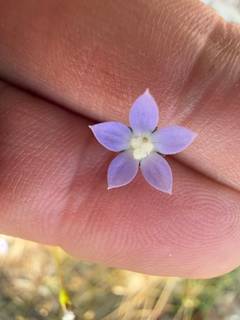
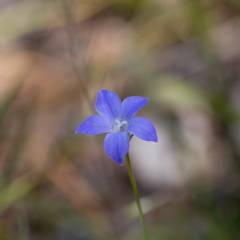
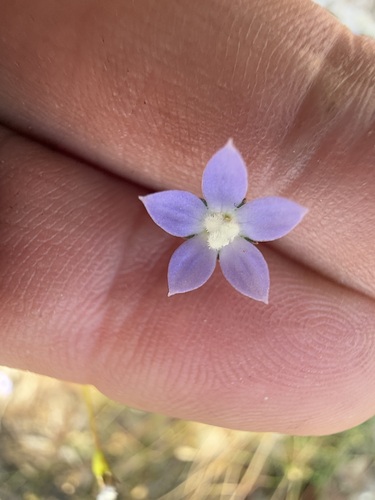
Wahlenbergia is a genus of about 260 species of annual and perennial herbs in the bellflower family (Campanulaceae), the Capebells, found mostly in the Southern Hemisphere and richest in South Africa, Australia, and New Zealand. Most form low tufts or sprawling mats 6 to 24 in (15 to 60 cm) high, with thin, wiry, much-branched stems rising from a basal cluster of small narrow leaves. The flowers are bell- to star-shaped, 0.3 to 1 in (8 to 25 mm) across, with five lobes, mostly in shades of blue and violet but also white, nodding or facing outward on slender stalks. Bloom continues over a long season from spring into autumn in mild climates. W. gloriosa, the royal bluebell, is the floral emblem of the Australian Capital Territory, while W. stricta is a common Australian bluebell of open ground. The genus grows on rocky slopes, grassland, and disturbed sites, tolerating poor soil and drought once established. Annual species complete their cycle in a season and self-seed, while perennial species return from a slender rootstock. The slender stems and small flowers give the plants an airy, see-through look in a planting.
Native Range
Wahlenbergia is native mainly to the Southern Hemisphere, with the greatest number of species in South Africa, Australia, and New Zealand, and scattered species reaching the Northern Hemisphere. The plants grow in grassland, rocky slopes, heath, and open disturbed ground.Suggested Uses
Wahlenbergia grows in rock gardens, gravel gardens, troughs, containers, and the front of sunny borders, where the low airy growth suits small spaces. It is planted in wildflower and meadow plantings for its long season of small blue flowers, spaced 8 to 12 in (20 to 30 cm) apart. The trailing and tufted species also spill over walls and edges.How to Identify
Appearance
Size & Dimensions
Height6" - 2'
Width/Spread6" - 1'6"
Bloom Information
Flowering runs over a long season, from spring through summer and into autumn in mild climates, with many small flowers opening in succession. Each bloom is bell- to star-shaped and 0.3 to 1 in (8 to 25 mm) across, in blue, violet, or white. Bees and other small insects work the flowers.
Detailed Descriptions
Flower Description
blue, violet, or white, bell- or star-shapedFoliage Description
greenGrowing Conditions
Sun Requirements
Requires 5-9 hours of direct sunlight daily
• Full Sun: 6+ hours of direct sunlight
• Partial Shade: 3-6 hours of direct sunlight
• Full Shade: Less than 3 hours of direct sunlight
Water & Climate
Water Needs
Drought Tolerance
Drought tolerant when established
Care & Maintenance
Care Guide
Wahlenbergia grows in full sun to light shade in free-draining soil of low to average fertility at a pH of about 5.5 to 7.5, including sandy, gravelly, and rocky ground. The genus tolerates drought once established and needs little water or feeding. Sharp drainage is the main requirement, as the plants rot in heavy, wet soil over winter. Hardiness varies by species, with W. gloriosa taking light frost while many South African species are tender. Annual species self-seed to renew themselves, and perennials can be divided in spring. Few pests affect the plants, though slugs may graze the soft new growth.Pruning
Wahlenbergia needs little pruning. Shearing the plants lightly after the main flush of bloom removes spent flowers and can bring a second show. Cut perennial species back to the basal tuft in late autumn or early spring, and leave some seed heads if self-sown seedlings are wanted.Pruning Schedule
Prune: August & November
summerfall
Container Growing
Suitable for container growing
Minimum container size: 1 gallons