Veratrum, Genus, nigrum, Species,
- Genus & species
black false hellebore
Overview
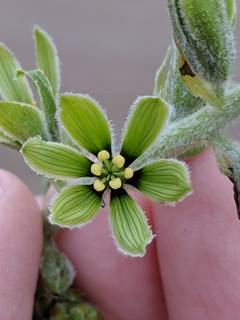
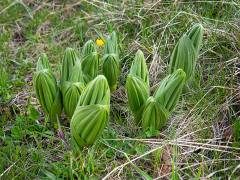
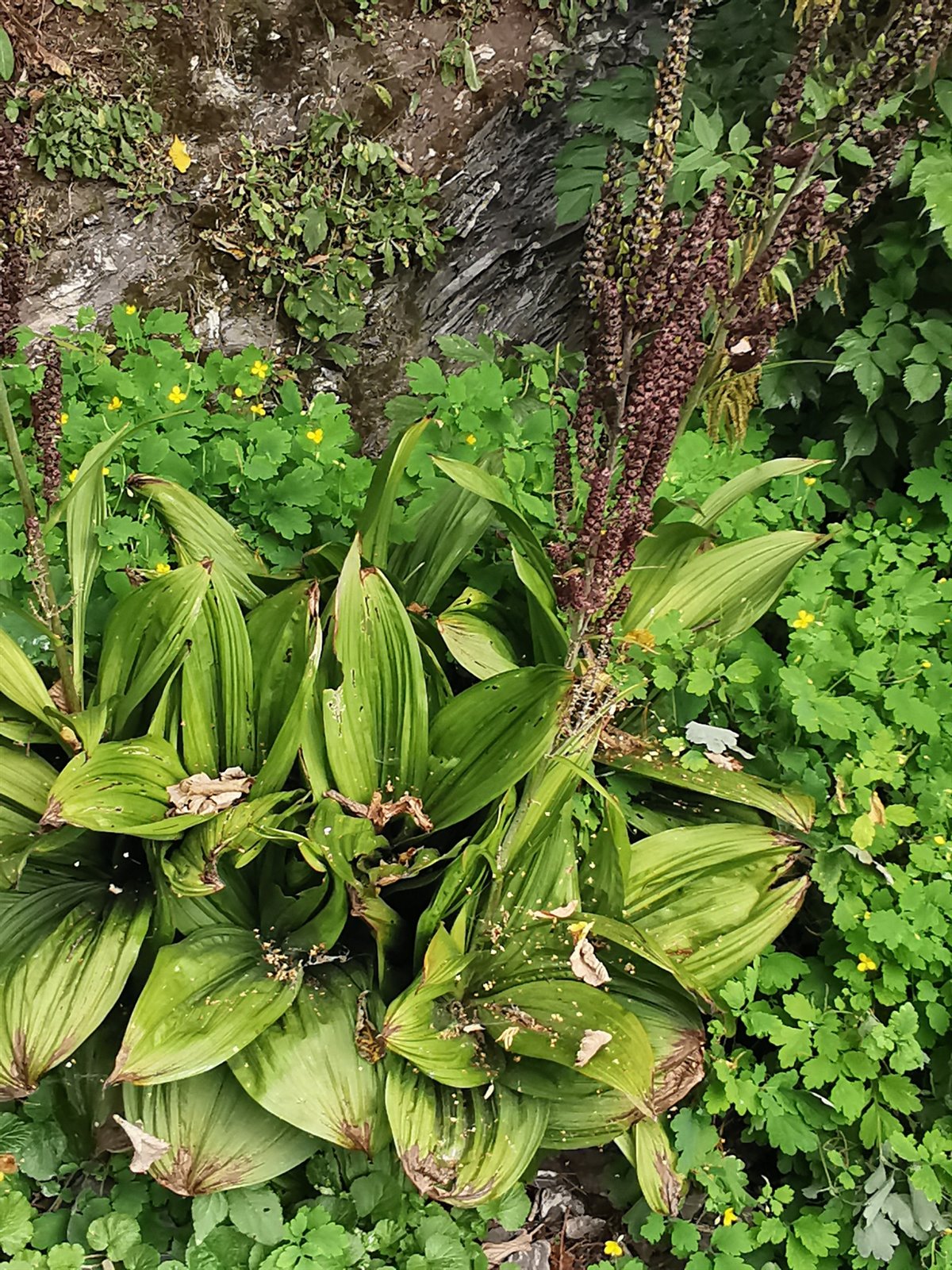
Veratrum nigrum is a clump-forming herbaceous perennial reaching 3-5 feet (0.9-1.5 m) in flower, with a basal mound of foliage 2-3 feet (60-90 cm) wide. The broad, oval to elliptic leaves are 6-12 inches (15-30 cm) long, strongly pleated along parallel veins, forming a bold ribbed mound in spring. In mid- to late summer, a tall branched flower stem rises well above the leaves, carrying many small, star-shaped flowers of deep maroon to near-black, each about 0.5 inch (1.2 cm) across. The plant grows slowly from a stout rhizome and takes several years to reach flowering size. All parts contain steroidal alkaloids and are highly poisonous if eaten. The pleated leaves can scorch in full sun and dry soil, browning at the edges by late summer.
Native Range
Native to southern Europe and across temperate Asia to Siberia, China, and Korea, where it grows in damp meadows, woodland clearings, and on grassy slopes.Suggested Uses
Grown in moist borders, woodland-edge plantings, and beside water, spaced 24-36 inches (60-90 cm) apart, where the pleated foliage forms a structural mound. Combines with other moisture-loving perennials in part shade. Its toxicity is a consideration in gardens used by children and pets.How to Identify
Appearance
Size & Dimensions
Height3' - 5'
Width/Spread2' - 3'
Bloom Information
Blooms in mid- to late summer, July to August, once plants are several years old. The branched spikes remain in flower for 3-5 weeks. Young plants may grow for several years before flowering for the first time.
Detailed Descriptions
Flower Description
Maroon to near-blackFoliage Description
GreenGrowing Conditions
Sun Requirements
Requires 3-8 hours of direct sunlight daily
• Full Sun: 6+ hours of direct sunlight
• Partial Shade: 3-6 hours of direct sunlight
• Full Shade: Less than 3 hours of direct sunlight
Care & Maintenance
Care Guide
Grows in full sun to part shade in deep, fertile, reliably moist soil; in hot regions afternoon shade reduces leaf scorch. Dry soil causes the pleated leaves to scorch and brown early. A spring mulch holds moisture and feeds the slow-growing crown. The plant resents disturbance and is slow to re-establish after division, so clumps are left in place. All parts are highly toxic if ingested, containing steroidal alkaloids, and the sap can irritate skin. Few pests trouble it.Pruning
Cut the spent flower stem and dying foliage to the ground in autumn. No routine pruning is needed during the growing season. The plant takes years to rebuild after division, so propagation by division is infrequent.Pruning Schedule
Prune: October
fall