Vanilla, Genus, spp., Multiple species,
- Genus
- Multiple species
vanilla orchid
Neotropics, with species in tropical Africa, Asia, and the Pacific
Overview
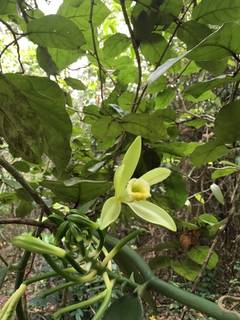
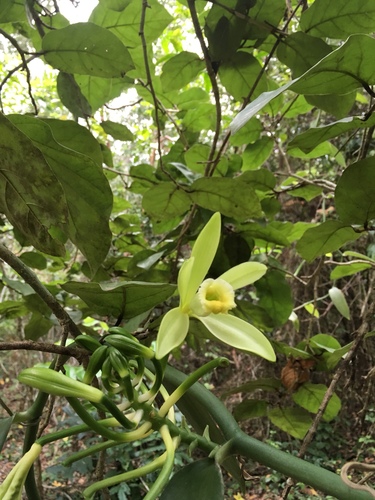
Vanilla is a genus of about 110 species of climbing orchids distributed across tropical regions of the Americas, Africa, Asia, and the Pacific. Plants produce long, succulent green stems that climb by clasping aerial roots, ascending host trees and supports to 10-15 m (33-50 ft) or more. Leaves are alternate, flattened, and thick, though several species are leafless and photosynthesize through their stems. The flowers are tubular to flared, 5-10 cm (2-4 in) across, in shades of greenish-yellow, cream, and white, each lasting roughly one day. Pollinated flowers develop into elongated capsules 10-25 cm (4-10 in) long, the source of commercial vanilla in V. planifolia. Most species root in the ground and climb into dappled canopy light, occupying a layer between terrestrial and epiphytic orchids. Growth is rapid under warm, humid conditions but stalls below about 10C (50F), and frost kills exposed stems. Species vary in cold sensitivity and leaf form, with neotropical members generally larger than African and Asian relatives. Cultivated plants need sustained warmth, support to climb, and high humidity, which limits outdoor use to frost-free tropical and subtropical zones.
Native Range
The genus is native to the humid tropics of the Americas, tropical and southern Africa, Madagascar, tropical Asia, and islands of the western Pacific. Its center of diversity lies in the neotropics of Mexico, Central America, and northern South America. V. planifolia originates in Mexico and Central America and is now grown commercially across many tropical countries.Suggested Uses
Grown on supports in tropical and subtropical gardens, in greenhouses, and as a flavoring crop in frost-free regions. Container culture with a climbing frame is used where winters are cold, kept under glass during cool months. V. planifolia is the species grown for vanilla production.How to Identify
Appearance
Size & Dimensions
Height33' - 50'
Width/Spread1' - 3'
Bloom Information
Flowering occurs mainly in spring and summer once stems reach several metres in length, often after two to three years of growth. Flowers open a few at a time along the stem, and each lasts about one day before wilting. Outside the range of natural pollinators, flowers set fruit only when hand-pollinated.
Detailed Descriptions
Flower Description
greenish-yellow to cream-whiteFoliage Description
greenGrowing Conditions
Sun Requirements
Requires 3-6 hours of direct sunlight daily
• Full Sun: 6+ hours of direct sunlight
• Partial Shade: 3-6 hours of direct sunlight
• Full Shade: Less than 3 hours of direct sunlight
Care & Maintenance
Care Guide
Plants grow in warm, humid conditions with daytime temperatures of 21-32C (70-90F) and little exposure below 10C (50F). They climb on a sturdy support such as a tree trunk, post, or trellis, rooting into a loose, organic, well-drained medium kept evenly moist but not waterlogged. Bright filtered light, comparable to the dappled shade of a forest edge, suits them, while direct midday sun in hot climates can scorch the foliage. Humidity above 80 percent and regular misting support active growth, and reduced watering in cooler months matches the slower growth period. Light feeding during the growing season sustains the long stems. Root rot follows poorly drained media, and scale insects and mealybugs are the common pests.Pruning
Stems are trimmed to limit length and to encourage branching once plants exceed their support. A cut just above a node produces side shoots, and removed sections root readily as cuttings. Trimming is done in the warm growing season so wounds heal quickly.Container Growing
Suitable for container growing
Minimum container size: 5 gallons