Uniola, Genus, paniculata, Species,
- Genus & species
sea oats
Southeastern United States, Caribbean, eastern Mexico
Overview
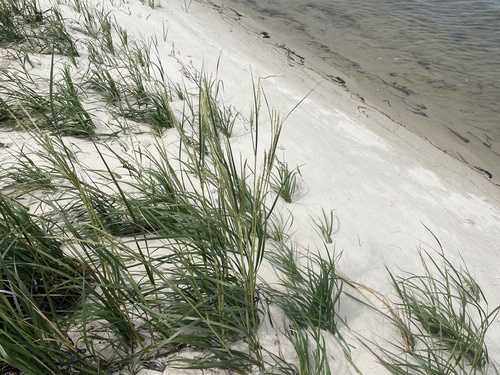
Uniola paniculata is a warm-season perennial grass of the family Poaceae native to coastal dunes along the Atlantic and Gulf coasts of the southeastern United States, the Caribbean, and eastern Mexico. It grows 3-6 feet (0.9-1.8 m) tall in upright clumps from deep, far-spreading rhizomes that anchor shifting sand. The narrow, arching blue-green to grey-green leaves are 12-24 inches (30-60 cm) long and taper to a narrow tip, curling as they dry. In late summer it produces large, drooping, flattened panicles 8-16 inches (20-40 cm) long of broad, oat-like spikelets that ripen from green to straw-gold and rustle in coastal wind. The deep roots and sand-trapping growth make it a primary builder and stabilizer of foredunes, but the same far-creeping rhizomes spread slowly and transplant poorly, and seed set is often low. Because of its role in protecting coastlines, it is legally protected from collection in several southeastern states. In cultivation it is used for dune restoration, coastal landscaping, erosion control, and as an ornamental grass in sandy, salt-exposed sites.
Native Range
Native to coastal dunes of the southeastern United States from Virginia south through Florida and west along the Gulf to Texas, and to the Bahamas, Caribbean, and eastern Mexico. It grows on foredunes and sandy beaches within reach of salt spray.Suggested Uses
Used for dune building and restoration, coastal erosion control, and as an ornamental grass in sandy, salt-exposed gardens. Its nodding seed heads also serve in dried arrangements where collection is legal.How to Identify
Appearance
Size & Dimensions
Height3' - 6'
Width/Spread2' - 3'
Colors
Bloom Information
Large nodding panicles emerge in summer, mainly June to August, green at first and ripening to straw-gold by autumn. The flat, oat-like spikelets persist into winter. Wind pollinates the inconspicuous florets.
Detailed Descriptions
Flower Description
green to straw-goldFoliage Description
blue-greenGrowing Conditions
Sun Requirements
Requires 6-12 hours of direct sunlight daily
• Full Sun: 6+ hours of direct sunlight
• Partial Shade: 3-6 hours of direct sunlight
• Full Shade: Less than 3 hours of direct sunlight
Care & Maintenance
Care Guide
Grow in full sun in deep, sandy, sharply drained soil; the species is adapted to salt spray, blowing sand, drought, and low-nutrient dunes. Once established it needs no watering or feeding and tolerates coastal exposure that few grasses survive. It spreads by deep rhizomes that stabilize sand but make mature clumps hard to move, so it is planted young from container stock. It grows slowly from seed, and germination is often low. In rich or wet inland soils it is shorter-lived and weaker. It is hardy in USDA zones 7-11.Pruning
Cut back old foliage in late winter before new growth begins to refresh the clump. Spent flower stems can be left for winter structure or removed once tattered. Digging established clumps damages the dune-binding roots.Pruning Schedule
Prune: February–March
winterearly spring
Container Growing
Suitable for container growing
Minimum container size: 5 gallons