Uniola, Genus, spp., Multiple species,
- Genus
- Multiple species
sea oats
Southeastern US, Gulf, Caribbean, and Mexico
Overview
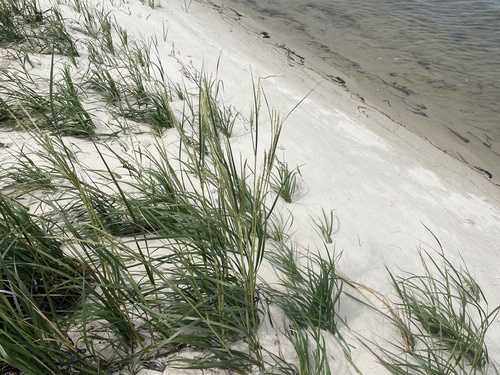
Uniola is a small genus of warm-season perennial grasses in the family Poaceae, native to coastal dunes and sandy shores of the southeastern United States, the Gulf of Mexico, the Caribbean, and northeastern Mexico. The principal species, sea oats (Uniola paniculata), forms upright clumps 3-6 feet (0.9-1.8 m) tall from deep, spreading rhizomes that bind shifting sand. The leaves are narrow, tough, and grey-green, rolling inward in dry weather to limit water loss. In late summer the stems carry large, drooping panicles of flat, overlapping spikelets that resemble oats and turn straw-gold as they ripen. The seed heads sway on long stalks and shed seed that is often sterile, so the grass spreads mainly by rhizome. As a primary dune-building plant, it tolerates salt spray, burial by sand, drought, and intense heat. Because of its role in stabilising dunes, harvesting or disturbing sea oats is restricted by law in several coastal states.
Native Range
Native to the southeastern United States, the Gulf and Atlantic coasts, the Caribbean, and northeastern Mexico, growing on foredunes and sandy beaches.Suggested Uses
Planted for dune stabilisation and coastal restoration and as an ornamental grass in seaside and gravel gardens. The dried seed heads are used in arrangements where local law permits harvesting.How to Identify
Appearance
Size & Dimensions
Height3' - 6'
Width/Spread1' - 3'
Colors
Bloom Information
Detailed Descriptions
Flower Description
green to straw-goldFoliage Description
grey-greenGrowing Conditions
Sun Requirements
Requires 6-12 hours of direct sunlight daily
• Full Sun: 6+ hours of direct sunlight
• Partial Shade: 3-6 hours of direct sunlight
• Full Shade: Less than 3 hours of direct sunlight