Turritis, Genus, spp., Multiple species,
- Genus
- Multiple species
tower mustard
Overview
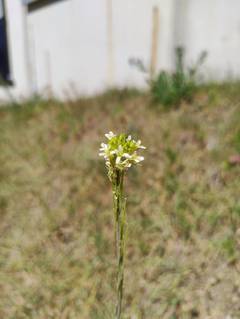
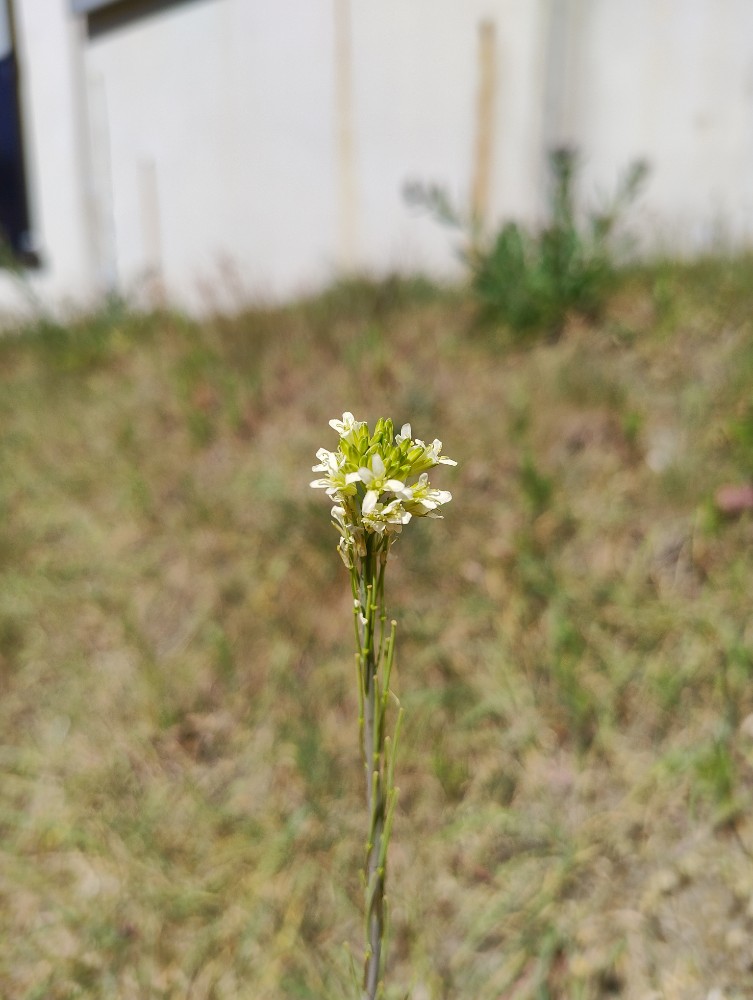
Turritis is a small genus of annual to biennial herbs in the mustard family (Brassicaceae), found across Europe, Asia, and North America in dry, open habitats. The most familiar species, tower mustard (Turritis glabra), forms a basal rosette of toothed, bristly leaves in its first year and sends up a single, slender, unbranched stem 1.5-5 feet (45-150 cm) tall in the second. Stem leaves are smooth, grey-green, and clasp the stem with arrow-shaped bases. Small four-petalled flowers, pale yellow to creamy white, cluster at the stem tip and open from late spring into summer. They ripen into long, narrow seedpods called siliques that stand erect and close to the stem, giving the plant a stiff, tower-like outline. The genus grows on sandy banks, rocky slopes, roadsides, and dry grassland, often on disturbed ground. Plants are short-lived and rely on abundant seed to persist; the foliage withers soon after flowering, leaving little above ground.
Native Range
Native across the temperate Northern Hemisphere, including Europe, temperate Asia, and North America, growing in dry grassland, sandy banks, rocky slopes, and disturbed ground.Suggested Uses
Grown in wildflower meadows, gravel gardens, and naturalistic plantings on poor, dry soils. Also useful in restoration of sandy grassland and as a larval host for some butterflies.How to Identify
Appearance
Size & Dimensions
Height1'6" - 5'
Width/Spread6" - 1'
Colors
Foliage Colors
Bloom Information
Detailed Descriptions
Flower Description
pale yellow to creamFoliage Description
grey-greenGrowing Conditions
Sun Requirements
Requires 6-12 hours of direct sunlight daily
• Full Sun: 6+ hours of direct sunlight
• Partial Shade: 3-6 hours of direct sunlight
• Full Shade: Less than 3 hours of direct sunlight