Tropaeolum, Genus, majus, Species,
- Genus & species
garden nasturtium
SunFull Sun – Part Shade
WaterMedium
Overview
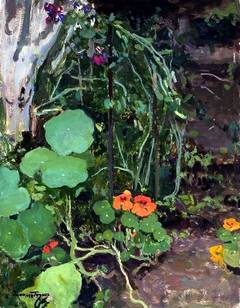
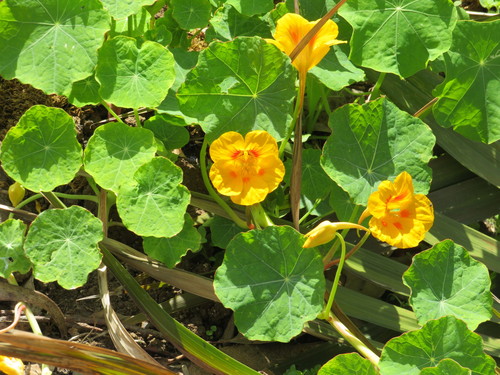
Tropaeolum majus is a fast-growing annual reaching 12-120 inches (30-300 cm) long depending on whether it trails, mounds, or climbs through supports by its coiling leaf stalks. The round, shield-shaped leaves are 2-6 inches (5-15 cm) across, blue-green, with the stalk joined near the center and pale radiating veins. Spurred, funnel-shaped flowers 1-2.5 inches (2.5-6 cm) across appear from early summer to frost in shades of orange, yellow, red, cream, and mahogany, each with a long backward-pointing nectar spur. Both the flowers and the peppery leaves are edible, and the green seed pods can be pickled. Plants grow quickly from large seeds sown in place and bloom within 8-12 weeks. The whole plant is frost-tender and dies with the first hard freeze. Flowering is heaviest in poor soils, while rich soil produces leafy growth and fewer flowers. Aphids gather on the stems and undersides of leaves in warm weather.
Native Range
Native to the Andes of South America, from Bolivia to Colombia. Grown worldwide as a garden annual and naturalized in mild, frost-free regions where it can persist and self-seed.Suggested Uses
Used in containers, hanging baskets, along walls and fences, and as a trailing edge in borders and vegetable gardens, spaced 10-12 inches (25-30 cm) apart. Climbing types are trained up trellises and netting. Both flowers and leaves are used in salads, and plants are grown among vegetables as a trap crop for aphids.How to Identify
Appearance
Size & Dimensions
Height1' - 10'
Width/Spread1' - 3'
Colors
Foliage Colors
Bloom Information
Detailed Descriptions
Flower Description
orange, yellow, red, cream, or mahoganyFoliage Description
blue-greenGrowing Conditions
Sun Requirements
Requires 4-10 hours of direct sunlight daily
• Full Sun: 6+ hours of direct sunlight
• Partial Shade: 3-6 hours of direct sunlight
• Full Shade: Less than 3 hours of direct sunlight
Water & Climate
Water Needs
Care & Maintenance
Care Guide
Grows in full sun to light shade in poor to average, well-drained soil. Water during dry spells to keep plants flowering; rich, heavily fertilized soil favors foliage over flowers. Sow large seeds directly in the spot where plants are to grow after the last frost, since nasturtiums establish poorly after transplanting. Trailing types ramble across the ground or climb supports by their twining leaf stalks. Aphids and cabbage white caterpillars are common, and nasturtiums are often grown near vegetables as a trap crop for aphids. Plants die at the first hard frost and are replaced from seed each year.Pruning
Pinch back long trailing stems to encourage branching and keep growth compact. Remove faded flowers and developing seed pods to prolong blooming, unless seeds are wanted for pickling or saving. Cut back or pull out plants after frost kills the top growth.Container Growing
Suitable for container growing
Minimum container size: 2 gallons