Tropaeolum, Genus, spp., Multiple species,
- Genus
- Multiple species
nasturtiums
Central and South America (centered in the Andes)
Overview
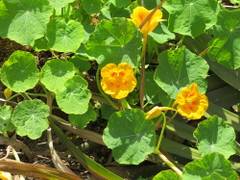
Tropaeolum is a genus of about 80 annual and perennial herbs in the family Tropaeolaceae, native to Central and South America, with the greatest concentration along the Andes. The genus, known broadly as nasturtiums, ranges from compact bushy plants to scrambling climbers that pull themselves up by coiling leaf stalks. The rounded, shield-shaped leaves are attached at the center, and the long-spurred flowers come in orange, red, yellow, cream, and mahogany. The common garden nasturtium T. majus is a fast annual with edible, peppery leaves, flowers, and seed pods; T. tuberosum is grown in the Andes for its edible tubers; and T. speciosum is a perennial climber from Chile. Most species grow in full sun and lean soil, since rich ground produces leaves at the expense of flowers. Aphids and cabbage-white caterpillars are frequent pests, and the tender annual types are killed by the first hard frost. Several perennial species are frost-hardy only in mild climates.
Native Range
Central and South America, from Mexico south through the Andes to Patagonia, where species grow in habitats ranging from warm lowlands to cool mountain slopes.Suggested Uses
Tropaeolum is grown in borders, containers, hanging baskets, and vegetable gardens, where trailing types spill over edges and climbers cover trellises and fences. The edible leaves, flowers, and seeds of T. majus are used in salads and as a garnish. Nasturtiums are also planted as companion plants to draw aphids away from crops.How to Identify
Appearance
Size & Dimensions
Height1' - 10'
Width/Spread1' - 3'
Bloom Information
Garden annual species flower from early summer until the first frost, while perennial species bloom in summer. The spurred flowers are rich in nectar and draw bees, and T. speciosum and T. peregrinum attract hummingbirds in their native range. Deadheading and lean soil prolong flowering on the annual types.
Detailed Descriptions
Flower Description
Orange, red, yellow, cream, or mahoganyFoliage Description
Green, sometimes blue-green or variegatedGrowing Conditions
Sun Requirements
Requires 6-10 hours of direct sunlight daily
• Full Sun: 6+ hours of direct sunlight
• Partial Shade: 3-6 hours of direct sunlight
• Full Shade: Less than 3 hours of direct sunlight
Care & Maintenance
Care Guide
Tropaeolum grows in full sun to light shade in light, free-draining soil of low fertility. Rich, heavily fed ground produces lush foliage and few flowers, so feeding is kept minimal. Annual species are sown directly where they are to grow, since their roots are easily damaged by transplanting, and they need steady moisture in hot weather. Climbing types need a trellis, netting, or neighboring plants for support. Tender perennial and tuberous species are lifted or mulched over winter outside frost-free areas, and aphids are the main pest across the genus.Pruning
Annual nasturtiums need little pruning beyond removing faded flowers and trimming overlong or straggly stems to keep growth tidy. Perennial and tuberous species are cut back as top growth dies down in autumn. Stems that root where they touch the ground can be cut away to limit spread.Container Growing
Suitable for container growing
Minimum container size: 2 gallons