Overview
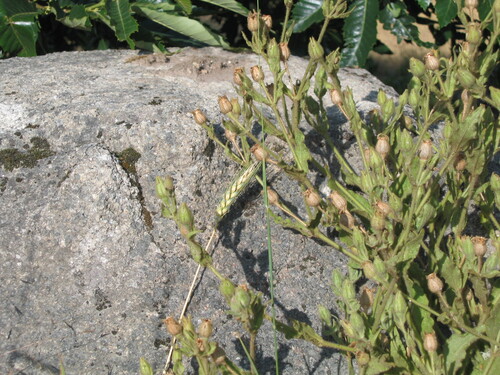
Triticum aestivum is an annual grass grown as a cereal, reaching 24-48 inches (60-120 cm) tall on hollow, jointed stems that form upright clumps from a fibrous root system. The flat leaf blades are 0.3-0.8 inch (8-20 mm) wide, green to grey-green, with a rough upper surface. Each stem ends in a terminal spike, or ear, 2-5 inches (5-12 cm) long, made up of overlapping spikelets in two rows; awned (bearded) and awnless forms both occur. Each spikelet holds several florets that are self-pollinated, and the grain ripens within dry, chaffy husks. The spike and stems ripen from green to golden straw at harvest. Winter forms are sown in autumn and need a cold period to flower, while spring forms are sown in spring and flower without chilling. After grain set the whole plant dies, and the dry stems are cut as straw. Lodging, where stems bend or fall in wind and rain, can flatten a crop before harvest.
Native Range
Derived in cultivation from wild wheats of the Fertile Crescent in the Near East, where its wild relatives still grow. It is not found truly wild but is grown across temperate, subtropical, and highland regions worldwide as a major cereal crop.Suggested Uses
Grown as a field cereal for grain that is milled into flour for bread, and the straw is used for bedding and mulch. Grown on a small scale in gardens and allotments for grain, ornamental ears, or as a cover crop dug in to add organic matter. Sown in blocks or drills rather than as single plants.How to Identify
Appearance
Size & Dimensions
Height2' - 4'
Width/Spread6" - 1'
Bloom Information
Flowering, or heading, occurs in late spring to early summer, with timing set by sowing date and variety. The self-pollinated florets shed pollen over a few days per spike. Grain fills over four to six weeks after flowering and ripens to golden straw. Winter-sown crops head earlier than spring-sown crops.
Detailed Descriptions
Flower Description
green to strawFoliage Description
green to grey-greenGrowing Conditions
Sun Requirements
Requires 6-12 hours of direct sunlight daily
• Full Sun: 6+ hours of direct sunlight
• Partial Shade: 3-6 hours of direct sunlight
• Full Shade: Less than 3 hours of direct sunlight
Water & Climate
Water Needs
Care & Maintenance
Care Guide
Grows in full sun on deep, fertile, well-drained loams with a near-neutral pH and steady moisture through the growing season. Winter wheat is sown in autumn and needs winter cold to flower, while spring wheat is sown in early spring. Nitrogen is applied to support grain yield, though excess nitrogen encourages lodging. Drought during flowering and grain fill reduces yield and grain size. Rusts, mildew, fusarium, and aphids affect crops in some seasons and regions. The crop is harvested when the grain is hard and the straw is dry, usually in mid to late summer.Pruning
No pruning is required. Cereal crops are not pruned; the whole plant is cut at harvest when the grain is ripe. In gardens, dead stems are cleared after the ears are gathered.Toxicity
Non-toxicPlanting Guide
Planting Methods & Timing
Planting Method
direct sow
Direct Sow Timing
Autumn for winter wheat; early spring for spring wheat
Days to Maturity
100–240 days
Plant Spacing
6 inches