Triteleia, Genus, laxa, Species,
- Genus & species
Ithuriel's spear
Overview
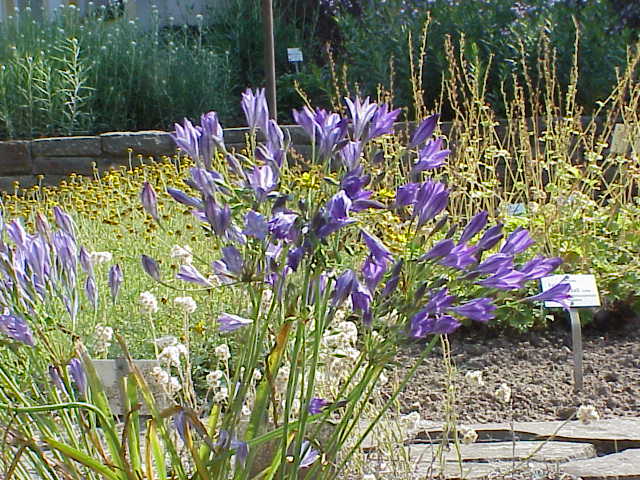
Triteleia laxa is a cormous perennial in the asparagus family, sending up one or two narrow, grass-like basal leaves 8-16 inches (20-40 cm) long that wither by flowering time. From late spring into early summer it forms leafless flowering stems 12-24 inches (30-60 cm) tall, each topped by an open umbel of 5 to 25 funnel-shaped flowers. Individual blooms are 1-1.5 inches (2.5-4 cm) long, violet-blue to purple, with six tepals fused at the base and spreading into a star at the mouth. The plant grows from a brown-coated corm 0.5-1 inch (1.5-2.5 cm) wide that sits 3-5 inches (8-13 cm) below the surface. Native to grasslands, oak woodlands, and clay soils of California and southern Oregon, it is adapted to wet winters and dry summers, going dormant after seed set. Foliage emerges with winter rains and dies back as temperatures rise. The corms multiply slowly by offsets and the species also self-sows. It is sensitive to summer irrigation, which can rot dormant corms in heavy soils.
Native Range
Native to California and southern Oregon, where it grows in open grasslands, oak woodlands, vernally moist meadows, and heavy clay soils. It ranges from coastal hills into the Sierra Nevada foothills.Suggested Uses
Triteleia laxa is grown in rock gardens, dry borders, and meadow plantings, and naturalizes in grassy areas with dry summers. Its cut stems last well in arrangements, and the flowers draw bees and other pollinators.How to Identify
Appearance
Size & Dimensions
Height1' - 2'
Width/Spread6" - 1'
Bloom Information
Detailed Descriptions
Foliage Description
greenGrowing Conditions
Sun Requirements
Requires 6-10 hours of direct sunlight daily
• Full Sun: 6+ hours of direct sunlight
• Partial Shade: 3-6 hours of direct sunlight
• Full Shade: Less than 3 hours of direct sunlight
Care & Maintenance
Care Guide
Triteleia laxa grows in full sun to light shade and tolerates heavy clay as well as loam, needing sharp drainage during dormancy. It depends on winter and spring moisture but stays dry through summer, when the corms rest. Established plantings need no irrigation in regions with wet winters. Corms can be lifted and divided once foliage dies back. In summer-wet climates, growing the corms in containers keeps them dry during dormancy.Pruning
No pruning is needed beyond cutting spent flower stems after bloom. Foliage is left in place until it yellows so the corm can store energy. Seed heads can be removed to limit self-sowing.Pruning Schedule
summer
Container Growing
Suitable for container growing
Minimum container size: 1 gallons