Triquetrella, Genus, papillata, Species,
- Genus & species
Australia (all states); also New Zealand, southern Africa, South America
Overview
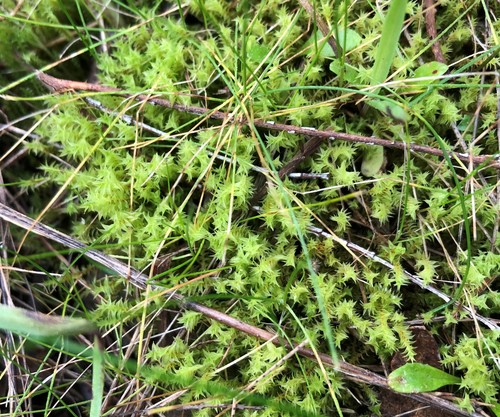
Triquetrella papillata is a small terrestrial moss forming low turfs or loose mats on soil. Individual stems are 0.2-0.8 inch (5-20 mm) tall, branched, and clothed in small leaves 0.04-0.08 inch (1-2 mm) long. Leaves are lance-shaped to triangular, spreading when moist and twisting or incurving against the stem when dry, with margins recurved and the surface covered in low papillae that give the plant a dull, non-glossy texture. Colour ranges from dull green when moist to yellowish or brownish-green when dry. A single midrib runs most of the length of each leaf. The plant anchors to the substrate by thread-like rhizoids rather than true roots and has no flowers; reproduction is by spores released from capsules borne on short stalks, supplemented by vegetative fragmentation. Capsules are cylindrical and erect when present, though fruiting is infrequent in many populations. Growth occurs mainly after rain, when the colony rehydrates and turns green within minutes; during dry periods the colony becomes desiccated and dormant, reviving when moisture returns. Mats spread slowly outward over bare or disturbed soil and stabilise the surface.
Native Range
Native to Australia, where it is widespread across all states in open, disturbed, and bare ground. It also occurs in New Zealand, southern Africa, and South America. Grows on clay and loam soils in grassland, woodland, tracksides, and degraded sites from sea level to montane elevations.Suggested Uses
Used in soil stabilisation on bare and disturbed ground, in moss gardens, and in terrariums where surface moisture is maintained. Forms ground-covering patches between pavers and on the surface of container soil. Spreads slowly and suits small-scale plantings rather than rapid cover.How to Identify
Appearance
Size & Dimensions
Height1" - 1"
Width/Spread2" - 1'
Bloom Information
Does not flower; Triquetrella papillata reproduces by spores rather than seed. Spore capsules, when produced, mature mainly through the cooler, wetter months from autumn to spring, though many colonies persist for years without fruiting and spread instead by fragmentation.
Detailed Descriptions
Foliage Description
dull green to yellowish-brownGrowing Conditions
Sun Requirements
Requires 3-8 hours of direct sunlight daily
• Full Sun: 6+ hours of direct sunlight
• Partial Shade: 3-6 hours of direct sunlight
• Full Shade: Less than 3 hours of direct sunlight
Care & Maintenance
Care Guide
As a moss, it grows from rhizoids on the soil surface and takes up water and nutrients through its leaves rather than from a root system. Colonies need consistent surface moisture during active growth and tolerate complete desiccation between rains, reviving when wet. It establishes on compacted clay and loam in full sun to light shade and is sensitive to deep shade, thick leaf litter, and frequent soil disturbance. Foot traffic and competition from vascular plants reduce cover over time. No fertiliser is needed; high nutrient levels favour competing plants and algae.Pruning
Requires no pruning. Colonies can be lifted and pressed onto moist bare soil to start new patches. Removing overlying leaf litter maintains exposed colonies, since accumulated debris and shade cause the moss to thin.Container Growing
Suitable for container growing
Minimum container size: 1 gallons