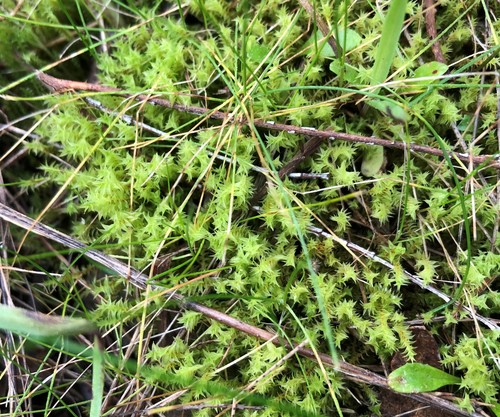
Triquetrella, Genus, spp., Multiple species,
- Genus
- Multiple species
triquetrella moss
Southern Hemisphere and warm temperate zones
Overview
Triquetrella is a genus of small mosses in the family Pottiaceae, found on soil and rock in warm-temperate and subtropical regions of the Southern Hemisphere and beyond, including Australia, southern Africa, and the Americas. The plants form low turfs or mats rarely more than 0.4-1.2 inches (1-3 cm) tall. Stems are erect to spreading and clothed in small leaves that are often arranged in three rows, a feature reflected in the genus name. The leaves are lance-shaped to triangular, with margins that are frequently recurved and a surface bearing tiny papillae that give the plants a dull, grey-green to brownish cast when dry. Like other mosses, Triquetrella lacks true roots, flowers, and vascular tissue, anchoring instead by thread-like rhizoids and absorbing moisture directly through its leaves. Reproduction is by spores released from capsules raised on short stalks, and by fragmentation. The genus colonises bare, disturbed, and seasonally dry ground, surviving drought by curling its leaves and reviving when moisture returns.
Native Range
Species occur across the Southern Hemisphere and warmer temperate zones, including Australia, New Zealand, southern Africa, and parts of North and South America, growing on soil, rock, and disturbed ground.Suggested Uses
Used in moss gardens, green roofs, terraria, and rock features where a low, drought-tolerant ground layer is wanted. Also used in ecological studies of soil-crust and pioneer vegetation.How to Identify
Appearance
Bloom Information
Mosses do not flower. Triquetrella reproduces by spores borne in capsules that mature mainly during the cooler, wetter months, releasing spores when the lid-like operculum falls away.
Detailed Descriptions
Foliage Description
grey-green to brownGrowing Conditions
Sun Requirements
Requires 3-8 hours of direct sunlight daily
• Full Sun: 6+ hours of direct sunlight
• Partial Shade: 3-6 hours of direct sunlight
• Full Shade: Less than 3 hours of direct sunlight
Water & Climate
Water Needs
Drought Tolerance
Drought tolerant when established
