Tripolium, Genus, pannonicum, Species,
- Genus & species
sea aster
Europe, western Asia, and North Africa
Overview
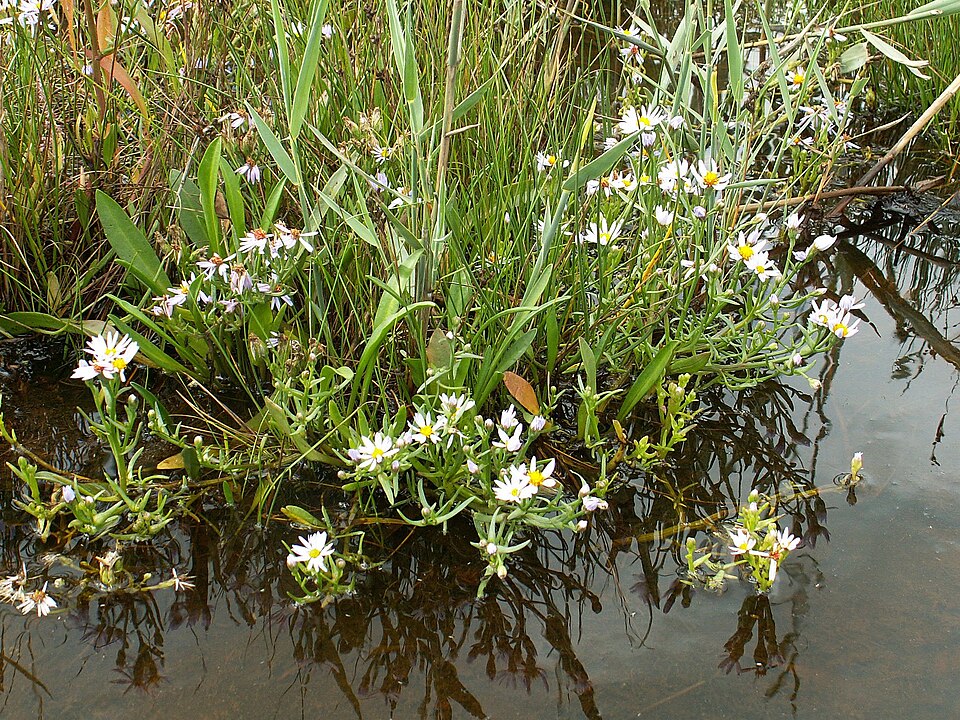
Tripolium pannonicum, formerly Aster tripolium, is a salt-tolerant biennial or short-lived perennial in the daisy family Asteraceae, growing 6-39 inches (15-100 cm) tall and 8-18 inches (20-45 cm) wide. It forms a basal rosette of fleshy, narrow, untoothed leaves 2-5 inches (5-12 cm) long, dark green and slightly succulent, from which branched, reddish flowering stems rise in the second year. From July to October it carries loose heads of daisy flowers 0.4-0.8 inch (10-20 mm) across, each with a ring of pale blue to mauve-purple ray florets around a yellow disc; a rayless form with yellow heads occurs in some populations. The seeds bear a pappus of hairs and are dispersed by wind and tidal water. The species grows on coastal saltmarshes, tidal mudflats, sea walls, and brackish ditches around the coasts of Europe, western Asia, and North Africa, tolerating regular salt-water flooding that excludes most other plants. It needs salty or brackish, wet ground and full sun, and is short-lived and prone to dying after flowering, so it relies on steady self-seeding to persist.
Native Range
Native to the coasts of Europe, western Asia, and North Africa, from Scandinavia and Britain south to the Mediterranean and east into central Asia. It grows in saltmarshes, on tidal mudflats and sea walls, and along brackish ditches and estuaries on saline, waterlogged soils.Suggested Uses
Grown in coastal and seaside gardens, brackish pond and bog margins, and conservation plantings on saline ground. The young fleshy leaves are edible and gathered as a samphire-like vegetable. It also stabilises soft estuarine mud and is a source of late nectar in wildlife plantings.How to Identify
Appearance
Size & Dimensions
Height6" - 3'3"
Width/Spread8" - 1'6"
Bloom Information
Flowering runs from July to October, later than most coastal flowers, with heads opening in succession on the branched upper stems. The blue-and-yellow daisies draw bees, hoverflies, butterflies, and other late-season insects to the saltmarsh. After flowering the heads form fluffy seed clocks that disperse on wind and tide.
Detailed Descriptions
Flower Description
pale blue to mauve-purple with yellow centreFoliage Description
dark greenGrowing Conditions
Sun Requirements
Requires 6-12 hours of direct sunlight daily
• Full Sun: 6+ hours of direct sunlight
• Partial Shade: 3-6 hours of direct sunlight
• Full Shade: Less than 3 hours of direct sunlight
Care & Maintenance
Care Guide
Tripolium pannonicum grows in full sun on permanently moist to wet, saline or brackish soils, and withstands tidal flooding and salt spray that few garden plants survive. In cultivation it suits coastal gardens, wildlife ponds with brackish margins, and salt-affected ground, where it needs constant moisture and grows poorly in dry, free-draining beds. It is raised from seed sown in autumn or spring, often flowering and then dying in its second year, so a patch is kept going by letting some plants set and shed seed. No feeding is required on natural saltmarsh-type soils. Salt is not essential for survival but increases its vigour and reduces competition from other plants. Plants in pots need a deep container and regular watering with no risk of drying out.Pruning
No formal pruning is needed. Spent flowering stems can be cut down in late autumn or winter, or left standing so the seed disperses naturally. Leaving a few seed heads in place maintains the colony, since individual plants are short-lived.Container Growing
Suitable for container growing
Minimum container size: 3 gallons