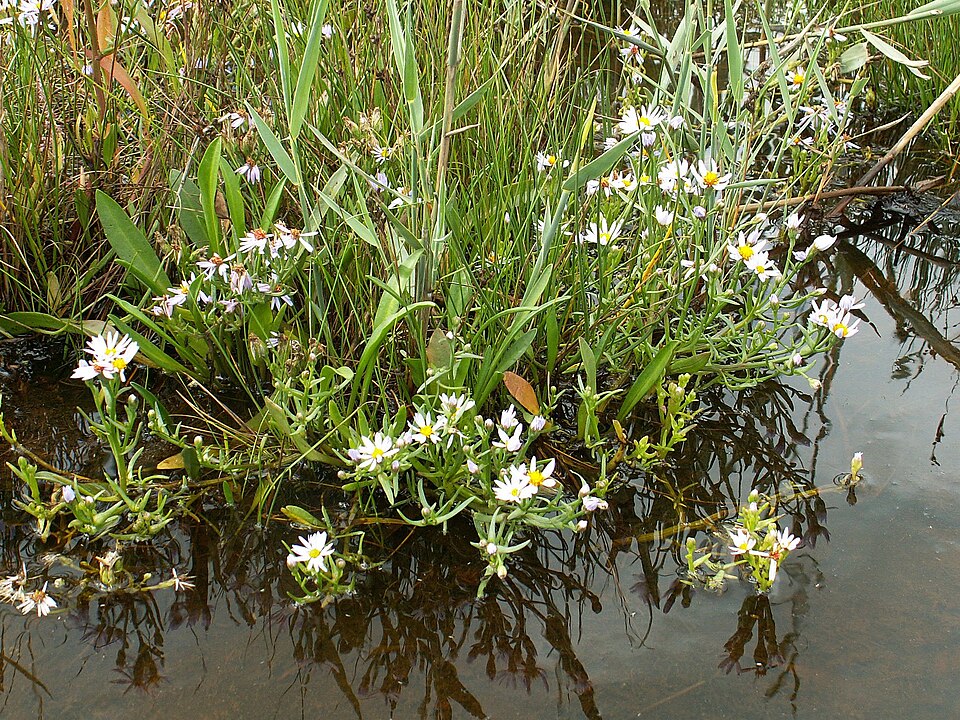
Tripolium, Genus, spp., Multiple species,
- Genus
- Multiple species
sea aster
Europe, North Africa, and temperate Asia
Overview
Tripolium is a genus in the daisy family (Asteraceae) consisting mainly of the sea aster, Tripolium pannonicum, a halophyte of coastal marshes across Europe, North Africa, and temperate Asia. Plants are annual to short-lived perennial herbs forming upright, branched stems 8-32 inches (20-80 cm) tall. The leaves are fleshy, narrow, and lance-shaped, an adaptation to salt-laden soils, and are arranged alternately along the stems. Flower heads, 0.4-0.8 inch (10-20 mm) across, are carried in loose, branched clusters; each head has lilac to pale-purple ray florets surrounding a yellow disc, though a rayless form occurs in some populations. Blooming runs through late summer and autumn, and the seeds bear a pappus of hairs that aids wind dispersal. The genus occupies salt marshes, estuaries, tidal mudflats, and inland saline soils, tolerating periodic flooding by brackish water. The young leaves and shoots are edible and are harvested as a coastal vegetable. Its salt tolerance limits competition, allowing it to colonise ground where few other flowering plants persist.
Native Range
Native to coastal and inland saline habitats across Europe, North Africa, and temperate Asia, from the Atlantic and Mediterranean coasts eastward to central Asia.Suggested Uses
Grown in coastal and seaside gardens, salt marshes, and rain gardens with saline or brackish soils. The young leaves and shoots are also cultivated as an edible vegetable.How to Identify
Appearance
Size & Dimensions
Height8" - 2'8"
Width/Spread1' - 2'
Colors
Bloom Information
Detailed Descriptions
Flower Description
lilac to pale purple with yellow centreFoliage Description
fleshy green to grey-greenGrowing Conditions
Sun Requirements
Requires 6-12 hours of direct sunlight daily
• Full Sun: 6+ hours of direct sunlight
• Partial Shade: 3-6 hours of direct sunlight
• Full Shade: Less than 3 hours of direct sunlight
