Triodanis, Genus, biflora, Species,
- Genus & species
Venus's looking-glass
SunFull Sun – Part Shade
WaterLow
Overview
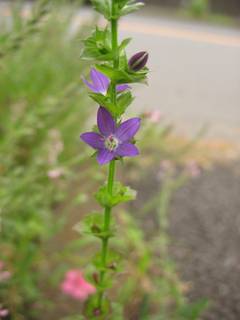
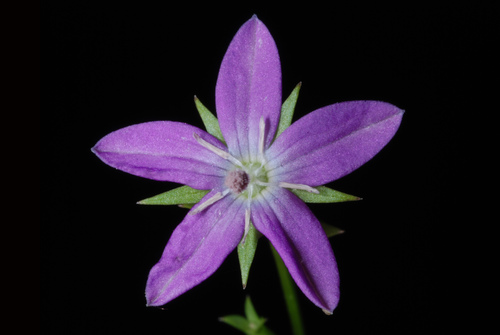
Triodanis biflora is a slender annual in the bellflower family, with erect, sometimes branched stems 4-16 inches (10-40 cm) tall. The small alternate leaves are ovate to lance-shaped, 0.3-0.8 inch (8-20 mm) long, with shallow rounded teeth, and clasp the stem. Violet to blue-purple star-shaped flowers, each with five pointed lobes and about 0.3-0.5 inch (8-13 mm) across, sit in the upper leaf axils. Only the uppermost flowers open fully; the lower flowers stay closed and self-pollinate, setting seed without opening. The fruit is a small capsule that releases seed through pores in its side. It grows in fields, lawns, roadsides, and other open, disturbed ground across much of the Americas. As an annual it completes its life cycle in one season and relies on self-sown seed to return, so stands shift from year to year and can be sparse in dry springs.
Native Range
Triodanis biflora is native to North and South America, ranging through much of the United States, Mexico, Central America, and into South America. It grows in open, disturbed ground, fields, and grassy areas.Suggested Uses
Used in wildflower meadows, naturalized areas, and the margins of native plantings where light reseeding is acceptable. The spring flowers draw small bees. It is sown or allowed to self-sow in open ground rather than grown as a formal bedding plant.How to Identify
Appearance
Size & Dimensions
Height4" - 1'4"
Width/Spread2" - 6"
Bloom Information
Detailed Descriptions
Flower Description
violet to blue-purpleFoliage Description
greenGrowing Conditions
Sun Requirements
Requires 4-10 hours of direct sunlight daily
• Full Sun: 6+ hours of direct sunlight
• Partial Shade: 3-6 hours of direct sunlight
• Full Shade: Less than 3 hours of direct sunlight
Water & Climate
Water Needs
Care & Maintenance
Care Guide
Grows in full sun to part shade in average, well-drained soil with a pH near 5.5-7.5, and tolerates poor, dry, and disturbed ground. As an annual it grows quickly from seed in spring, flowers, sets seed, and dies by midsummer. It needs little care and no feeding in average soil. Excess water and rich soil produce lank growth. Plants reseed freely, and a stand maintains itself from year to year unless the ground is heavily disturbed.Pruning
No pruning is needed. Plants can be pulled after seed set if reseeding is not wanted. Removing plants before the lower closed flowers ripen limits self-sowing.Container Growing
Suitable for container growing
Minimum container size: 1 gallons
Toxicity
Non-toxicPlanting Guide
Planting Methods & Timing
Planting Method
direct sow
Direct Sow Timing
Sow in early spring after the last frost, or in fall in mild climates
Days to Maturity
60–90 days
Plant Spacing
4 inches