Trachymene, Genus, incisa, Species,
- Genus & species
Australian parsnip
Overview
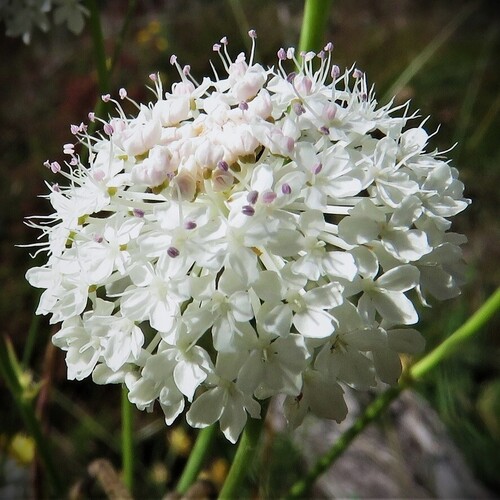
Trachymene incisa is a perennial herb growing from a thickened, somewhat tuberous root, forming a basal cluster of deeply divided (incised) leaves and slender flowering stems 8-24 inches (20-60 cm) tall. The leaves are divided into narrow segments, 1-3 inches (2.5-8 cm) long, on long stalks. Small white flowers are grouped into rounded, umbrella-like heads about 0.4-0.8 inch (10-20 mm) across, held on wiry stems above the foliage through summer. The flower heads age to clusters of small dry fruits. The plant dies back to its root over dry or cold periods and regrows when conditions return. It grows in sandy soils in heath, woodland, and open forest. Above-ground growth is sparse, and the plant can be inconspicuous outside the summer flowering period.
Native Range
Native to eastern Australia, from Queensland through New South Wales to Victoria. Grows in heath, dry sclerophyll woodland, and open forest on sandy, well-drained soils, often in areas that are seasonally dry.Suggested Uses
Planted in native grassland and heath gardens, rockeries, and the front of dry borders at 8-12 inch (20-30 cm) spacing. Suits naturalistic and water-conserving plantings where summer flowering and seasonal dormancy fit local rainfall. Grows in containers of at least 2 gallons (8 L) with free-draining mix.How to Identify
Appearance
Size & Dimensions
Height8" - 2'
Width/Spread6" - 1'
Bloom Information
Flowers in summer, mainly November to February in eastern Australia. The rounded white flower heads open over several weeks on wiry stems. Flowering is followed by dry fruits, after which the above-ground growth dies back.
Detailed Descriptions
Foliage Description
GreenGrowing Conditions
Sun Requirements
Requires 4-8 hours of direct sunlight daily
• Full Sun: 6+ hours of direct sunlight
• Partial Shade: 3-6 hours of direct sunlight
• Full Shade: Less than 3 hours of direct sunlight
Care & Maintenance
Care Guide
Grows in full sun to part shade in sandy, well-drained soils and tolerates seasonal dryness through dormancy. Moisture during the growing season supports leaf and flower growth, while drier conditions suit the dormant root. It grows poorly in heavy, wet soils, where the fleshy root can rot. The plant dies back over dry or cold periods and regrows from the root when moisture returns. Soil disturbance over the root can damage the plant. Snails may graze the soft young leaves in wet weather.Pruning
Cut spent flower stems back after the fruits dry if self-seeding is not wanted, or leave them to allow seeding. Remove browned foliage as the plant dies back into dormancy. No other trimming is required, as growth renews from the root.Container Growing
Suitable for container growing
Minimum container size: 2 gallons