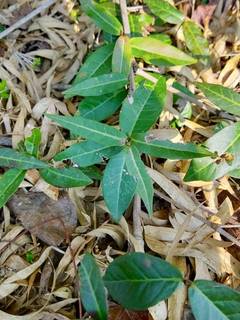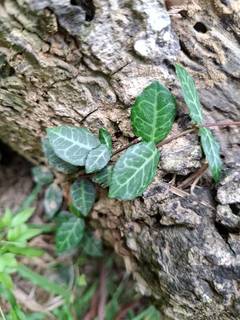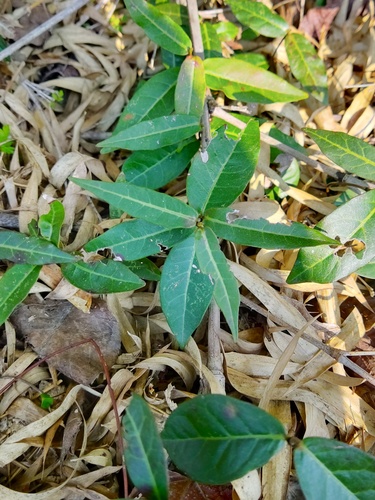
Trachelospermum, Genus, spp., Multiple species,
- Genus
- Multiple species
star jasmines
Eastern and southeastern Asia, with one species in the southeastern United States
Overview
Trachelospermum is a genus of about 15 species of evergreen woody climbers in the dogbane family (Apocynaceae), native to eastern and southeastern Asia, with one species in the southeastern United States. Twining stems climb 10–25 feet (3–7.5 m) and release a milky sap when cut. Opposite leaves are leathery, glossy, oval to lance-shaped, 1–4 inches (2.5–10 cm) long, dark green and often turning bronze or red in cold winters. Flowers are white to cream, 0.5–1 inch (1.5–2.5 cm) across, with five lobes twisted like a pinwheel, carried in clusters and strongly fragrant, especially in the evening. Bloom comes mainly in late spring and early summer. Fruit is a pair of slender pods 4–9 inches (10–23 cm) long releasing tufted, wind-borne seeds. Without support the stems trail and root to form a ground cover. Plants tolerate shade but flower most in sun. The sap can irritate skin, and all parts are mildly toxic if eaten.
Native Range
Native to China, Japan, Korea, India, and Southeast Asia, with T. difforme native to the southeastern United States. Grows in woodland, thickets, and along streams, climbing trees and rocks, from sea level to about 4,000 feet (1,200 m).Suggested Uses
Grown on trellises, fences, walls, and arbors, and as a ground cover on banks, spaced 3–5 feet (0.9–1.5 m) apart, with T. jasminoides the most common species. Plants are used for evening fragrance near patios and entries. The twining habit and rooting runners limit use where spread is unwanted.How to Identify
Appearance
Size & Dimensions
Height10' - 25'
Width/Spread3' - 6'
Bloom Information
Main flowering comes in late spring and early summer, generally May to June, with scattered later bloom in warm climates. The flush of fragrant flowers lasts 3–5 weeks. Bloom is heaviest on plants in full sun, while shaded plants grow well but flower sparsely.
Detailed Descriptions
Flower Description
white to creamFoliage Description
dark green, bronzing in winterGrowing Conditions
Sun Requirements
Requires 4-10 hours of direct sunlight daily
• Full Sun: 6+ hours of direct sunlight
• Partial Shade: 3-6 hours of direct sunlight
• Full Shade: Less than 3 hours of direct sunlight
Care & Maintenance
Care Guide
Grows in full sun to part shade and average, well-drained soil with moderate water once established, tolerating a range of soils and brief drought. Plants are hardy in USDA zones 8–10, with foliage bronzing or dropping near their cold limit. New plants are slow to start but climb steadily once rooted. Stems twine onto supports and root where they touch soil, spreading as a ground cover. Scale and sooty mold occur on stressed plants. The milky sap stains and can irritate skin.Pruning
Prune after the main flowering flush to control size and direct the twining stems, since the next season's flowers form on mature wood. Wayward and rooted runners can be cut back at any time to limit spread. Hard renewal pruning in spring regrows leggy, bare-based plants.Container Growing
Suitable for container growing
Minimum container size: 5 gallons