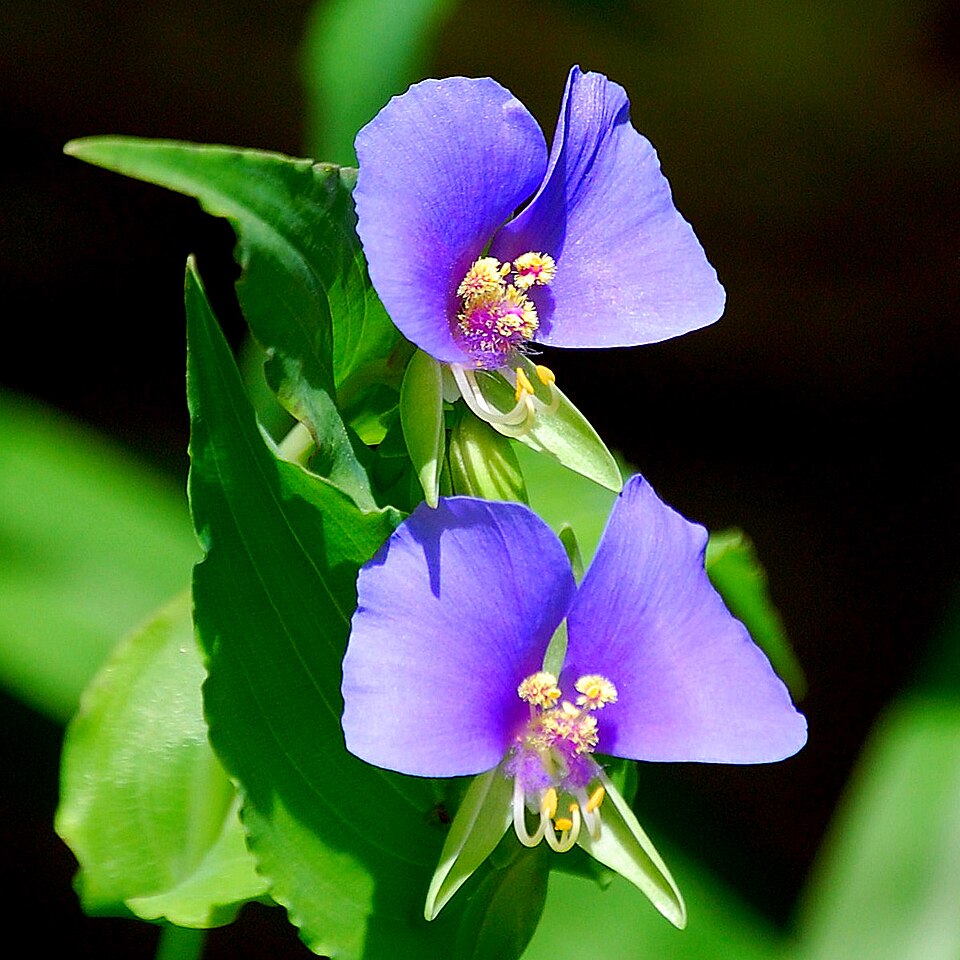
Tinantia, Genus, anomala, Species,
- Genus & species
false dayflower
SunPart Shade – Full Shade
WaterMedium
Overview
A spring annual in the spiderwort family growing 8–24 inches (20–60 cm) tall, with succulent, branching stems. Leaves are alternate, lance-shaped, 2–6 inches (5–15 cm) long, with sheathing bases that clasp the stem, medium green and somewhat fleshy. Pale blue to lavender flowers, about 0.5–0.75 inch (1.3–2 cm) across, have three petals, with the lower petals fringed and bearded stamens at the center. Flowers open in the morning and close by afternoon, with new flowers opening over many days. Bloom occurs from March to May. Each flower lasts a single day, and seed capsules form afterward, splitting to release several seeds. The plant grows from a shallow root system, completes its life cycle in one season, and dies after setting seed. It reseeds readily where soil is left undisturbed. Foliage yellows and collapses as the soil dries in late spring.
Native Range
Native to central Texas, largely on the Edwards Plateau and adjacent areas. Grows in shaded, moist limestone soils along canyon bottoms, streambanks, and wooded slopes.Suggested Uses
Grown in shaded native plantings, woodland gardens, and naturalized areas at 8–12 inch (20–30 cm) spacing. Used as a spring-flowering, self-seeding annual under trees and along shaded paths. Suited to cool-season shade gardens, where it fills in before summer dormancy.How to Identify
Appearance
Size & Dimensions
Height8" - 2'
Width/Spread6" - 1'
Bloom Information
Flowers from March to May, opening in the cool morning hours and closing by early afternoon. Individual flowers last one day, but a plant produces new flowers for 4–6 weeks. Flowering ends as temperatures rise and soils dry in late spring.
Detailed Descriptions
Flower Description
Pale blue to lavenderFoliage Description
Medium greenGrowing Conditions
Sun Requirements
Requires 2-5 hours of direct sunlight daily
• Full Sun: 6+ hours of direct sunlight
• Partial Shade: 3-6 hours of direct sunlight
• Full Shade: Less than 3 hours of direct sunlight
Water & Climate
Water Needs
Care & Maintenance
Care Guide
Grows in partial to full shade in moist, well-drained soils, including the limestone soils of its native range. Water during dry spells in spring to extend bloom and delay dormancy. The plant is a cool-season annual that dies back as summer heat arrives. It reseeds freely, returning from seed the following spring where soil is undisturbed. Few pests or diseases affect it. Seedlings can be thinned to manage density.Pruning
No structural pruning is needed for this annual. Spent plants can be left to set seed for the next season or cleared once the foliage yellows. Removing seed capsules before they open limits self-seeding. No other pruning applies.Container Growing
Suitable for container growing
Minimum container size: 1 gallons
Toxicity
Non-toxicPlanting Guide
Planting Methods & Timing
Planting Method
direct sow
Direct Sow Timing
Fall or early spring
Plant Spacing
10 inches