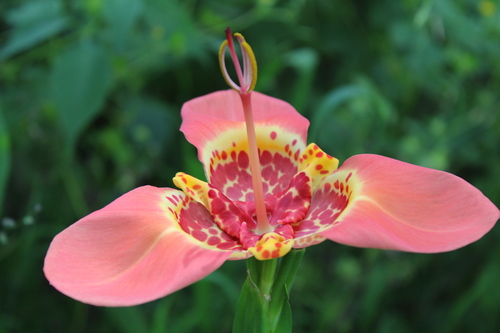
Tigridia, Genus, pavonia, Species,
- Genus & species
Mexican shell flower
Mexico (Jalisco, Nayarit, Oaxaca, Veracruz) and Guatemala; open hillsides and pine-oak woodland, 5,000-9,000 feet (1,500-2,700 m)
Overview
Tigridia pavonia is the Mexican shell flower (peacock flower), a cormous perennial growing 18-24 inches (45-60 cm) tall and 6-9 inches (15-23 cm) wide. Flowers 4-6 inches (10-15 cm) across with three large outer tepals in solid yellow, orange, red, pink, or white and a deeply cupped central cup heavily spotted and blotched in contrasting red, purple, or brown from July through September. Each flower lasts one day, but 4-8 buds per stem provide 3-5 weeks of bloom. Bright green sword-like pleated foliage 12-18 inches (30-45 cm) in a flat fan arrangement. In the iris family (Iridaceae). The genus name means 'tiger-like' (Latin tigris), referencing the spotted central cup. The species name 'pavonia' references the peacock (Pavo). Approximately 55 species in the genus, all from the Americas. Grows from a corm. Lift corms in zones 5-7 after the first frost and store dry at 45-50°F (7-10°C). In zones 8+, mulch and leave in ground. Stagger planting every 2 weeks for extended display. Not deer-resistant. Mildly toxic to dogs and cats. Consistent moisture during the growing season. Full sun. Native. Zones 8-10 (lift elsewhere). Growth rate is fast.
Native Range
Native to Mexico (Jalisco, Nayarit, Oaxaca, Veracruz) and Guatemala, growing on open hillsides and in pine-oak woodland at 5,000-9,000 feet (1,500-2,700 m).Suggested Uses
Planted in borders and containers of at least 5 gallons (19 L). The spotted central cup and the solid outer tepals. Each flower lasts one day — stagger planting. Lift corms in zones below 8. Not deer-resistant. Mildly toxic to pets. Native.How to Identify
Appearance
Size & Dimensions
Height1'6" - 2'
Width/Spread6" - 9"
Bloom Information
Detailed Descriptions
Flower Description
Three large outer tepals in solid yellow, orange, red, pink, or white; deeply cupped central cup heavily spotted and blotched red, purple, or brown; 4-6 inches (10-15 cm) across; each flower lasts one dayFoliage Description
Bright green, sword-like, pleated, 12-18 inches (30-45 cm), in a flat fan arrangement (equitant)Growing Conditions
Sun Requirements
Requires 6-10 hours of direct sunlight daily
• Full Sun: 6+ hours of direct sunlight
• Partial Shade: 3-6 hours of direct sunlight
• Full Shade: Less than 3 hours of direct sunlight
Care & Maintenance
Care Guide
Full sun. Well-drained soil. Consistent moisture during the growing season. Lift corms in zones 5-7 after frost; store at 45-50 degrees F (7-10 degrees C). Stagger planting for extended bloom. Not deer-resistant. Mildly toxic to pets. Zones 8-10 (lift elsewhere). Native.Pruning
Remove spent flower stems as buds finish. Allow foliage to die back naturally in fall (October-November) before lifting corms. In zones 8+, cut dead foliage to the ground after frost and mulch.Pruning Schedule
Prune: October–November
fall
Container Growing
Suitable for container growing
Minimum container size: 5 gallons