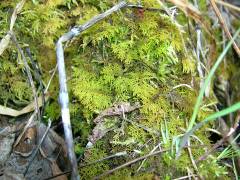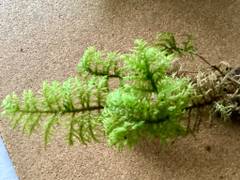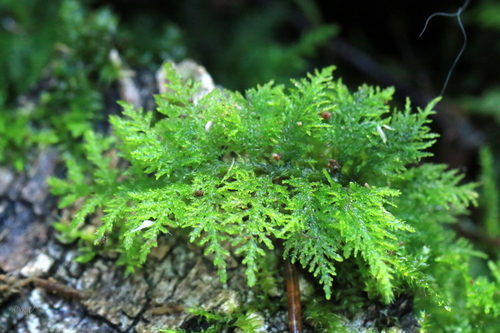
Thuidium, Genus, tamariscinum, Species,
- Genus & species
common tamarisk-moss
Europe, western Asia, North Africa, and Macaronesia
SunFull Shade
WaterHigh
Overview
Thuidium tamariscinum is a pleurocarpous moss forming loose, spreading mats. Main stems creep horizontally and produce arching, 3-pinnate (tripinnate) fronds 2-4 inches (5-10 cm) long that branch in a single plane, giving a feather-like outline resembling tamarisk foliage. The dark, almost black stems carry minute paraphyllia (tiny green filaments) over their surface, visible under magnification. Leaves are of two kinds: stem leaves triangular and pleated, abruptly contracted to a slender hair-point; branch leaves smaller and ovate, both about 1 mm or less. Colour ranges from yellowish-green to deep green, dulling and curling inward as the fronds dry. Capsules form infrequently; when present they are cylindrical, curved, 2-3 mm long, held horizontally on a red seta 1-1.5 inches (2.5-4 cm) tall and ripening through winter. Spread is by creeping stems, with mats enlarging slowly over several seasons. The species depends on continuous humidity and shade; fronds desiccate and brown during prolonged dry exposure and the moss does not persist in full sun or on lime-rich surfaces.
Native Range
Thuidium tamariscinum occurs across Europe from the British Isles and Scandinavia south to the Mediterranean, extending into western Asia, North Africa, and Macaronesia. It grows in damp, shaded woodland on soil, leaf litter, rotting logs, rock ledges, and stream banks, from lowland to montane elevations.Suggested Uses
Used as ground cover in shaded, humid gardens, in moss gardens, and at the substrate surface of terraria and vivaria. Mats are laid 4-8 inches (10-20 cm) apart and knit together over one to two seasons. Growth declines in exposed, sunny, or lime-rich sites.How to Identify
Appearance
Size & Dimensions
Height2" - 4"
Colors
Foliage Colors
Bloom Information
As a moss, Thuidium tamariscinum does not flower. Reproduction is by spores released from capsules, which form infrequently and mature through winter into early spring. Vegetative spread by fragmenting stems occurs more often than sporophyte production.
Detailed Descriptions
Foliage Description
yellowish-green to deep greenGrowing Conditions
Sun Requirements
Tolerates up to 2 hours of direct sunlight daily
• Full Sun: 6+ hours of direct sunlight
• Partial Shade: 3-6 hours of direct sunlight
• Full Shade: Less than 3 hours of direct sunlight
Water & Climate
Water Needs
Care & Maintenance
Care Guide
Grows in consistently moist, shaded positions on humus-rich, slightly acidic substrates. In terraria, shaded gardens, and moss gardens it needs steady humidity and screening from direct sun, which scorches the fronds within days. Established mats tolerate brief drying by curling their fronds and recover when moisture returns, though extended drought kills the colony. Mineral fertiliser and lime reduce growth and are left off. Faster mosses and liverworts can overgrow thin patches in very wet, low-airflow sites. Propagation is by pressing stem fragments onto a moist surface, where they root within several weeks.Pruning
No pruning is required. Overgrown or damaged sections can be lifted and the mat thinned by hand in any season without harming regrowth. Removed fragments root readily on moist substrate, so thinnings double as propagation material.Container Growing
Suitable for container growing