Thermopsis, Genus, montana, Species,
- Genus & species
mountain goldenbean
Overview
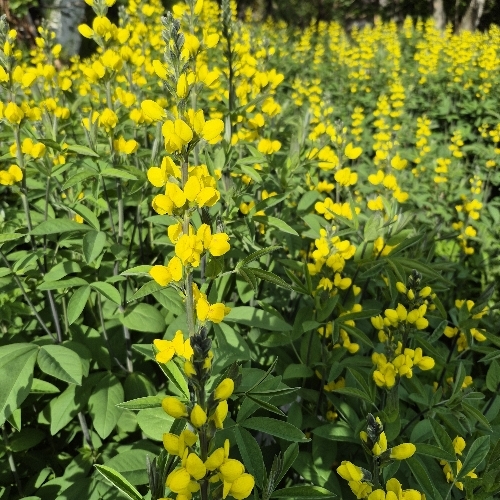
Thermopsis montana is a rhizomatous herbaceous perennial of the pea family, reaching 12-36 inches (30-90 cm) tall and spreading into colonies over time. Erect, mostly unbranched stems carry palmately compound leaves divided into three oblong leaflets 1-3 inches (2.5-7.5 cm) long, each leaf backed by a pair of leaf-like stipules. Pea-shaped yellow flowers, each about 0.8 inch (20 mm) long, are held in upright terminal racemes 4-10 inches (10-25 cm) tall. Bloom is concentrated in late spring and early summer. Flowers give way to erect to spreading seed pods 1.5-3 inches (4-7.5 cm) long that turn brown and dry as they ripen. The species grows in mountain meadows, along streambanks, and in open coniferous woodland across the western United States. It tolerates a range of soils but needs steady moisture during spring growth and goes dormant by late summer in dry sites. The deep rhizome system makes established plants drought-tolerant but slow to relocate once sited. Seeds and foliage contain quinolizidine alkaloids toxic to livestock, pets, and humans if eaten. The flowers are visited by bumblebees and other long-tongued bees.
Native Range
Thermopsis montana is native to the western United States, from the Rocky Mountains and Great Basin west to the Cascade and Sierra Nevada ranges. It grows in moist mountain meadows, streambanks, and open pine forest from foothill to subalpine elevations.Suggested Uses
Used in native meadow plantings, pollinator gardens, and naturalized borders within its range. The colony-forming habit fills open ground in informal settings. Seeds and foliage are toxic to livestock, keeping it out of grazed pasture.How to Identify
Appearance
Size & Dimensions
Height1' - 3'
Width/Spread1' - 2'
Colors
Bloom Information
Detailed Descriptions
Foliage Description
green to blue-greenGrowing Conditions
Sun Requirements
Requires 4-10 hours of direct sunlight daily
• Full Sun: 6+ hours of direct sunlight
• Partial Shade: 3-6 hours of direct sunlight
• Full Shade: Less than 3 hours of direct sunlight
Care & Maintenance
Care Guide
Grows in full sun to part shade with four to eight hours of light. Steady moisture during spring growth supports fuller flowering, while summer drought triggers early dormancy. Average to moist, well-drained loam or sandy loam suits it across a wide pH range. The spreading rhizomes form colonies, so open ground gives room to naturalize. Division is difficult because of the deep root system, and propagation is usually from scarified, stratified seed. No fertilizer is needed in fertile meadow soils.Pruning
Pruning is limited to cutting spent stems to the ground after foliage yellows in late summer or in late winter. Seed pods can be left for winter structure or removed to limit self-seeding. No shaping is required.Pruning Schedule
Prune: February–March
winter