Thermopsis, Genus, spp., Multiple species,
- Genus
- Multiple species
Goldenbanners
Overview
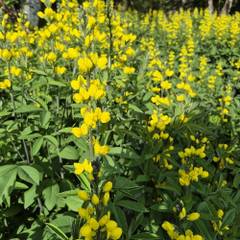
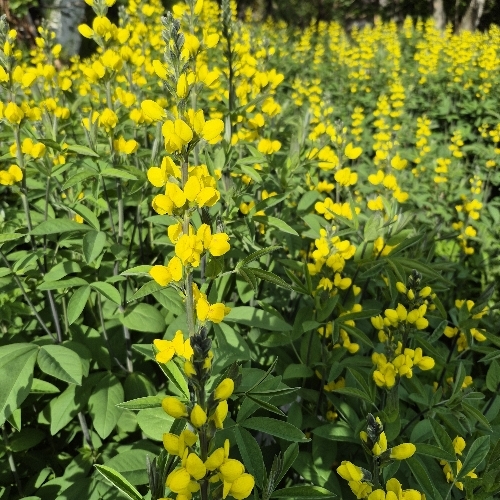
Thermopsis is a genus of about 25 species of upright, rhizomatous perennials in the pea family, native to North America and eastern Asia. Plants form clumps or spreading colonies 1-5 ft (0.3-1.5 m) tall and 1-3 ft (0.3-0.9 m) wide, with erect stems and palmate leaves divided into three leaflets, often with a pair of leafy stipules at the base. In late spring and early summer the genus sends up dense, upright spikes of bright yellow, pea-like flowers that resemble lupines, held above the foliage. These are followed by flattened, often hairy seed pods that may stand erect or curve outward. Several species, such as Carolina lupine T. villosa and prairie goldenbanner T. rhombifolia, are grown in borders and prairie plantings. The genus spreads by rhizomes and can form broad patches over time. Like many legumes, the foliage and seeds contain quinolizidine alkaloids and are toxic if eaten. Thermopsis grows in full sun to light shade on well-drained soil, tolerates drought and poor ground once established, and fixes nitrogen through its roots. It blooms earlier than true lupines and is free of the powdery mildew that often troubles them.
Native Range
Native to North America and eastern Asia, with North American species in prairies, open woods, mountain meadows, and along streams from the eastern states to the Rockies, and Asian species in grassland and scrub. Carolina lupine is native to the southeastern United States.Suggested Uses
Grown in perennial borders, prairie and meadow plantings, and naturalized areas, spaced 18-30 in (45-75 cm) apart, with the taller species used toward the back of borders. The yellow spikes combine with early summer perennials and grasses.How to Identify
Appearance
Size & Dimensions
Height1' - 5'
Width/Spread1' - 3'
Bloom Information
Detailed Descriptions
Foliage Description
Green, three-partGrowing Conditions
Sun Requirements
Requires 5-10 hours of direct sunlight daily
• Full Sun: 6+ hours of direct sunlight
• Partial Shade: 3-6 hours of direct sunlight
• Full Shade: Less than 3 hours of direct sunlight
Care & Maintenance
Care Guide
Grow in full sun to light shade on average, well-drained soil; the genus tolerates poor, sandy, and dry ground once established and dislikes heavy, wet conditions. Water new plants through their first season, after which they are drought-tolerant. The deep roots resent disturbance, so plants are left undisturbed rather than divided or moved. Rhizomatous species spread into broad patches and can be cut around to limit their reach. The foliage and seeds contain quinolizidine alkaloids and are toxic to people and pets if eaten. Hardiness spans USDA zones 3-8 depending on species.Pruning
Cut flower stems back after bloom to limit self-seeding, or leave the pods for their form and seed. Cut the whole plant to the ground in late autumn after the foliage dies back. Plants regrow from the rootstock each spring.Pruning Schedule
Prune: November
fall