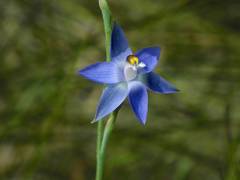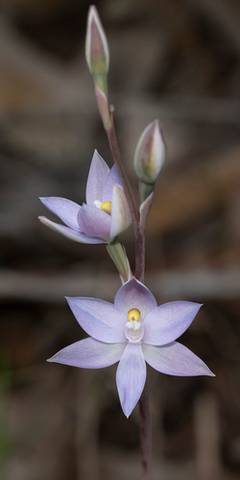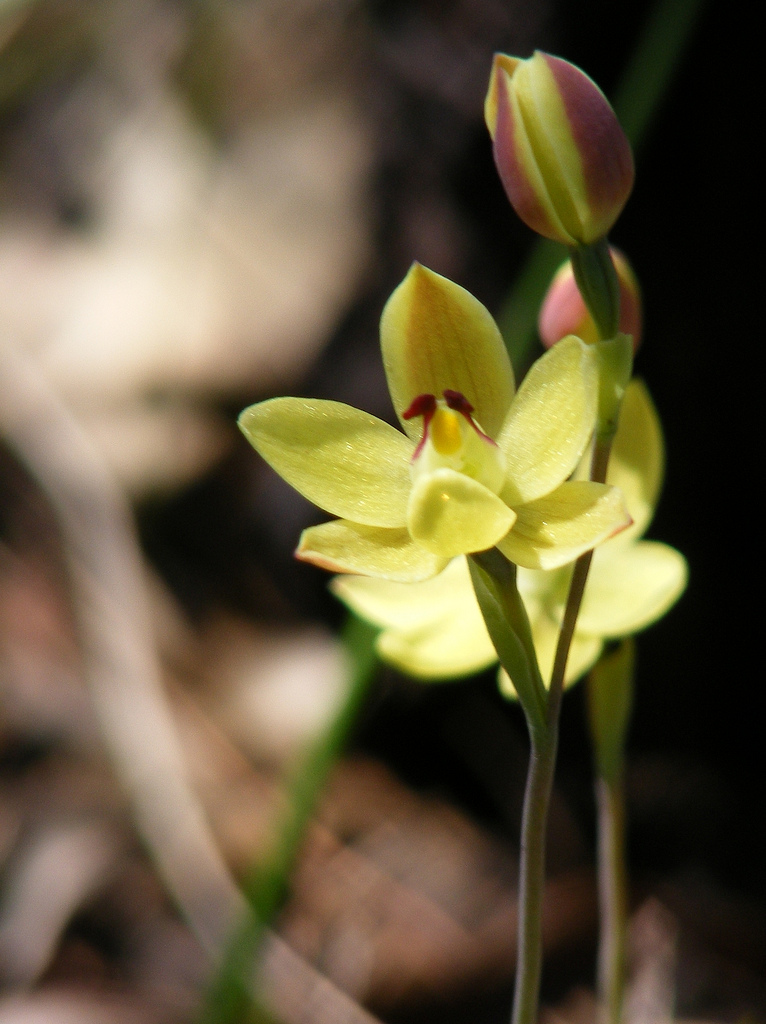
Image 1 of 7
1 / 7
© Ratabago from Adelaide, Australia, some rights reserved (CC-BY-SA) · Wikimedia Commons
Thelymitra, Genus, spp., Multiple species,
- Genus
- Multiple species
sun orchids
Australia, New Zealand, New Caledonia, and Indonesia
Overview
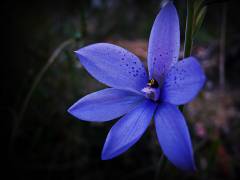
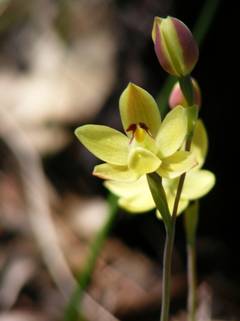
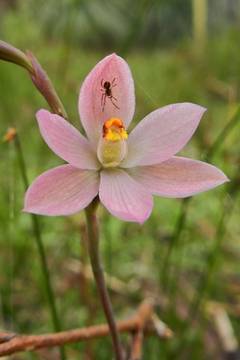
Thelymitra is a genus of about 110 species of terrestrial orchids in the family Orchidaceae, called sun orchids because the flowers open mainly on warm, sunny days and stay closed in cool or overcast weather. The genus is centered in Australia, with additional species in New Zealand, New Caledonia, and Indonesia. Each plant grows from an underground tuber and produces a single erect, channelled or grass-like leaf 4-16 inches (10-40 cm) long. A flowering stem 4-40 inches (10-100 cm) tall carries from one to as many as twenty-five flowers. In contrast to most orchids, the flowers are nearly radially symmetric, with six similar segments in blue, purple, pink, yellow, white, or combinations, sometimes spotted or streaked. The central column often bears tufts, hairs, or colored arms that separate the species. Plants are dormant through the dry summer, persisting as tubers below ground, and re-emerge with autumn and winter rains. Many species depend on specific soil fungi and on insect pollinators drawn by color, which makes them difficult to grow outside their native habitats. Several are threatened by land clearing and grazing.
Native Range
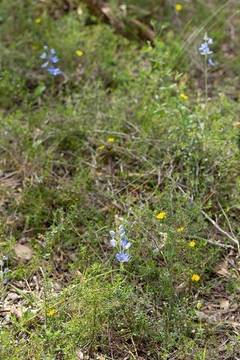
The genus is native to Australia, where it reaches its greatest diversity, and extends to New Zealand, New Caledonia, the Philippines, and Indonesia. Species grow in heathland, grassland, open woodland, and seasonally moist soils.Suggested Uses
Sun orchids are grown by terrestrial orchid hobbyists in pots and in specialist native plant collections. In their native regions they appear in wildflower plantings and grassland restoration. They are not suited to general garden borders because of their fungal and dormancy requirements.How to Identify
Appearance
Size & Dimensions
Height4" - 3'4"
Width/Spread2" - 6"
Bloom Information
Flowering occurs from late winter through spring and into early summer, varying by species and rainfall. Individual flowers open for only a few hours on warm, sunny days over a flowering period of two to four weeks. Cool or cloudy weather can keep the flowers closed for days.
Detailed Descriptions
Flower Description
blue, purple, pink, yellow, or whiteFoliage Description
greenGrowing Conditions
Sun Requirements
Requires 6-10 hours of direct sunlight daily
• Full Sun: 6+ hours of direct sunlight
• Partial Shade: 3-6 hours of direct sunlight
• Full Shade: Less than 3 hours of direct sunlight
Care & Maintenance
Care Guide
Thelymitra species grow in full sun in well-drained sandy or loamy soils with a pH of 5.0-6.5 and depend on associated soil fungi for establishment. Plants are watered through the autumn-to-spring growing season and kept dry during summer dormancy, when the tuber rests below ground. Most species tolerate light frost but are damaged by hard freezes, matching USDA zones 8-10. They are grown by specialist growers in pots of free-draining mix, since transplanting disturbs the fungal partnership. Slugs, aphids, and fungal rot affect plants in cultivation. Division of tuber clusters during dormancy is the usual means of increase.Pruning
Pruning is limited to removing the spent flowering stem after blooming, which returns resources to the tuber. Dead foliage is left to die down naturally as the plant enters summer dormancy. No structural pruning is involved.Pruning Schedule
Prune: June
summer
Container Growing
Suitable for container growing
Minimum container size: 1 gallons