Teucrium, Genus, chamaedrys, Species,
- Genus & species
wall germander
Southern Europe and southwestern Asia — Mediterranean region; rocky slopes, old walls, and dry open habitats
Overview
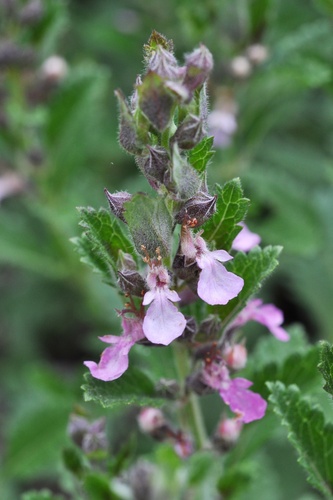
Teucrium chamaedrys is wall germander (clippable germander), a mounding semi-evergreen sub-shrub growing 10-15 inches (25-38 cm) tall and 18-24 inches (45-60 cm) wide. Dark glossy green small ovate scalloped aromatic oak-like foliage 0.5-1 inch (1.3-2.5 cm). Rose-pink to magenta-pink small tubular 2-lipped flowers 0.5 inch (1.3 cm) in whorled terminal spikes in July-August. Square stems. In the mint family (Lamiaceae). Native to the Mediterranean region — rocky slopes, old walls, and dry open habitats. Historically used as a boxwood substitute in formal knot gardens and parterres — takes shearing into low hedges 8-12 inches (20-30 cm) tall. Semi-evergreen — the foliage may brown or thin in harsh exposed winters (zones 5-6) without snow cover. This winter dieback in cold zones is the primary limitation. The semi-woody stems can become leggy and open at the base after 4-5 years — rejuvenation pruning (hard cutback to 3-4 inches / 7-10 cm in early spring) restores compact form. Spreads by underground runners and can colonize adjacent areas — install root barriers if containment is needed. Tolerates alkaline soil (pH 6.0-8.0). Deer-resistant. Drought-tolerant once established. Non-toxic. Zones 5-9. Full sun to partial shade. Growth rate is moderate.
Native Range
Native to southern Europe and southwestern Asia — Mediterranean region. Found on rocky slopes, old walls, and dry open habitats.Suggested Uses
Grown as low formal hedges (8-12 inches / 20-30 cm), knot garden edging, perennial border edging, and in containers of at least 5 gallons (19 L). Boxwood substitute. Mediterranean garden. Deer-resistant. Drought-tolerant. Non-toxic. Zones 5-9.How to Identify
Appearance
Size & Dimensions
Height10" - 1'3"
Width/Spread1'6" - 2'
Colors
Bloom Information
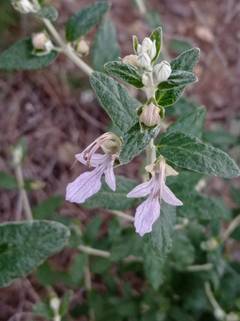
Midsummer (July-August). Rose-pink to magenta-pink tubular 2-lipped flowers 0.5 inch (1.3 cm) in whorled terminal spikes. 4 weeks of bloom. Bee- and butterfly-pollinated.
Detailed Descriptions
Flower Description
Rose-pink to magenta-pink, small tubular 2-lipped flowers 0.5 inch (1.3 cm), in whorled terminal spikesFoliage Description
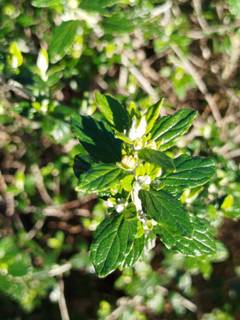
Dark glossy green, small ovate scalloped leaves 0.5-1 inch (1.3-2.5 cm) long, aromatic, oak-like shape; the dense glossy foliage takes shearing into formal low hedgesGrowing Conditions
Sun Requirements
Requires 4-10 hours of direct sunlight daily
• Full Sun: 6+ hours of direct sunlight
• Partial Shade: 3-6 hours of direct sunlight
• Full Shade: Less than 3 hours of direct sunlight
Care & Maintenance
Care Guide
Full sun to partial shade (4-10 hours). Well-drained soil pH 6.0-8.0 — tolerates alkaline and rocky soils. Shear after bloom (August) for compact form. Can be sheared into formal low hedges 2-3 times per season. Spreads by underground runners. Rejuvenation prune every 4-5 years. Deer-resistant. Non-toxic. Zones 5-9.Pruning
Shear after bloom (August) to maintain compact mound. For formal hedges, shear 2-3 times per season. Rejuvenation prune (hard cutback to 3-4 inches / 7-10 cm) in early spring (March-April) every 4-5 years to prevent legginess. Do not cut into bare wood late in the season.Pruning Schedule
Prune: March–April & August
early springsummer
Container Growing
Suitable for container growing
Minimum container size: 5 gallons