Tetratheca, Genus, pilosa, Species,
- Genus & species
hairy pink-bells
Overview
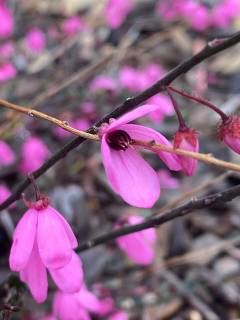
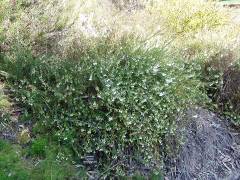
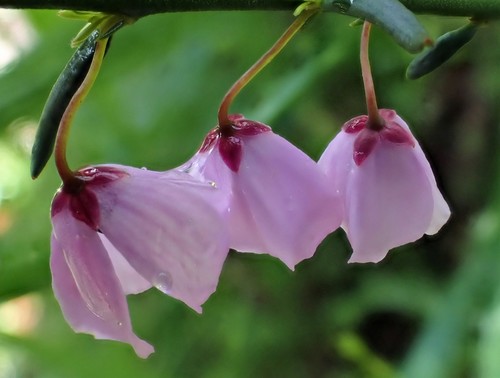
Tetratheca pilosa is a small evergreen shrub reaching 6-20 inches (15-50 cm) tall and 8-16 inches (20-40 cm) wide, with slender, wiry, hairy stems forming an open mound. Leaves are small, 0.1-0.5 inch (3-12 mm) long, narrow to oval, scattered or whorled along the stems, and covered with short, soft hairs that give the plant its name. Nodding flowers 0.4-0.6 inch (1-1.5 cm) across hang singly on thin stalks, each with four pink to mauve petals and dark anthers at the centre. Flowering occurs from late winter through spring. The flowers are followed by small flattened capsules holding a few seeds. The plant grows at a slow to moderate rate and is short-lived, often persisting 3-6 years in cultivation. It grows in well-drained sandy and rocky soils and is sensitive to summer waterlogging and heavy clay. Foliage is hardy to about 23°F (-5°C).
Native Range
Native to southeastern Australia, from New South Wales through Victoria and South Australia to Tasmania. Grows in heathland, dry sclerophyll forest, and rocky outcrops, usually in well-drained sandy or gravelly soils from near sea level to about 4,000 feet (1,200 m).Suggested Uses
Used in native, rockery, and container plantings on well-drained sites, spaced 12-18 inches (30-45 cm) apart. Suited to small gardens and the front of native borders where a low-growing shrub is wanted. Grows in containers of at least 2 gallons (8 L) with free-draining mix.How to Identify
Appearance
Size & Dimensions
Height6" - 1'8"
Width/Spread8" - 1'4"
Bloom Information
Detailed Descriptions
Flower Description
pink to mauveFoliage Description
greenGrowing Conditions
Sun Requirements
Requires 4-8 hours of direct sunlight daily
• Full Sun: 6+ hours of direct sunlight
• Partial Shade: 3-6 hours of direct sunlight
• Full Shade: Less than 3 hours of direct sunlight
Care & Maintenance
Care Guide
Grows in full sun to light shade in sandy or gravelly, sharply drained soil. Water moderately during establishment; established plants tolerate dry periods but decline in waterlogged ground. Performs poorly in heavy clay and humid, still air, where root and stem rots develop. It can be propagated from cuttings, which root slowly over several weeks. Plants are short-lived, often replaced after 3-6 years. Few insect pests affect it.Pruning
Trim lightly after flowering to keep a compact shape; the wiry stems tolerate removal of up to one-third of the season growth. Bare old wood reshoots poorly, so trimming is kept to leafy stems.Pruning Schedule
Prune: November–December
spring
Container Growing
Suitable for container growing
Minimum container size: 2 gallons