Tetrarrhena, Genus, juncea, Species,
- Genus & species
forest wire-grass
Overview
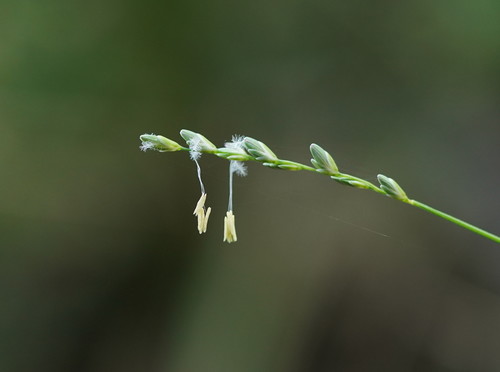
Tetrarrhena juncea is an evergreen perennial grass with wiry, much-branched scrambling stems reaching 3-6.6 feet (1-2 m) long that clamber over surrounding vegetation. Leaves are stiff, flat to inrolled, 1.2-4 inches (3-10 cm) long and about 0.1 inch (2-4 mm) wide, dark green, and spaced along the wiry stems. Flowers form in narrow, sparse panicles 2-4 inches (5-10 cm) long, the small spikelets green to straw-colored, produced mainly from spring into early summer. The plant builds dense tangled masses in the forest understory and layers where stems touch the ground, spreading by rhizomes and rooting stems to form colonies several feet across. It forms a low ground layer and habitat in damp forest. The scrambling habit can smother low shrubs, and the interwoven stems make an established colony difficult to remove. It tolerates deep shade but flowers more sparsely there.
Native Range
Native to southeastern Australia in Victoria, Tasmania, New South Wales, and southeastern South Australia. It grows in the understory of damp and wet sclerophyll forest and along shaded gully margins, from near sea level to 3,300 feet (1,000 m).Suggested Uses
Used in shaded revegetation and erosion control on moist slopes and gully banks. It forms ground cover beneath trees where the scrambling stems knit together. The spreading habit makes it unsuited to small formal gardens.How to Identify
Appearance
Size & Dimensions
Height3' - 6'7"
Width/Spread3' - 6'7"
Bloom Information
Detailed Descriptions
Flower Description
green to strawFoliage Description
dark greenGrowing Conditions
Sun Requirements
Tolerates up to 4 hours of direct sunlight daily
• Full Sun: 6+ hours of direct sunlight
• Partial Shade: 3-6 hours of direct sunlight
• Full Shade: Less than 3 hours of direct sunlight
Care & Maintenance
Care Guide
It grows in part to full shade in moist, well-drained soils rich in organic matter with a pH of 5.0-6.5. Water through the first season to establish; established colonies tolerate short dry periods but decline in prolonged drought. The plant spreads by rhizomes and rooting stems and can form dense mats within 2-3 years. Few pests or diseases affect it. The scrambling stems may grow into adjacent plantings and need containment in mixed beds.Pruning
Cut stems back in late winter to remove old growth and reduce tangling. Plants regrow from the rhizomes after cutting. Removing stems that root into surrounding beds limits the colony spread.Pruning Schedule
Prune: July–August
winter