Tetragonia, Genus, spp., Multiple species,
- Genus
- Multiple species
Seacorals
Southern Hemisphere (South Africa, Australia, New Zealand, South America)
Overview
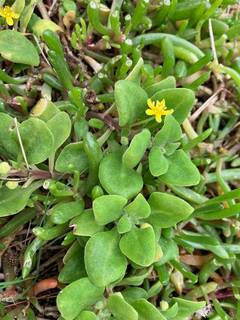
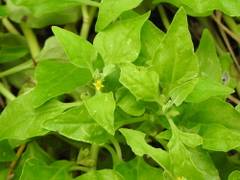
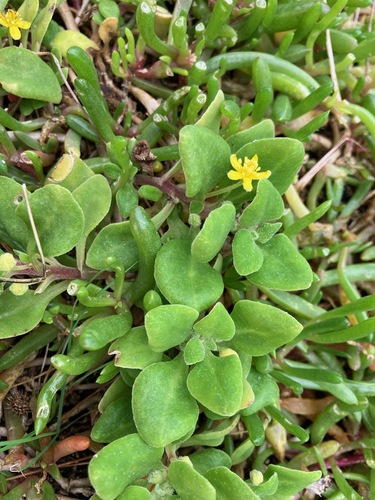
Tetragonia is a genus of about 50 to 85 species of sprawling annual and perennial herbs and subshrubs in the family Aizoaceae, found mainly in the Southern Hemisphere, especially South Africa, Australia, New Zealand, and South America. Plants have thick, fleshy, often triangular leaves and a low, spreading habit, trailing across the ground from a central crown and reaching 1 to 2 feet (30 to 60 cm) high but spreading several feet wide. The small flowers are yellow to greenish, tucked in the leaf axils, and are followed by hard, angular, often horned fruits. The most familiar species, T. tetragonioides, New Zealand spinach or warrigal greens, is grown as a warm-season leaf vegetable whose young shoots are cooked like spinach. Many species grow on coasts, salt flats, and dry ground, tolerating salt, heat, and drought, and storing water in their fleshy tissues. Plants grow quickly in warm weather and self-seed freely, and the leaf-vegetable forms keep cropping through heat that makes true spinach bolt. The leaves contain oxalates and are eaten cooked rather than raw. The genus is grown as edible greens and as ground cover for hot, dry, and coastal sites.
Native Range
Tetragonia is native mainly to the Southern Hemisphere, with the greatest number of species in South Africa, and others in Australia, New Zealand, and South America. T. tetragonioides occurs naturally on coasts of Australia, New Zealand, and East Asia. The genus is not native to North America, where New Zealand spinach is grown as a vegetable.Suggested Uses
New Zealand spinach is grown as a heat-tolerant summer leaf vegetable in vegetable gardens and containers, cropping when true spinach fails in the heat. Other species are used as ground cover and erosion control on hot, dry, and coastal banks. The fleshy, salt-tolerant foliage suits seaside and dry-garden plantings.How to Identify
Appearance
Size & Dimensions
Height1' - 2'
Width/Spread2' - 6'
Bloom Information
Flowering occurs through the warm season, mainly from late spring through summer, with small yellow-green flowers borne in the leaf axils over many weeks. In mild climates flowering can continue much of the year. The hard fruits ripen through summer and autumn and can persist on the plant.
Detailed Descriptions
Flower Description
Yellow to greenFoliage Description
GreenGrowing Conditions
Sun Requirements
Requires 6-12 hours of direct sunlight daily
• Full Sun: 6+ hours of direct sunlight
• Partial Shade: 3-6 hours of direct sunlight
• Full Shade: Less than 3 hours of direct sunlight
Care & Maintenance
Care Guide
Tetragonia grows in full sun in light, free-draining soil and tolerates heat, drought, coastal salt, and poor ground once established. The vegetable forms grow fastest with steady moisture and moderate fertility, producing tender shoots over a long warm season. A soil pH from about 6.0 to 7.5 suits them. New Zealand spinach is frost tender and grown as a warm-season annual where winters are cold, sown after the last frost. Plants self-seed readily and can spread, so seedlings are thinned or removed where not wanted. Few pests trouble them, and they tolerate conditions that cause true spinach to bolt.Pruning
Little pruning is needed beyond harvesting. Picking the young shoot tips of the vegetable forms keeps plants productive and bushy and delays seeding. Sprawling growth can be trimmed back to control spread, and frosted plants are cleared at the end of the season.Container Growing
Suitable for container growing
Minimum container size: 3 gallons
Toxicity
Non-toxicPlanting Guide
Planting Methods & Timing
Planting Method
both
Direct Sow Timing
After last frost when soil is warm
Days to Maturity
50–70 days
Plant Spacing
18 inches