Ternstroemia, Genus, gymnanthera, Species,
- Genus & species
Japanese cleyera
Japan, Korea, southern China, Taiwan, Southeast Asia
Overview
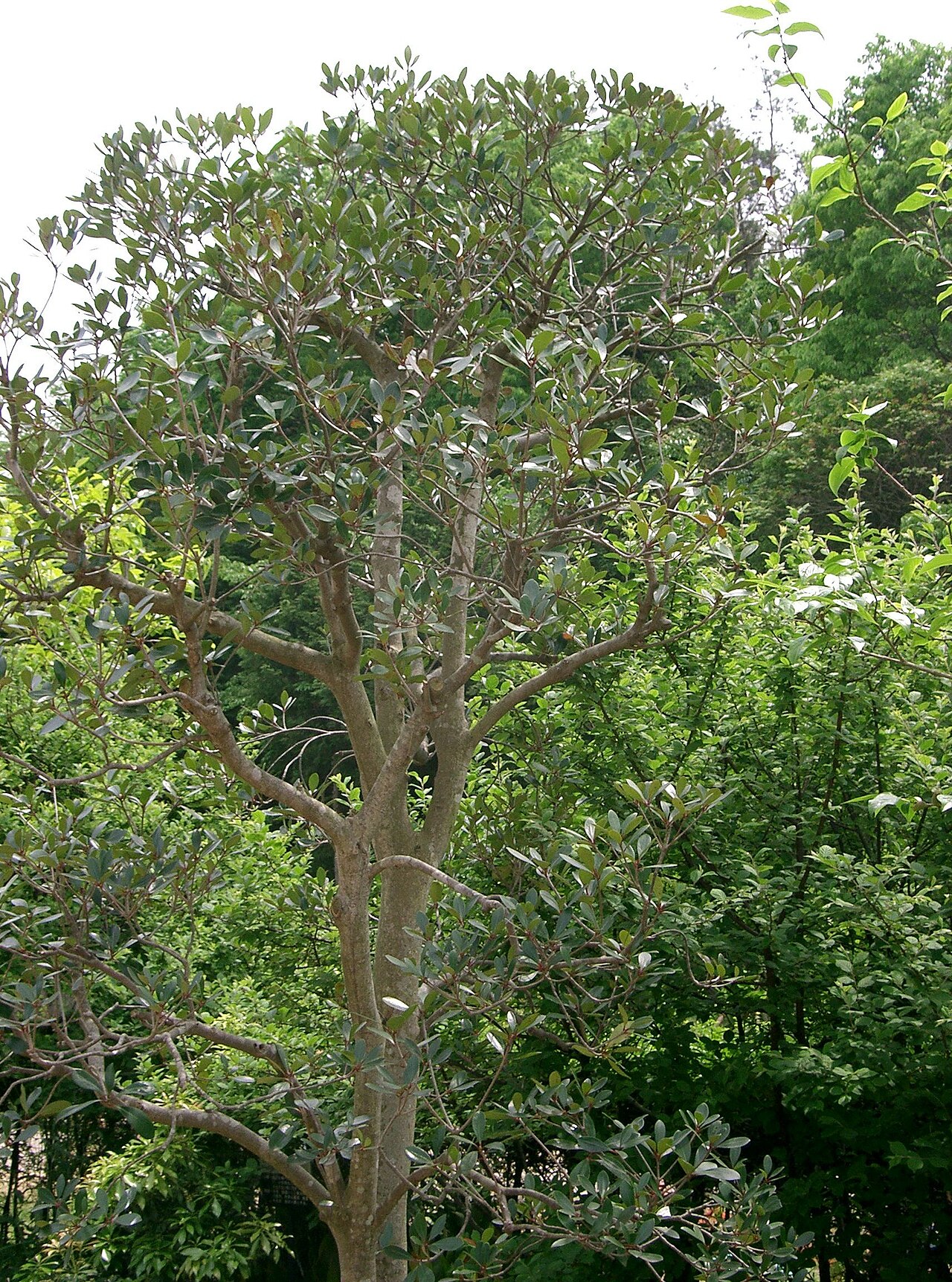
Ternstroemia gymnanthera is an evergreen shrub or small tree reaching 8-15 feet (2.4-4.5 m) tall and 5-8 feet (1.5-2.4 m) wide, holding a dense upright oval outline with branches layered in tiers. Leaves are thick and leathery, obovate to elliptic, 2-4 inches (5-10 cm) long, glossy dark green, and gathered in whorl-like clusters at the shoot tips on red leaf stalks. New growth opens bronze-red and hardens to green over 4-6 weeks, and the foliage takes on bronze and burgundy tones through winter in full sun. Flowers are 0.5 inch (1.2 cm) across, creamy white to pale yellow, nodding on short stalks beneath the foliage in June and July, with a sweet scent that carries a few feet. Fruit is a red-orange capsule about 0.3 inch (8 mm) across that splits in autumn to show orange-red seeds. Growth runs 6-12 inches (15-30 cm) per year. Leaves yellow between the veins on soils above pH 7.0, and plants defoliate near 5F (-15C), which holds the species to USDA zones 7-10. Nursery stock is often labelled cleyera, while Cleyera japonica is a separate species carrying thinner leaves in two ranks on green stalks.
Native Range
Ternstroemia gymnanthera is native to Japan, Korea, southern China, Taiwan, and parts of Southeast Asia and India, where it grows as an understorey shrub in evergreen broadleaf forest below 5,900 feet (1,800 m). It has been planted around temples and gardens in Japan for centuries and reached the southeastern United States in the 20th century, where it is now a common landscape shrub from Virginia to Texas. Populations outside cultivation are rare.Suggested Uses
Planted at 5-6 foot (1.5-1.8 m) spacing as a screen or informal hedge and at 8-10 foot (2.4-3 m) spacing as single plants in foundation groups across USDA zones 7-10. Grown in containers of 10 gallons (38 L) or larger, holding at 4-6 feet (1.2-1.8 m) for several years. The dense evergreen structure gives cover for small birds, and the autumn fruit is taken by mockingbirds and thrushes.How to Identify
Appearance
Size & Dimensions
Height8' - 15'
Width/Spread5' - 8'
Bloom Information
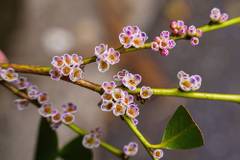
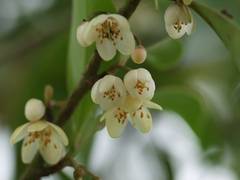
Flowering runs 2-3 weeks in June and July, after the spring growth flush hardens. Flowers are 0.5 inch (1.2 cm) across, creamy white to pale yellow, and hang under the shoots, so the scent is met before they are seen. Bees work the flowers through the morning. Fruit follows from September and holds into December on plants carrying female flowers.
Detailed Descriptions
Flower Description
Creamy white to pale yellowFoliage Description
Glossy dark green, bronze-red on new growth and in winter sunGrowing Conditions
Sun Requirements
Requires 4-8 hours of direct sunlight daily
• Full Sun: 6+ hours of direct sunlight
• Partial Shade: 3-6 hours of direct sunlight
• Full Shade: Less than 3 hours of direct sunlight
Care & Maintenance
Care Guide
Growth continues from full sun through moderate shade, with winter foliage colour strongest in full sun and leaf scorch following on plants in reflected heat above 95F (35C). Acid, free-draining soil at pH 5.0-6.5 suits the roots, and interveinal yellowing above pH 7.0 is corrected with chelated iron and soil sulfur. Water at 1 inch (25 mm) per week for the first three seasons; established plants hold through 3-4 weeks of dry weather. A slow-release fertilizer for acid-loving plants applied in early spring covers the year's growth. Scale insects colonise the leaf undersides and shaded interior stems, and root rot follows where drainage stops. Foliage is damaged near 5F (-15C), and plants regrow from the base after die-back in USDA zone 7.Pruning
Pruning is carried out in late spring, once the first flush of bronze-red growth hardens, so the next flush covers the cuts by midsummer. The layered outline holds without pruning, and cuts are usually limited to dead wood and to shortening shoots that break the line. Plants take shearing into a formal hedge at 5-8 feet (1.5-2.4 m), which removes the flowers and fruit for that year. Cuts into bare interior wood regrow slowly, over 2-3 seasons.Pruning Schedule
Prune: April–May
late spring
Container Growing
Suitable for container growing
Minimum container size: 10 gallons