Image 1 of 9
1 / 9
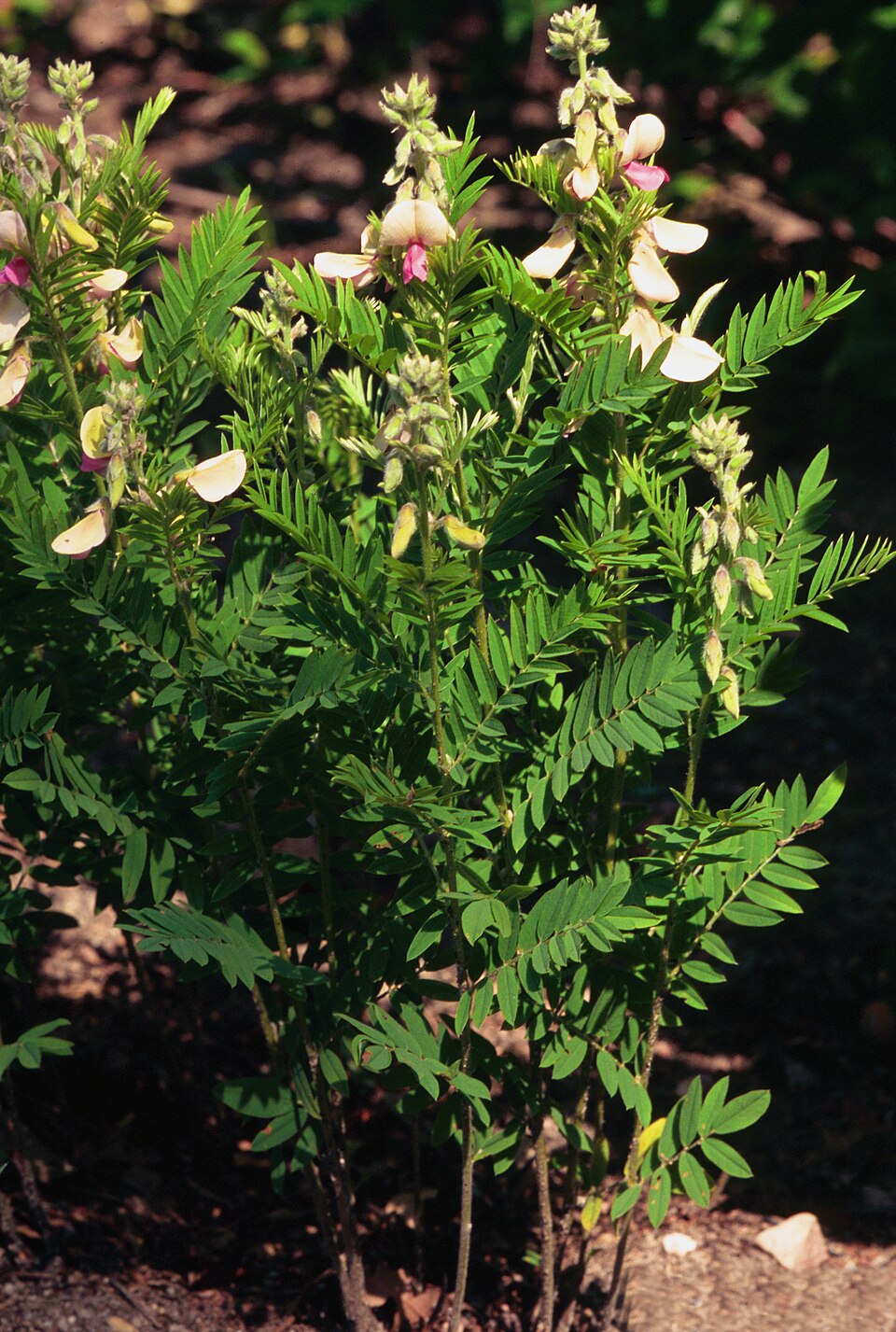
© James H. Miller & Ted Bodner, Southern Weed Science Society, Bugwood.org, some rights reserved (CC-BY) · Wikimedia Commons
Tephrosia, Genus, virginiana, Species,
- Genus & species
goat's rue
Overview
Tephrosia virginiana is an upright perennial in the pea family, native to dry, sandy woods and prairies of the eastern and central United States. Plants form bushy clumps 12-24 inches (30-60 cm) tall and wide from a deep, woody taproot. The pinnately compound leaves carry 9-25 narrow leaflets covered in silky white hairs, giving the foliage a soft gray-green sheen. In late spring and early summer, dense clusters of two-toned pea flowers open at the stem tips; the upper petal is pale yellow to cream, while the side and lower petals are pink to rose. After bloom, the plant forms flat, hairy seedpods 1.5-2 inches (4-5 cm) long. The species grows in full sun on dry, acidic, sandy or rocky soils and withstands drought and poor fertility, as it fixes its own nitrogen. It is slow to establish and transplants poorly once the taproot forms. The roots contain rotenone, a compound long used as a fish poison and insecticide. Foliage dies back after frost.
Native Range
Native to the eastern and central United States, from New England and Ontario south to Florida and Texas. It grows in dry, sandy or rocky open woods, pine barrens, prairies, and clearings.Suggested Uses
Grown in native plant and prairie gardens, sandy or gravelly beds, and pollinator plantings on poor soil. Spaced 18-24 inches (45-60 cm) apart, plants form low silvery clumps. Used to add nitrogen and cover on dry, infertile sites.How to Identify
Appearance
Size & Dimensions
Height1' - 2'
Width/Spread1' - 2'
Bloom Information
Detailed Descriptions
Flower Description
Pale yellow standard with pink to rose wingsFoliage Description
Gray-green, silky-hairy, pinnately compoundGrowing Conditions
Sun Requirements
Requires 6-10 hours of direct sunlight daily
• Full Sun: 6+ hours of direct sunlight
• Partial Shade: 3-6 hours of direct sunlight
• Full Shade: Less than 3 hours of direct sunlight
Care & Maintenance
Care Guide
Grows in full sun on dry, acidic, sandy or rocky soil with sharp drainage, and tolerates poor, infertile ground. Water lightly while establishing; mature plants are drought-tolerant and need no summer water. No fertilizer is needed, as the plant fixes nitrogen through its roots. Rich or wet soil causes weak growth and root rot. The deep taproot makes plants slow to start and difficult to move, so set them in a permanent spot. Foliage dies back after frost and resprouts in spring.Pruning
Cut spent stems to the ground in late autumn after frost. The seedpods can be left for wildlife. No other pruning is required.Pruning Schedule
Prune: October
fall
Container Growing
Suitable for container growing
Minimum container size: 2 gallons