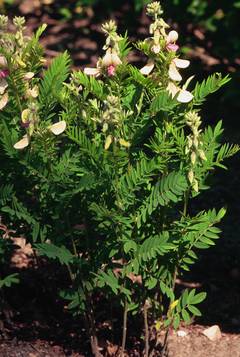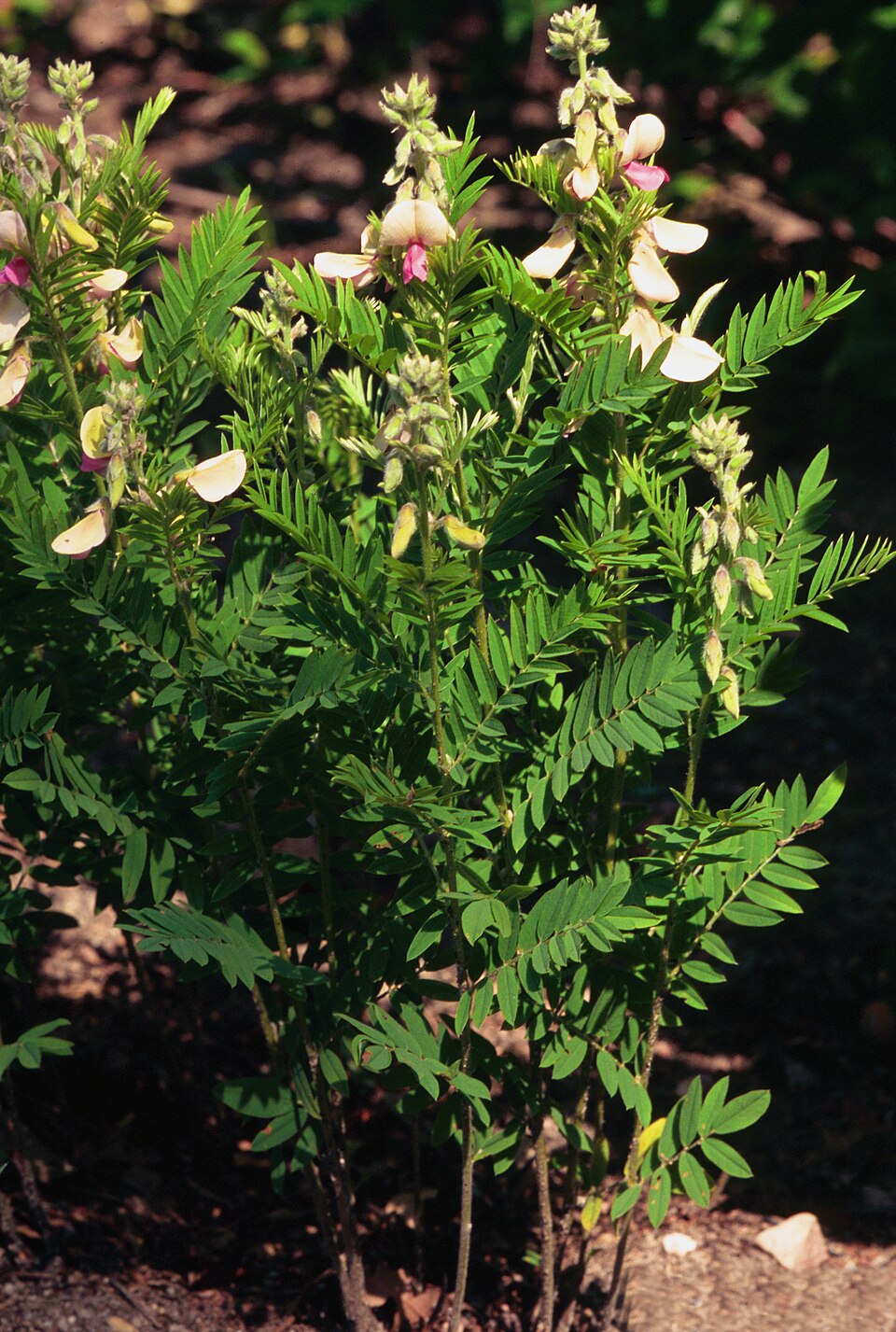
Image 1 of 2
1 / 2
© James H. Miller & Ted Bodner, Southern Weed Science Society, Bugwood.org, some rights reserved (CC-BY) · Wikimedia Commons
Tephrosia, Genus, spp., Multiple species,
- Genus
- Multiple species
Hoarypeas
Overview
Tephrosia is a genus of about 350 species of perennial herbs, subshrubs, and small shrubs in the legume family, distributed through the tropics and warm temperate regions worldwide. Plants range from low spreading herbs 8 inch (20 cm) tall to woody shrubs 6 ft (1.8 m) high. Leaves are pinnately compound with 5 to 41 leaflets, frequently covered in dense silvery or greyish hairs that give the foliage a hoary cast. Pea-type flowers appear in terminal or leaf-opposed racemes in pink, red, purple, or white, each 0.3-1 inch (8-25 mm) long, often with two-toned standards. Seed pods are flat and linear, 1-3 inch (2.5-8 cm) long, splitting to release several seeds. Roots and seeds of many species contain rotenone and related compounds, which are toxic to fish and insects and have been used as fish poisons and botanical insecticides. The genus fixes nitrogen through root nodules and tolerates poor, sandy soils, but most species are frost-sensitive and short-lived. Habit, hairiness, and flower color vary widely across the genus.
Native Range
Tephrosia occurs across Africa, Asia, Australia, and the Americas in tropical and warm temperate zones, with high diversity in Africa and Australia. North American species such as T. virginiana grow in dry sandy woodlands and prairies of the eastern and central United States.Suggested Uses
Grown in dryland and native plantings, on sandy banks, and for soil stabilization and nitrogen enrichment. Some species are used as cover crops and green manure in the tropics. Native species feature in prairie and pine-woodland restoration.How to Identify
Appearance
Size & Dimensions
Height8" - 6'
Width/Spread1' - 5'
Bloom Information
Detailed Descriptions
Flower Description
Pink, red, purple, whiteFoliage Description
Green to silvery-greyGrowing Conditions
Sun Requirements
Requires 6-12 hours of direct sunlight daily
• Full Sun: 6+ hours of direct sunlight
• Partial Shade: 3-6 hours of direct sunlight
• Full Shade: Less than 3 hours of direct sunlight