Overview
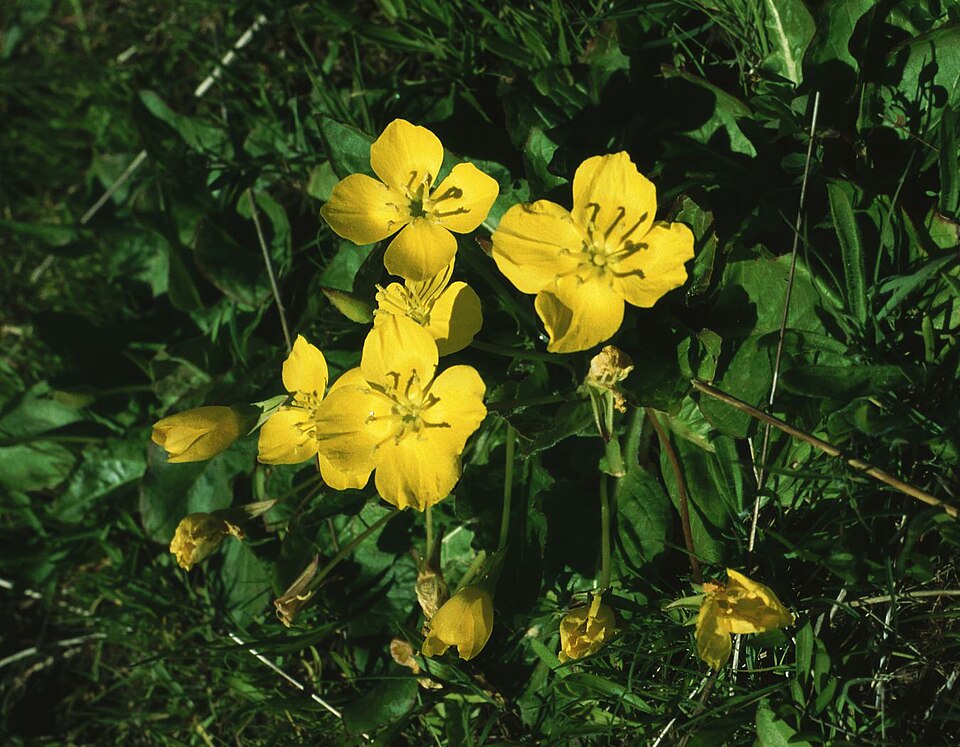
Taraxia is a small genus of about four species of low-growing herbs in the evening-primrose family (Onagraceae), native to western North America. Plants form a flat basal rosette of narrow, often toothed or lobed leaves, with little or no above-ground stem, spreading 4 to 12 inches (10-30 cm) across. Yellow four-petalled flowers open at or near ground level, sometimes ageing to reddish, and are followed by hard, woody, four-angled capsules that sit among the leaves. Some species are taprooted perennials and others behave as annuals. They grow in open, seasonally moist habitats such as vernal flats, clay depressions, and sagebrush ground, tolerating heavy soils that dry hard in summer. Flowering is tied to spring moisture, and plants retreat to the rootstock or die back as the ground dries. Taraxia is uncommon in cultivation and is grown mainly in native and rock gardens; its low stature and need for a wet-then-dry seasonal cycle are the main limits to wider garden use.
Native Range
Taraxia is native to western North America, ranging through the western United States from Washington and Idaho south to California and east into the Great Basin, mostly on the dry interior side of the coastal ranges.Suggested Uses
Grown in native-plant, rock, and dryland gardens in western North America, and in restoration of clay flats and seasonally wet ground. The ground-level rosettes suit gravel gardens and the front of dry borders.How to Identify
Appearance
Size & Dimensions
Height2" - 6"
Width/Spread4" - 1'
Colors
Foliage Colors
Bloom Information
Flowering is in spring (March-June depending on elevation and rainfall), with yellow flowers that open through the day and may redden with age. Bloom is brief and linked to soil moisture, ending as the habitat dries; woody capsules then ripen and persist.
Detailed Descriptions
Flower Description
yellow, ageing reddishFoliage Description
green to grey-greenGrowing Conditions
Sun Requirements
Requires 6-12 hours of direct sunlight daily
• Full Sun: 6+ hours of direct sunlight
• Partial Shade: 3-6 hours of direct sunlight
• Full Shade: Less than 3 hours of direct sunlight
Water & Climate
Water Needs
Drought Tolerance
Drought tolerant when established