Tamala, Genus, palustris, Species,
- Genus & species
swamp redbay
Southeastern United States coastal plain
Overview
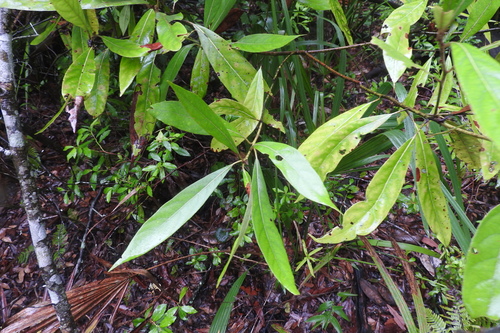
Tamala palustris, also treated as Persea palustris, is an evergreen shrub or small tree in the laurel family growing 15-40 feet (4.5-12 m) tall. The aromatic leaves are leathery and lance-shaped, 3-6 inches (8-15 cm) long, dark green above and densely covered with rusty hairs on the underside. Crushed foliage releases a spicy scent. Small pale yellow flowers form in stalked clusters from the leaf axils in spring. The fruit is a dark blue to black drupe about 0.4 inch (1 cm) long held on a red stalk, ripening in fall. The species grows in swamps, wet pine flatwoods, and pond margins across the coastal southeastern United States, tolerating standing water and saturated soils. It is a host of laurel wilt, a lethal fungal disease spread by the introduced redbay ambrosia beetle, which has killed large numbers of trees across its range. Growth is moderate, and plants resprout from the base after dieback. The wood is soft, and the foliage is browsed by deer.
Native Range
Tamala palustris is native to the coastal plain of the southeastern United States, from Virginia south through Florida and west along the Gulf Coast to Texas. It grows in freshwater and brackish wetlands.Suggested Uses
Planted in rain gardens, pond edges, and wetland restoration where its flood tolerance suits saturated sites. The fruit and cover are used by birds and other wildlife, and the aromatic leaves are used in cooking like bay laurel. Its disease susceptibility limits use as a long-lived landscape tree in areas with laurel wilt.How to Identify
Appearance
Size & Dimensions
Height15' - 40'
Width/Spread10' - 20'
Bloom Information
Pale yellow flowers open in spring, roughly March through May. Fruit develops over summer and ripens to blue-black in fall, often holding on the red stalks into early winter.
Detailed Descriptions
Foliage Description
Dark green above, rusty-hairy beneathGrowing Conditions
Sun Requirements
Requires 4-10 hours of direct sunlight daily
• Full Sun: 6+ hours of direct sunlight
• Partial Shade: 3-6 hours of direct sunlight
• Full Shade: Less than 3 hours of direct sunlight
Care & Maintenance
Care Guide
Grow T. palustris in full sun to part shade in moist to wet, acidic soil; it tolerates flooding and saturated ground that excludes many trees. It is hardy in USDA zones 7-10 and adapts to sandy and mucky wetland soils. The species is highly susceptible to laurel wilt, and infected trees decline rapidly once the ambrosia beetle vector arrives. Supplemental water is rarely needed where the water table is high. Plants resprout from the roots after top dieback, though regrowth is also vulnerable to the disease.Pruning
Prune in late winter to take out dead or crossing wood before spring growth. Root suckers can be removed to keep a single-trunk form or left to develop a multi-stemmed shrub. Wilt-killed branches are cut out as they appear.Pruning Schedule
Prune: February–March
winter