Syntrichia, Genus, montana, Species,
- Genus & species
intermediate screw-moss
Europe, North Africa, Asia, and North America
Overview
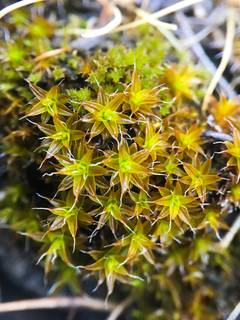
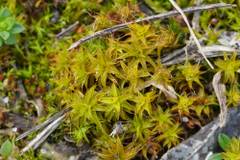
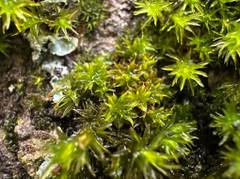
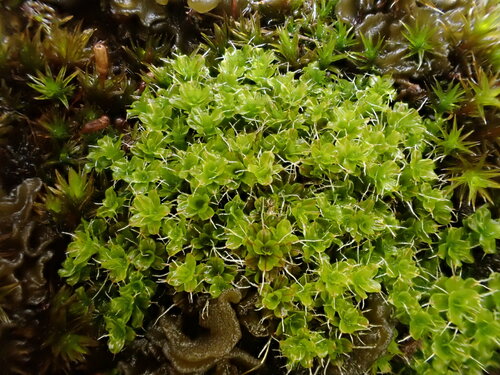
Syntrichia montana is a cushion-forming moss of the family Pottiaceae, building dense turfs and rounded patches 0.4-1.2 inches (1-3 cm) deep. The shoots are erect and closely packed, each clothed in tongue-shaped leaves that spread when moist and twist inward against the stem when dry. Each leaf ends in a long, clear hair-point and has strongly rolled-under margins, traits that reduce water loss on exposed surfaces. When wet the cushions turn green to yellow-green; when dry they fade to grey-green or brown as the pale hair-points dominate the surface. Reproduction is by spores formed in narrow, cylindrical capsules held upright on a reddish stalk, the capsule mouth ringed by spirally twisted teeth that give screw-mosses their name. Syntrichia montana colonizes dry, sun-exposed, lime-rich substrates such as limestone rock, mortar, concrete, and old walls, and revives quickly after long dry spells. It spreads slowly to form persistent mats but can be displaced by faster vascular plants where soil accumulates. The species has no flowers, fruit, or true roots, anchoring instead by hair-like rhizoids.
Native Range
Native to Europe, North Africa, western and central Asia, and North America, growing on dry, base-rich rock, walls, and stony ground in open, sunny places.Suggested Uses
Used on dry stone walls, tufa blocks, troughs, and gravel or green-roof plantings where a slow, drought-hardy moss cover is wanted on alkaline surfaces. It suits sunny, exposed positions that stay too dry for most mosses. Coverage builds gradually and is often combined with other crevice and rock specialists.How to Identify
Appearance
Colors
Foliage Colors
Bloom Information
As a moss, this species does not flower; it reproduces by spores. Capsules mature mainly through winter and spring, releasing spores as the twisted peristome teeth flex with changing humidity. Plants also spread locally through detached fragments of shoots and leaves.
Detailed Descriptions
Foliage Description
green to grey-greenGrowing Conditions
Sun Requirements
Requires 6-12 hours of direct sunlight daily
• Full Sun: 6+ hours of direct sunlight
• Partial Shade: 3-6 hours of direct sunlight
• Full Shade: Less than 3 hours of direct sunlight
Water & Climate
Water Needs
Drought Tolerance
Drought tolerant when established
Care & Maintenance
Care Guide
In cultivation this moss is limited to rock gardens, tufa, troughs, and green-roof or wall plantings, where it grows on dry, alkaline, mineral substrates in full sun. It needs sharp drainage and tolerates prolonged drought by drying out completely and reviving when rewetted. Excess shade, rich soil, or constant moisture favour competing plants and lead to its decline. No feeding is required, and the cushions take up water directly through their surfaces rather than from roots. Establishment is slow, usually from transplanted fragments pressed onto bare stone or mortar. Once settled, the mats need almost no attention beyond keeping competing vegetation clear.Pruning
Pruning does not apply to this moss. Maintenance consists of removing encroaching vascular plants and leaf litter that would otherwise smother the low cushions. Loose fragments dislodged during clearing can be repositioned to start new patches.Container Growing
Suitable for container growing