Syntrichia, Genus, spp., Multiple species,
- Genus
- Multiple species
screw mosses
Cosmopolitan - all continents including Antarctica
SunFull Sun – Part Shade
Overview
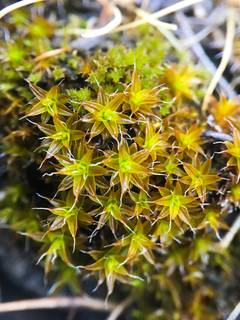
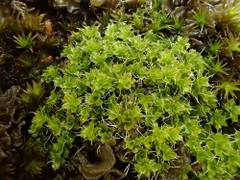
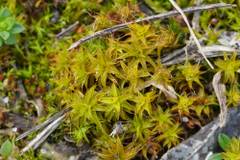
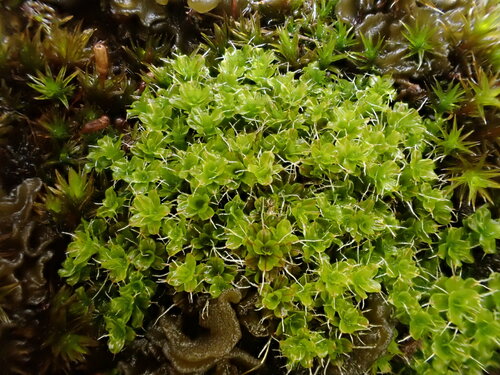
Syntrichia is a cosmopolitan genus of roughly 80 mosses in the family Pottiaceae, growing as low cushions and turfs on soil, rock, walls, tree bark, and biological soil crusts. Plants stand 0.2-2 in (0.5-5 cm) tall and spread laterally into mats that can cover broad patches of bare ground. The lance-shaped to spoon-shaped leaves spiral around the stem and typically end in a long clear or white hair-point; when wet they spread and turn green, and when dry they twist and curl tightly against the stem. Many species, including S. ruralis and S. caninervis, survive extreme drying for months or years and rehydrate within seconds of wetting, a trait that lets them occupy deserts, dunes, and exposed rock. Reproduction is by spores released from cylindrical capsules raised on short stalks, though many colonies spread mainly by fragmentation. As mosses, these plants have no true roots, flowers, or seeds, anchoring instead by thread-like rhizoids. Syntrichia forms a structural part of arid soil crusts that reduce erosion and aid water capture, and the mats are slow to recover once trampled or stripped.
Native Range
Syntrichia occurs on every continent, including Antarctica, in habitats ranging from arid deserts and dunes to alpine rock and temperate woodland. Several species are native and widespread across North America. The genus is most prominent in dry, open, and exposed sites where few other plants persist.Suggested Uses
Used in rock gardens, green roofs, moss gardens, terrariums, and the stabilization of bare or crusted soil. The drought-tolerant mats suit dry walls and gravel where other ground cover fails. Established colonies help hold soil surfaces against wind and water erosion.How to Identify
Appearance
Bloom Information
As a moss, Syntrichia does not flower. Spore capsules develop on short stalks mainly in spring, releasing spores as they dry and open. Many populations reproduce chiefly by vegetative fragments rather than spores.
Detailed Descriptions
Foliage Description
Green to reddish-brown, often tipped with a white or clear hair-pointGrowing Conditions
Sun Requirements
Requires 4-10 hours of direct sunlight daily
• Full Sun: 6+ hours of direct sunlight
• Partial Shade: 3-6 hours of direct sunlight
• Full Shade: Less than 3 hours of direct sunlight
Care & Maintenance
Care Guide
Syntrichia needs no soil cultivation and grows on mineral soil, sand, rock, concrete, and bark in full sun to part shade. It tolerates prolonged drought by drying out completely and reviving when moisture returns, so watering is needed only to green up a display. Plants accept a wide pH range from about 6.0 to 8.0 and grow well on lime-rich substrates. They are cold hardy across a wide range of climates and persist through heat and freezing alike. The main limitation is sensitivity to trampling and to dense shade, where the mats thin and disappear.Pruning
No pruning is required. Mats are kept clear of fallen leaves and debris, which would otherwise shade and smother the moss. Damaged or detached fragments can be pressed onto moist substrate to start new patches.Container Growing
Suitable for container growing
Minimum container size: 1 gallons