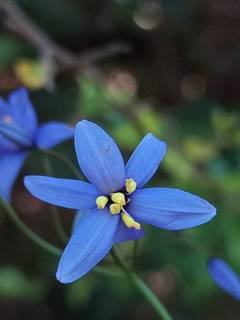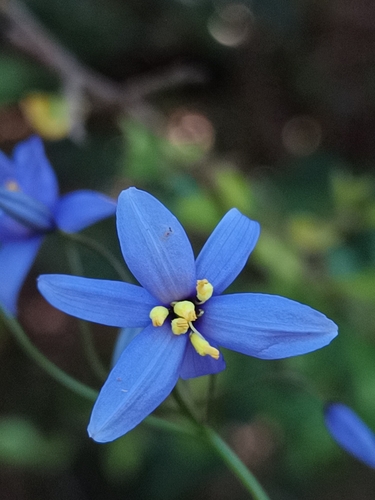
Stypandra, Genus, spp., Multiple species,
- Genus
- Multiple species
nodding blue lily
Overview
Stypandra is a small genus of tufted to sprawling perennials in the family Asphodelaceae, native to Australia. The most familiar species, S. glauca, called nodding blue lily, grows 1-3 feet (30-90 cm) tall with branching, somewhat woody-based stems and glaucous, grey-green, strap-shaped leaves that clasp the stem in two ranks. In spring, loose sprays of nodding, star-shaped blue to violet flowers open, each with six spreading tepals and a central tuft of bright yellow anthers on hairy filaments. The flowers are followed by small capsules. Stypandra grows in full sun to light shade on sandy, gravelly, or rocky, sharply drained soils in heath, sclerophyll woodland, and rocky outcrops. It tolerates drought and poor soil once established and resprouts after fire from a woody base. The foliage contains a toxin that causes blindness and death in grazing livestock, giving rise to the name blindgrass. Plants can be short-lived and may sprawl untidily as the stems lengthen.
Native Range
Stypandra is native to Australia, occurring in southern and eastern regions including Western Australia, South Australia, New South Wales, and Victoria. It grows in heath, dry sclerophyll woodland, and on rocky outcrops, on sandy and gravelly, sharply drained soils.Suggested Uses
Stypandra is used in native, rockery, and dry-garden plantings in mild Australian-climate gardens, on sandy or rocky banks. Its blue spring flowers and grey foliage suit low-water and bushland plantings. It is not used in pasture because the foliage is toxic to livestock.How to Identify
Appearance
Size & Dimensions
Height1' - 3'
Width/Spread1' - 3'
Colors
Bloom Information
Flowering occurs mainly in spring, roughly August to November in its native range, with the nodding blue flowers opening in loose sprays. Each flower is short-lived, but the sprays open in succession over several weeks. Bloom is heavier after a wet winter or following fire.
Detailed Descriptions
Flower Description
blue to violetFoliage Description
grey-greenGrowing Conditions
Sun Requirements
Requires 5-10 hours of direct sunlight daily
• Full Sun: 6+ hours of direct sunlight
• Partial Shade: 3-6 hours of direct sunlight
• Full Shade: Less than 3 hours of direct sunlight
Care & Maintenance
Care Guide
Stypandra grows in full sun to light shade on sandy, gravelly, or rocky, sharply drained soils and tolerates heat, drought, and low fertility. Water needs are low once established, and plants rot in heavy, wet, or poorly drained ground. Soil pH from about 5.5 to 7.0 suits the genus. It is suited to mild, frost-free to lightly frosted climates, roughly USDA zones 9-11. Plants resprout from a woody base after fire or cutting. The foliage is toxic to grazing animals.Pruning
Pruning is light. Straggly or spent stems can be cut back hard after flowering to encourage fresh, compact growth from the woody base. Old flowering sprays are removed once the capsules have shed seed.Container Growing
Suitable for container growing
Minimum container size: 2 gallons