Struthiopteris, Genus, spp., Multiple species,
- Genus
- Multiple species
deer fern
Northern Hemisphere temperate forests
Overview
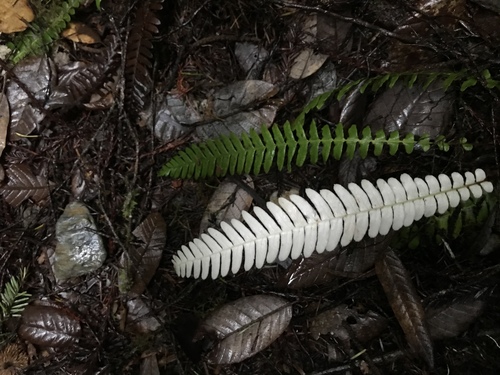
Struthiopteris is a genus of ferns in the family Blechnaceae, segregated from the large genus Blechnum and native to moist temperate forests of the Northern Hemisphere. The plants form rosettes of leathery, evergreen fronds and are notably dimorphic: spreading, arching sterile fronds 8-24 inches (20-60 cm) long form a low ring, while narrower, taller fertile fronds stand erect from the center, bearing spores in lines along the undersides of contracted segments. A widely grown species, S. spicant, the deer fern, occurs in cool forests of western North America and Europe. The once-divided fronds are deep green and ladder-like, with many narrow segments along a central rib. Struthiopteris grows in deep to part shade in cool, moist, acidic, humus-rich soil, on shaded banks, and along streams. It spreads slowly to form clumps and tolerates dense shade but declines in heat, drought, and alkaline soil. The evergreen sterile fronds persist through winter in mild areas and may flatten under snow.
Native Range
Struthiopteris is native to cool temperate regions of the Northern Hemisphere, including western North America, Europe, and parts of Asia. It grows in moist coniferous and mixed forest, on shaded streambanks and slopes, and in acidic woodland soils.Suggested Uses
Struthiopteris is used in shaded woodland, fern, and native plant gardens and in cool, moist, acidic borders. Its evergreen rosettes suit underplanting beneath trees and shrubs and along shaded paths and streams. It combines with other shade-loving woodland plants.How to Identify
Appearance
Size & Dimensions
Height1' - 2'6"
Width/Spread1'6" - 2'6"
Bloom Information
As a fern, Struthiopteris bears no flowers. It reproduces by spores carried in lines along the undersides of the narrow fertile fronds, ripening in summer and autumn. New sterile fronds unfurl in spring while the fertile fronds rise later in the season.
Detailed Descriptions
Foliage Description
deep greenGrowing Conditions
Sun Requirements
Tolerates up to 4 hours of direct sunlight daily
• Full Sun: 6+ hours of direct sunlight
• Partial Shade: 3-6 hours of direct sunlight
• Full Shade: Less than 3 hours of direct sunlight
Care & Maintenance
Care Guide
Struthiopteris grows in deep to part shade in cool, moist, acidic, humus-rich soil and suits woodland and shaded north-facing sites. Water needs are medium to high, and plants decline in heat, drought, and alkaline conditions. Soil pH should be acidic, roughly 4.0 to 6.0. Most species are hardy in USDA zones 5-8 and keep their sterile fronds through winter in mild climates. A mulch of leaf litter keeps the roots cool and moist. Established clumps are slow-growing and need little attention.Pruning
Pruning is limited to removing tattered or winter-damaged fronds in early spring before new growth unfurls. The spent fertile fronds can be cut once spores are shed. No shaping is required.Container Growing
Suitable for container growing
Minimum container size: 2 gallons