Stellaria, Genus, media, Species,
- Genus & species
chickweed
Europe; gardens, nurseries, lawns, cultivated fields, and disturbed ground from sea level to approximately 8,000 feet (2,400 m).
SunFull Sun – Part Shade – Full Shade
WaterMedium
Overview
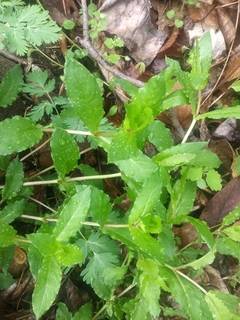
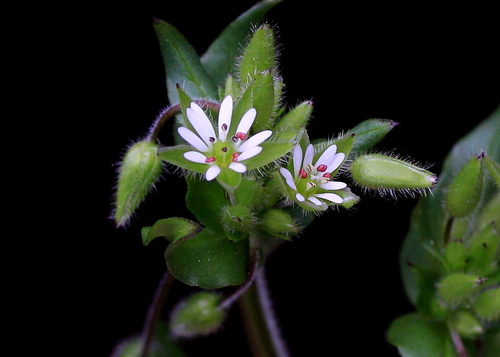
Stellaria media is a low prostrate annual or overwintering annual reaching 2-8 inches (5-20 cm) tall and 12-36 inches (30-90 cm) wide, forming dense tangled mats. Stems are prostrate to ascending, weak, brittle, freely branching, rooting at the nodes, and carry a single line of short hairs that alternates sides at each node. The alternating-hair-line trait is the primary field identification feature for the species: pulling a stem gently and rotating it reveals the hair line switching sides at each internode. Leaves are opposite, ovate, 0.2-1 inch (5-25 mm) long, smooth, bright green, with pointed tips. Lower leaves are held on short petioles while upper leaves are sessile. Small white flowers 0.2-0.3 inch (5-8 mm) across open with 5 deeply cleft (bilobed) petals that split so deeply each petal appears as two, giving the visual impression of 10 petals; the 3-5 stamens are fewer than the 10 typical of Caryophyllaceae flowers. Fruit is a capsule that splits into 6 teeth at the apex. A single plant produces 2,500-15,000 seeds that remain viable in soil for more than 10 years. Seeds germinate at temperatures as low as 36°F (2°C), which allows fall, winter, and early-spring germination in the cool moist Pacific Northwest climate. Plants complete a life cycle in 5-7 weeks, with multiple overlapping generations through the year, and the species is a widespread garden weed in Pacific Northwest lawns, beds, and nursery containers. All parts are edible raw or cooked.
Native Range
Stellaria media is native to Europe, where it grows in gardens, cultivated fields, and disturbed ground from sea level to approximately 8,000 feet (2,400 m). The species has naturalized across all 50 U.S. states and all Canadian provinces and thrives in the cool moist Pacific Northwest climate, where it grows year-round on sheltered sites.Suggested Uses
The species is used in Caryophyllaceae identification for the alternating-hair-line field test (a standard botany exercise that teaches students to pay attention to subtle stem traits), the deeply bilobed petals, and the opposite leaf arrangement. The year-round growth cycle and the 36°F (2°C) germination threshold are teaching examples in cool-season weed biology and in the concept of facultative winter annuals. Foliage is edible raw or cooked with a mild pleasant flavor and has a long historical record of use as a salad green and poultice herb. Seeds are a food source for ground-feeding birds, the source of the common name chickweed, and the species is studied in traditional herbal medicine for anti-inflammatory compounds.How to Identify
Appearance
Size & Dimensions
Height2" - 8"
Width/Spread1' - 3'
Bloom Information
Small white flowers 0.2-0.3 inch (5-8 mm) across with 5 deeply cleft petals open year-round in the Pacific Northwest on sheltered sites, with individual plants completing a full life cycle in 5-7 weeks and producing multiple overlapping generations through the year. Flowers open on sunny days and close at night and in overcast weather. Flowers are self-pollinating. Seeds germinate at temperatures as low as 36°F (2°C), with peak germination flushes in fall (September through November) and early spring (February through April), the windows when most other weed species are dormant.
Detailed Descriptions
Flower Description
White; small flowers 0.2-0.3 inch (5-8 mm) across with 5 deeply cleft (bilobed) petals that are split so deeply each appears as two, giving the visual impression of 10 petals; 3-5 stamens (fewer than the 10 typical of Caryophyllaceae)Foliage Description
Bright green; ovate, opposite, 0.2-1 inch (5-25 mm) long, smooth, with pointed tips; lower leaves held on short petioles, upper leaves sessile against the stemGrowing Conditions
Sun Requirements
Requires 2-8 hours of direct sunlight daily
• Full Sun: 6+ hours of direct sunlight
• Partial Shade: 3-6 hours of direct sunlight
• Full Shade: Less than 3 hours of direct sunlight