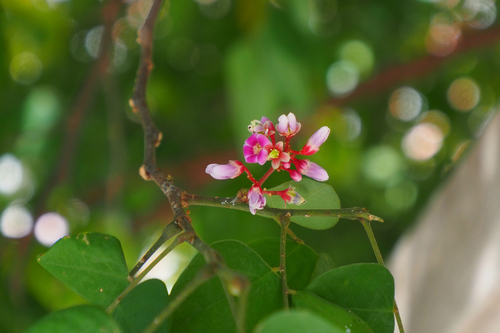
Averrhoa, Genus, carambola, Species,
- Genus & species
star fruit carambola
Tropical Southeast Asia (Indonesia, the Philippines, or Sri Lanka)
Overview
Averrhoa carambola is the carambola or star fruit, a tropical evergreen tree reaching 180-360 inches (450-900 cm) tall and 120-240 inches (300-600 cm) wide. Bark is light brown and smooth on young trees, developing shallow fissures with age. Leaves are evergreen, alternate, pinnately compound with 5-11 ovate leaflets totaling 6-12 inches (15-30 cm) long; foliage folds at night and during overcast periods, a habit shared with the related bilimbi (A. bilimbi). Flowers are small (0.4 inch / 1 cm) lilac-pink with 5 petals, borne in axillary panicles on older wood and on the trunk; appearing year-round in tropical climates with peak flushes in spring and summer. Self-fertile in most cultivars; some require cross-pollination. Fruit is the 5-ribbed yellow waxy berry, 2-5 inches (5-13 cm) long, that produces a star shape when sliced cross-wise; flavor varies by cultivar from sweet (less than 1% acid) to tart (more than 4% acid); flesh is juicy and translucent with 0-12 small seeds. Fruit ripens 60-75 days after flowering and the tree produces multiple crops per year in tropical settings. Frost-tender — foliage is damaged at 32°F (0°C) and the tree at 28°F (−2°C). Container culture in 15-25 gallon (60-95 liter) pots with indoor winter storage in zones cooler than 10. Star fruit contains caramboxin, a neurotoxin harmless to people with normal kidney function but capable of causing severe and sometimes fatal neurological symptoms in people with chronic kidney disease. Zones 10-11 in the ground.
Native Range
The species is native to tropical Southeast Asia (likely Indonesia, the Philippines, or Sri Lanka), with cultivation extending across South and Southeast Asia, the Caribbean, Central America, southern Florida, and Hawaii.Suggested Uses
Grown in zones 10-11 for fresh fruit, juice, and chutney use. Container culture in 15-25 gallon (60-95 liter) pots with indoor winter storage in colder zones. Caramboxin content makes the fruit medically contraindicated for people with chronic kidney disease.How to Identify
Appearance
Size & Dimensions
Height15' - 30'
Width/Spread10' - 20'
Bloom Information
Small (0.4 inch / 1 cm) lilac-pink 5-petalled flowers borne in axillary panicles on older wood and on the trunk; flowering occurs year-round in tropical climates with peak flushes in spring and summer. Self-fertile in most cultivars. Fruit ripens 60-75 days after flowering with multiple crops per year.
Detailed Descriptions
Flower Description
Lilac-pink, 5-petalled, 0.4 inch (1 cm), in axillary panicles on older wood and trunkFoliage Description
Glossy medium green, alternate, pinnately compound with 5-11 ovate leaflets totaling 6-12 inches (15-30 cm) longGrowing Conditions
Sun Requirements
Requires 6-10 hours of direct sunlight daily
• Full Sun: 6+ hours of direct sunlight
• Partial Shade: 3-6 hours of direct sunlight
• Full Shade: Less than 3 hours of direct sunlight
Care & Maintenance
Care Guide
Full sun (6+ hours) for the heaviest fruit set. Soil should be deep, fertile, and well-drained, slightly acidic to neutral (pH 5.5-6.5). High water needs in dry periods — drought stress causes flower and fruit drop. Foliage is damaged at 32°F (0°C); container plants are moved indoors before first frost in zones 9 and colder. Common pests include fruit flies, scale, and fruit-piercing moths in tropical regions. Caramboxin in the fruit causes severe and sometimes fatal neurological symptoms in people with chronic kidney disease.Pruning
Light pruning is done in late winter to early spring or after a flowering flush, removing crossing branches and dead wood. The tree fruits on older wood and on the trunk; heavy structural pruning reduces fruiting potential for 1-2 seasons. Suckers from the rootstock or below the graft union are removed at any time of year.Container Growing
Suitable for container growing
Minimum container size: 15 gallons