Image 1 of 9
1 / 9
© John Tann from Sydney, Australia, some rights reserved (CC-BY) · Wikimedia Commons
Sprengelia, Genus, incarnata, Species,
- Genus & species
pink swamp heath
Overview
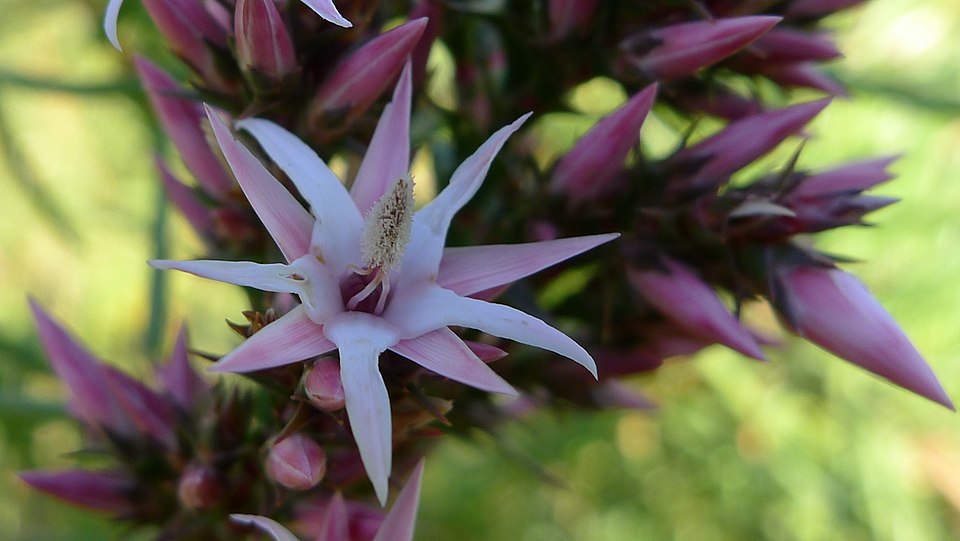
Sprengelia incarnata is an evergreen shrub with erect, slender stems reaching 1.5-6.5 feet (0.5-2 m) tall, often forming open colonies in wet ground. Leaves are stiff and lance-shaped, 0.4-1.2 inches (1-3 cm) long, with a sharp point and a broad stem-clasping base, spreading outward and crowded toward the stem tips. Star-shaped flowers 0.3-0.5 inch (8-12 mm) across are pale to deep pink, occasionally white, clustered at the stem ends with pointed bracts beneath. The five petals are fused at the base and spread into narrow, pointed lobes. Flowering occurs in late winter and spring. Growth is slow to moderate, with plants spreading by short rhizomes into loose patches. Shallow roots are easily damaged by disturbance once established. The species needs constantly moist, acidic, peaty soil and declines quickly if the root zone dries out.
Native Range
Native to southeastern Australia, including New South Wales, Victoria, Tasmania, and South Australia. Grows in swamps, wet heathland, and bog margins on peaty, permanently moist, acidic soils from sea level to subalpine elevations.Suggested Uses
Grown in bog gardens, pond margins, and constantly moist native plantings, spaced 16-24 inches (40-60 cm) apart. Suited to containers standing in water-reservoir saucers of at least 3 gallons (11 L). Not suited to dry borders or free-draining sandy beds.How to Identify
Appearance
Size & Dimensions
Height1'6" - 6'6"
Width/Spread1' - 3'
Bloom Information
Detailed Descriptions
Foliage Description
greenGrowing Conditions
Sun Requirements
Requires 4-8 hours of direct sunlight daily
• Full Sun: 6+ hours of direct sunlight
• Partial Shade: 3-6 hours of direct sunlight
• Full Shade: Less than 3 hours of direct sunlight
Care & Maintenance
Care Guide
Grows in full sun to part shade in permanently moist to wet, acidic, peaty soils. The root zone needs to stay damp year-round; plants wilt and die during drought. Phosphorus-sensitive roots are damaged by standard fertilizers, so only low-phosphorus feeding is used. Establishment from seed or cuttings is slow, with variable success rates. Few pests affect the species, though root rot occurs where water stagnates around the crown in still, warm conditions.Pruning
Light tip pruning after flowering keeps growth compact and encourages branching. Plants tolerate removal of up to one-third of stem length. Hard pruning into bare old wood often fails to reshoot.Pruning Schedule
Prune: November–December
spring
Container Growing
Suitable for container growing
Minimum container size: 3 gallons