Sprengelia, Genus, spp., Multiple species,
- Genus
- Multiple species
pink swamp-heath
South-eastern Australia and Tasmania
Overview
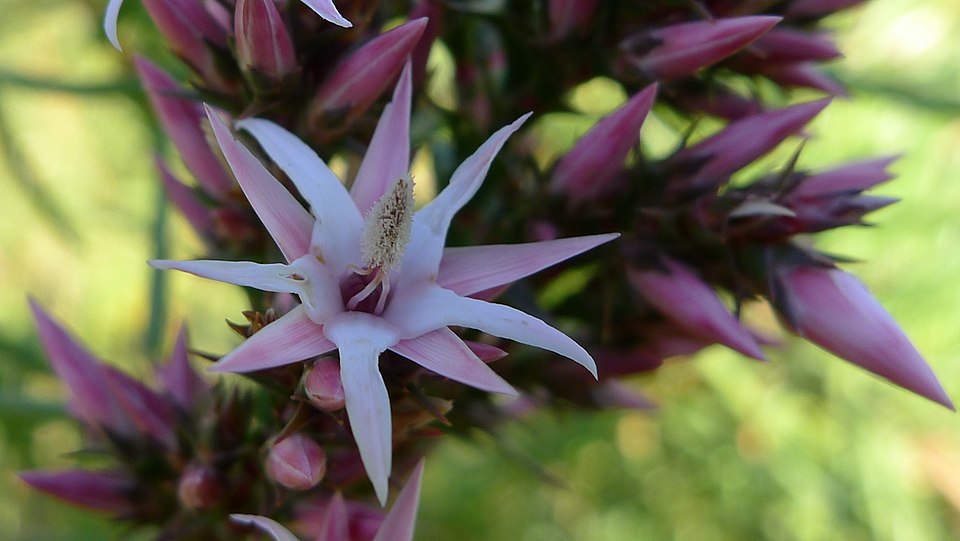
Sprengelia is a small genus of evergreen shrubs in the family Ericaceae, native to south-eastern Australia and Tasmania. Plants form upright, wiry shrubs 1-5 feet (0.3-1.5 m) tall with crowded, stem-clasping leaves that taper to a sharp point and spread stiffly from the stem. Clusters of small, star-shaped flowers open at the branch tips from late winter into spring, in shades of pink to nearly white, each with five spreading, pointed lobes. The leafy bracts around the flowers repeat the colour of the petals. The genus grows in wet heath, swamp margins, and peaty soils that stay damp, in full sun to light shade. It needs constant moisture and acidic ground and does not tolerate dry or limy soils. Plants suit bog gardens and native plantings in mild, frost-free to light-frost climates, roughly USDA zones 9 to 10.
Native Range
Sprengelia is native to south-eastern Australia, including New South Wales, Victoria, South Australia, and Tasmania. The shrubs grow in wet heathland, swamps, bogs, and along seepage lines on peaty, acidic soils.Suggested Uses
Used in bog gardens, pond and stream margins, native and heath plantings, and containers kept constantly moist. Spaced 18-30 inches (45-75 cm) apart, plants form low, wiry mounds. The spring flowers also draw native bees and other small pollinators.How to Identify
Appearance
Size & Dimensions
Height1' - 5'
Width/Spread1' - 3'
Bloom Information
Detailed Descriptions
Flower Description
Pink to whiteFoliage Description
GreenGrowing Conditions
Sun Requirements
Requires 4-8 hours of direct sunlight daily
• Full Sun: 6+ hours of direct sunlight
• Partial Shade: 3-6 hours of direct sunlight
• Full Shade: Less than 3 hours of direct sunlight
Care & Maintenance
Care Guide
Plants grow in full sun to light shade on peaty, acidic, constantly moist soils at a pH from about 4.5 to 5.5. They need ground that never dries out and tolerate seasonal waterlogging, making them suited to bog and pond-margin sites. Sharp drainage is not wanted; instead the roots are kept cool and damp with a peaty or sandy-peat mix. They do not tolerate lime, drought, or rich feeding. Light shaping after flowering keeps plants bushy. Hardiness suits frost-free to light-frost regions, roughly USDA zones 9 to 10.Pruning
A light trim after flowering keeps plants compact and slows open, leggy growth. Cutting is kept to leafy stems, since bare old wood resprouts slowly. Spent flower clusters can be removed to tidy the shrub.Pruning Schedule
Prune: November–December
late spring
Container Growing
Suitable for container growing
Minimum container size: 3 gallons