Sphaeralcea, Genus, ambigua, Species,
- Genus & species
apricot globemallow
southwestern United States and northwestern Mexico
Overview
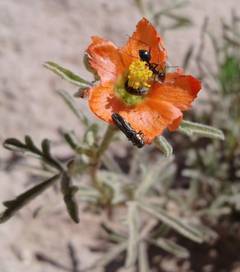
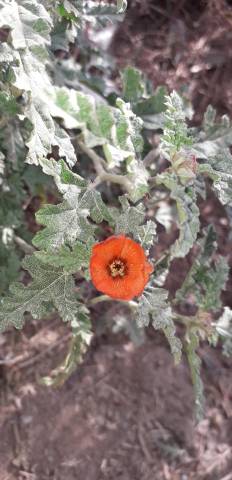
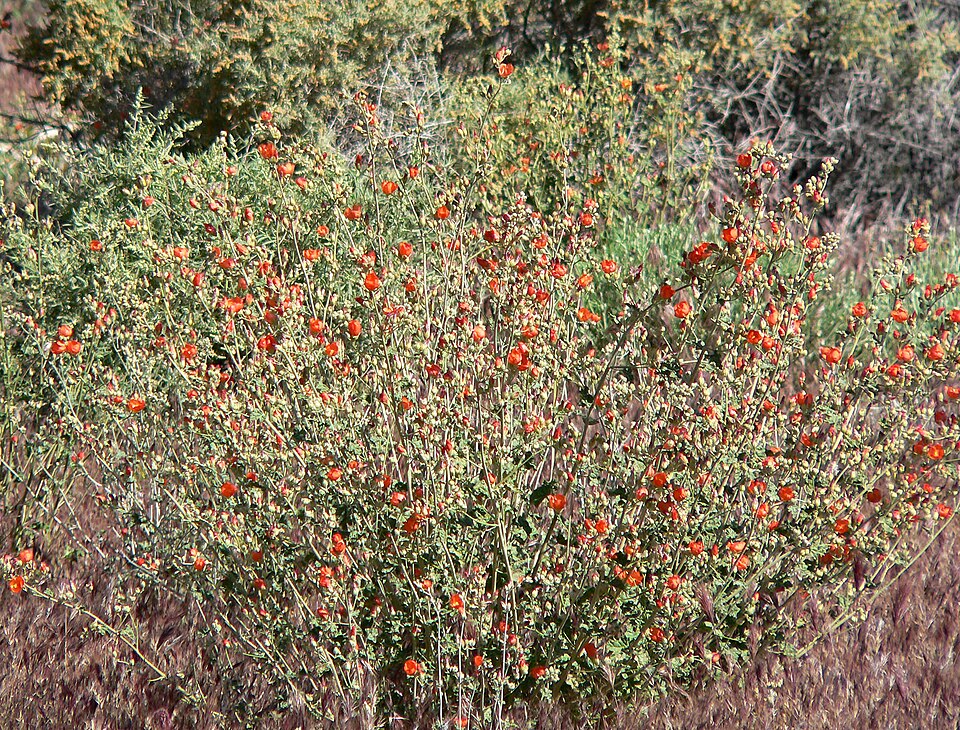
Sphaeralcea ambigua, apricot globemallow, is a woody-based perennial in the mallow family from the deserts of the southwestern United States and northwestern Mexico. It forms a rounded, multi-stemmed mound 2-3 feet (60-90 cm) tall and wide, sometimes reaching 3.5 feet (1.1 m). The gray-green leaves are 1-2 inches (2.5-5 cm) long, rounded to three-lobed, and densely covered in star-shaped hairs that reduce water loss. Cup-shaped flowers about 1-1.5 inches (2.5-4 cm) across line the upper stems, most often apricot to orange but ranging to red, pink, and white in different populations. In warm areas it flowers from early spring into summer and can rebloom after rain. The plant grows on dry slopes, washes, and roadsides below 4,000 feet (1,200 m), and survives extreme heat and prolonged drought on little water. The dense leaf hairs can irritate the eyes, which gave rise to the Spanish name plantas muy malas. Stems become open and leggy with age, and the plant is short-lived, often persisting only a few years before reseeding.
Native Range
Native to the Mojave, Sonoran, and Great Basin desert regions of the southwestern United States and northwestern Mexico, including California, Nevada, Arizona, Utah, and Baja California. It grows on dry slopes, desert washes, and disturbed roadsides, often on sandy or gravelly soils.Suggested Uses
Used in desert, xeriscape, and native gardens, on dry banks, and in unirrigated borders and medians. Combines with other low-water desert perennials and shrubs for spring color.How to Identify
Appearance
Size & Dimensions
Height2' - 3'6"
Width/Spread2' - 3'
Bloom Information
Detailed Descriptions
Flower Description
apricot to orangeFoliage Description
gray-greenGrowing Conditions
Sun Requirements
Requires 6-12 hours of direct sunlight daily
• Full Sun: 6+ hours of direct sunlight
• Partial Shade: 3-6 hours of direct sunlight
• Full Shade: Less than 3 hours of direct sunlight
Care & Maintenance
Care Guide
Grows in full sun on sharply drained sandy, gravelly, or rocky soils, including alkaline ground. Established plants need very little water and decline in rich, irrigated, or poorly drained beds. Propagation is from seed, which germinates better after scarification, or from softwood cuttings. Plants are short-lived but reseed where the soil is open and dry. Cutting stems back by half after the spring bloom keeps growth compact and can bring a second flush. Root rot follows overwatering and heavy soils.Pruning
Cut stems back by one-third to one-half after the main spring bloom to limit legginess and encourage rebloom. Remove dead or frost-damaged stems in early spring. Light shearing keeps the mound dense.Container Growing
Suitable for container growing
Minimum container size: 5 gallons