Spergula, Genus, spp., Multiple species,
- Genus
- Multiple species
spurry
SunFull Sun – Part Shade
WaterLow
Overview
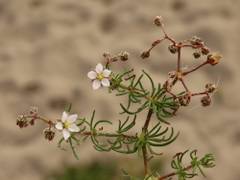
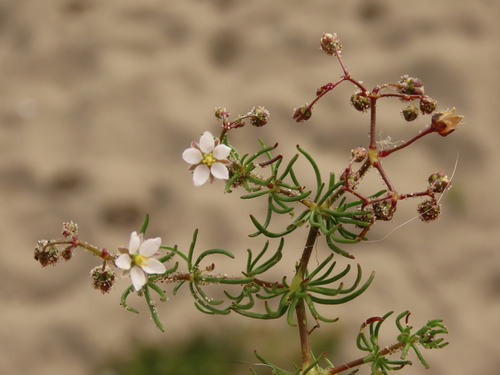
Spergula is a genus of slender annual herbs in the family Caryophyllaceae, native to Europe and now naturalized worldwide as a weed of arable land. Plants form low, much-branched tufts 4-16 inches (10-40 cm) tall with weak, ascending stems. The thread-like leaves are 0.5-1.5 inches (1-4 cm) long and arranged in dense whorls along the stem, giving a feathery look. Small white flowers about 0.2 inch (4-6 mm) across, each with five petals, open in loose sprays from late spring through summer. The flowers give way to tiny capsules holding many seeds. S. arvensis, corn spurry, grows on acid, sandy, and disturbed soils and has long been a weed of cereal and root crops; it was also once sown as a fodder and green-manure crop. Plants complete their cycle in a single season and can produce several generations a year, building large seed banks.
Native Range
Spergula is native to Europe and parts of Asia and has naturalized across North and South America, Africa, and Australasia. Species grow on acid, sandy, and gravelly soils in fields, gardens, roadsides, and other disturbed ground.Suggested Uses
Spergula is grown occasionally as a green-manure or fodder cover crop on poor, acid soils, and is otherwise treated as an arable and garden weed. Sown crops are broadcast and turned under before seeding. It has little ornamental use.How to Identify
Appearance
Size & Dimensions
Height4" - 1'4"
Width/Spread4" - 1'
Bloom Information
Detailed Descriptions
Foliage Description
GreenGrowing Conditions
Sun Requirements
Requires 4-8 hours of direct sunlight daily
• Full Sun: 6+ hours of direct sunlight
• Partial Shade: 3-6 hours of direct sunlight
• Full Shade: Less than 3 hours of direct sunlight
Water & Climate
Water Needs
Care & Maintenance
Care Guide
Spergula needs no cultivation and grows as a fast annual on acid, sandy, and low-fertility soils in full sun. It germinates over a long season, tolerates poor and compacted ground, and matures seed within a few weeks of flowering. Even moisture speeds growth, though plants also set seed on dry, thin soils. Where it is unwanted, removal before flowering prevents the rapid build-up of seed. As a sown green-manure or fodder crop it is broadcast onto cleared ground and turned in before it seeds. It dies back completely at the end of its season.Pruning
No pruning applies to this annual. Where it is grown as a green manure, the whole stand is cut or dug in before seed sets. As a weed, plants are hoed or pulled before flowering to limit seeding.Pruning Schedule
Prune: June–July
summer