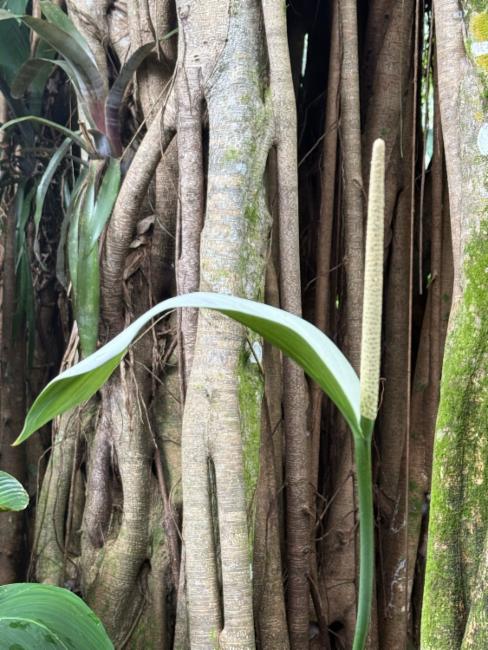
Spathiphyllum, Genus, spp., Multiple species,
- Genus
- Multiple species
peace lillies
Tropical Central and South America, and Southeast Asia
Overview
Spathiphyllum is a genus of about 50 species of evergreen, rhizomatous perennials in the arum family (Araceae), commonly called peace lilies. Most are native to the rainforest floors of tropical Central and South America, with a few species in southeastern Asia and the Pacific islands. Plants form clumps of glossy, dark green, lance-shaped leaves that rise on slender stalks directly from the base, reaching 12-36 inches (30-90 cm) tall, though some species grow to 6 feet (1.8 m). The flower is a typical arum structure: a narrow spadix of tiny true flowers backed by a broad, hood-like white spathe 3-6 inches (8-15 cm) long that ages to pale green. Bloom occurs mainly in spring and summer and can recur through the year in warm conditions and steady light. The genus is grown widely as an indoor plant for its tolerance of low light and its evergreen foliage. All parts contain calcium oxalate crystals, which can irritate the mouth and digestive tract of people and pets if chewed or swallowed. Plants are frost-tender and grow outdoors only in frost-free, USDA zone 10-12 climates.
Native Range
The genus is native chiefly to the tropical rainforests of southern Mexico, Central America, and northern South America, where the plants grow in shade on the moist forest floor. A smaller number of species occur in Southeast Asia and the western Pacific.Suggested Uses
Peace lilies are grown as indoor foliage and flowering plants for homes, offices, and low-light interiors, and in shaded tropical gardens and atriums. They are used in containers and grouped plantings where their evergreen leaves and white spathes add contrast. In frost-free climates they are planted as shade groundcover beneath trees, spaced 18-24 inches (45-60 cm) apart.How to Identify
Appearance
Size & Dimensions
Height1' - 3'
Width/Spread1' - 2'6"
Bloom Information
Flowering occurs mainly in spring and early summer and can repeat at intervals through the year where warmth and light are steady. Each spathe lasts several weeks, opening white and slowly turning green before it fades. Indoor plants flower most reliably with bright, indirect light and regular feeding.
Detailed Descriptions
Flower Description
white aging to greenFoliage Description
glossy dark greenGrowing Conditions
Sun Requirements
Tolerates up to 3 hours of direct sunlight daily
• Full Sun: 6+ hours of direct sunlight
• Partial Shade: 3-6 hours of direct sunlight
• Full Shade: Less than 3 hours of direct sunlight
Care & Maintenance
Care Guide
Spathiphyllum species grow in part to full shade in rich, moist, well-drained soil or potting mix with a pH of 5.5-6.5 and need warmth above 60F (16C). Consistent moisture suits them, and the leaves wilt visibly when the soil dries, recovering once watered. They are sensitive to cold, drafts, and frost and survive outdoors only in USDA zones 10-12. Indoors they tolerate low light but flower more in bright, indirect light, away from direct sun that scorches the leaves. Brown leaf tips follow dry air, fluoride or chlorine in tap water, or over-feeding. Spider mites, mealybugs, and root rot in soggy mix are the main problems. Clumps are divided in spring to renew them and increase plants.Pruning
Spent flower stalks are cut back to the base once the spathe browns, which keeps the clump tidy and returns resources to the leaves. Yellowed or damaged outer leaves are removed at the base as they age. No other routine pruning is needed.Container Growing
Suitable for container growing
Minimum container size: 2 gallons
