Smyrnium, Genus, perfoliatum, Species,
- Genus & species
perfoliate alexanders
Southern Europe (Mediterranean region), Turkey, Caucasus
Overview
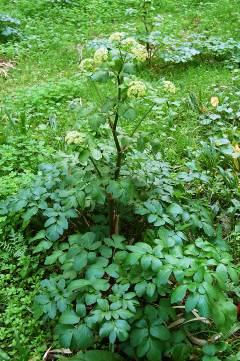
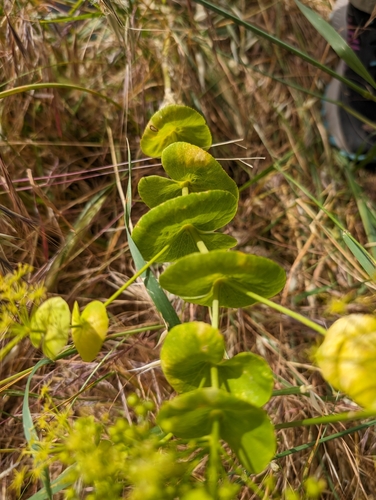
Smyrnium perfoliatum is perfoliate alexanders, a biennial growing 18–36 inches (45–90 cm) tall and 12–18 inches (30–45 cm) wide. The upper stem leaves are bright yellow-green (lime-colored) and perfoliate — the stem passes through the center of each leaf — creating a tiered stack of lime-green disc-shaped leaves along the upper stem. Tiny yellow-green flowers in compound umbels at the stem tips in mid to late spring — the flowers are visually secondary to the bright lime-green perfoliate leaves, which are the primary display. Basal leaves (year 1) are dark green and heart-shaped, different from the upper stem leaves. In the carrot/parsley family (Apiaceae). Biennial: basal rosette of dark green heart-shaped leaves in year 1; lime-green flowering stems in year 2; then the entire plant dies. Self-seeds to maintain a permanent colony — overlapping generations (year 1 rosettes and year 2 flowering stems present simultaneously). The entire plant goes dormant by midsummer as the seeds ripen and the stems dry. The bright lime-green spring color is the cultivation interest — it contrasts with blue-flowered companions (Brunnera, Myosotis) and dark-leaved plants. Tolerates dry shade. Native to southern Europe (Mediterranean), Turkey, and the Caucasus. Non-toxic. Deer-resistant. Partial shade to full shade. Zones 5–9. Growth rate is moderate.
Native Range
Native to southern Europe (Mediterranean region), Turkey, and the Caucasus, growing in woodland margins, hedgebanks, and rocky slopes.Suggested Uses
Grown in woodland gardens and shade borders in zones 5–9. The bright lime-green perfoliate leaves in spring contrast with blue- and dark-leaved companions. Biennial — allow self-seeding. Tolerates dry shade. Non-toxic. Deer-resistant.How to Identify
Appearance
Size & Dimensions
Height1'6" - 3'
Width/Spread1' - 1'6"
Bloom Information
Mid to late spring (April–May), lasting 3–4 weeks. Yellow-green flower umbels above bright lime-green perfoliate stem leaves. The lime-green foliage color — not the flowers — is the display. The plant dies after seeding and is dormant by midsummer.
Detailed Descriptions
Flower Description
Yellow-green, tiny, in umbels — visually secondary to the bright lime-green perfoliate stem leavesFoliage Description
Upper stem leaves bright yellow-green (lime), perfoliate (stem passes through the leaf); basal leaves dark green, heart-shapedGrowing Conditions
Sun Requirements
Requires 2-5 hours of direct sunlight daily
• Full Sun: 6+ hours of direct sunlight
• Partial Shade: 3-6 hours of direct sunlight
• Full Shade: Less than 3 hours of direct sunlight
Care & Maintenance
Care Guide
Partial shade to full shade. Tolerates dry shade. Biennial: allow self-seeding for permanent colonies. The lime-green color is the spring display. The plant goes dormant by midsummer. Non-toxic. Deer-resistant. Zones 5–9.Pruning
No pruning during the display period. Allow seed to ripen and drop for self-seeding (biennial — requires self-seeding for continuity). Remove dried stems after seed dispersal if desired.Pruning Schedule
Prune: July
summer